


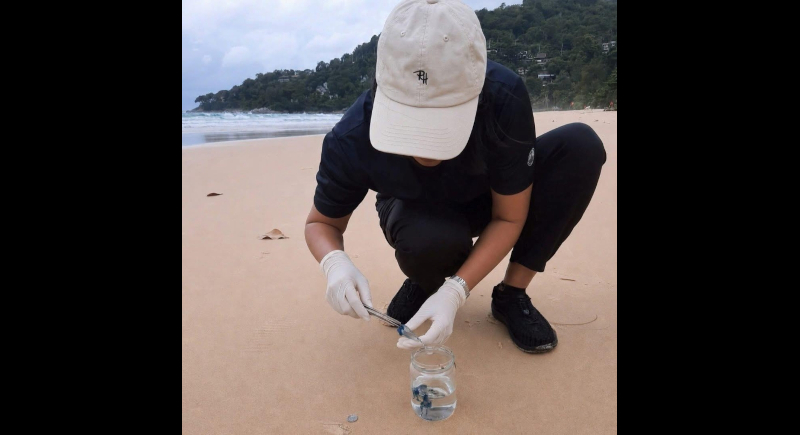
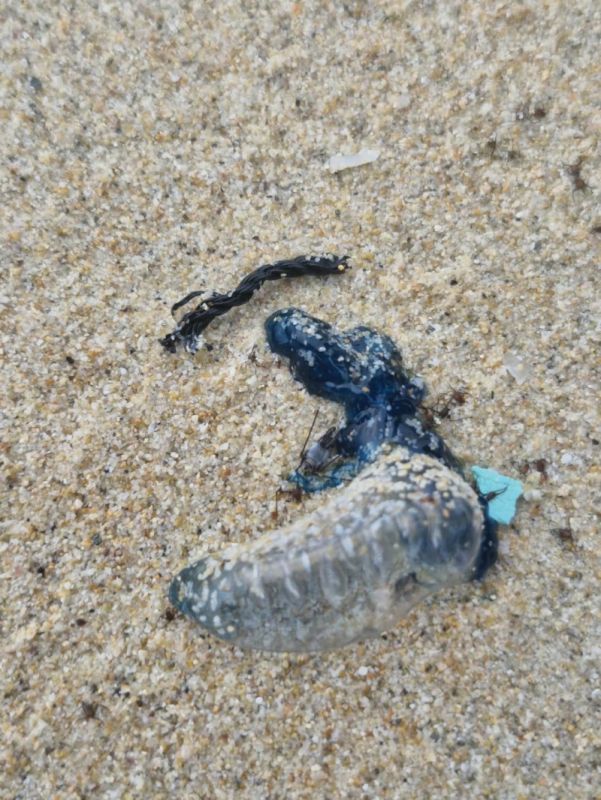
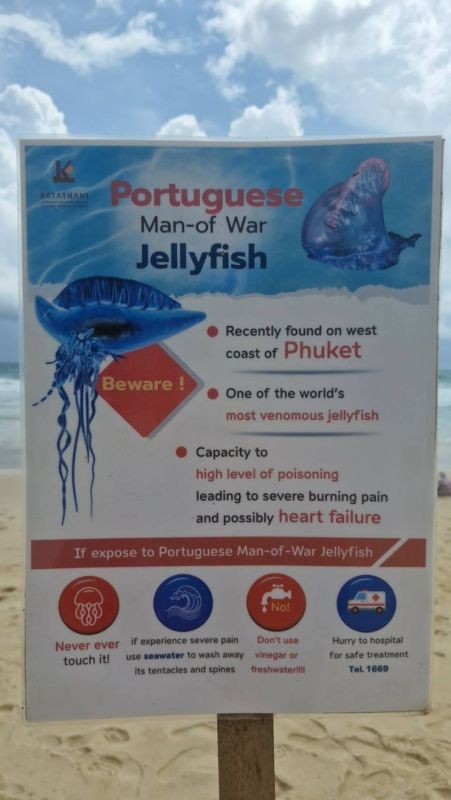
Lifeguards at Kata Noi Beach discovered the highly venomous marine animals on Thursday (May 28), with additional sightings reported on Friday (May 29), leading officials to post warning signs and advise tourists to exercise caution when entering the sea or walking along the shoreline.
Kata Noi lifeguard Chaninthon Nareepen said he encountered a Portuguese man o’ war at the beach on May 28, prompting officials to place warning signs for swimmers and visitors.
The warning comes after Minister of Natural Resources and Environment Suchart Chomklin directed the Department of Marine and Coastal Resources (DMCR) to closely monitor marine hazards that could affect residents and tourists during the southwest monsoon season.
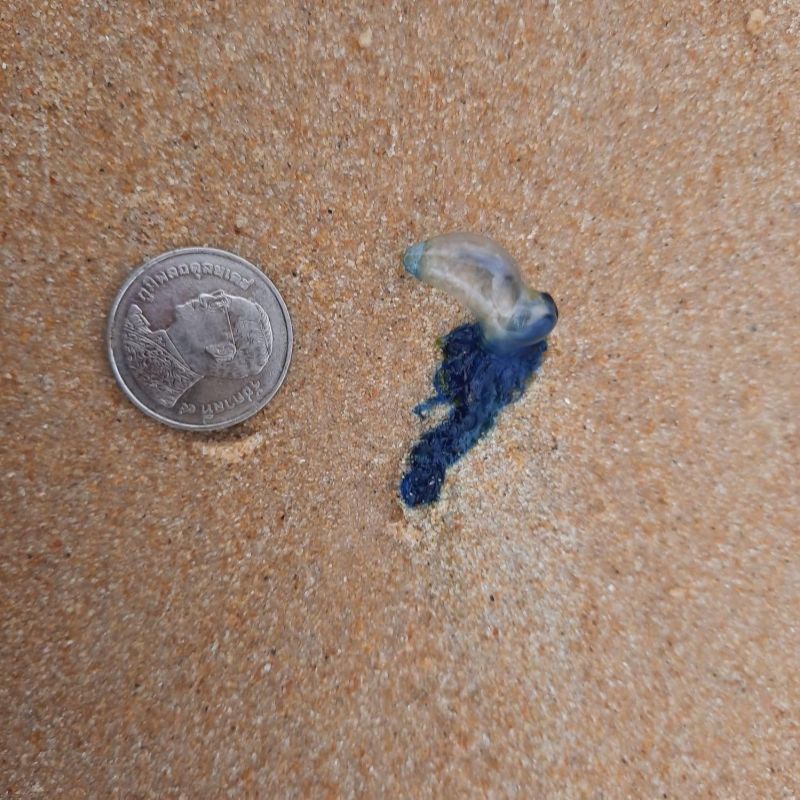
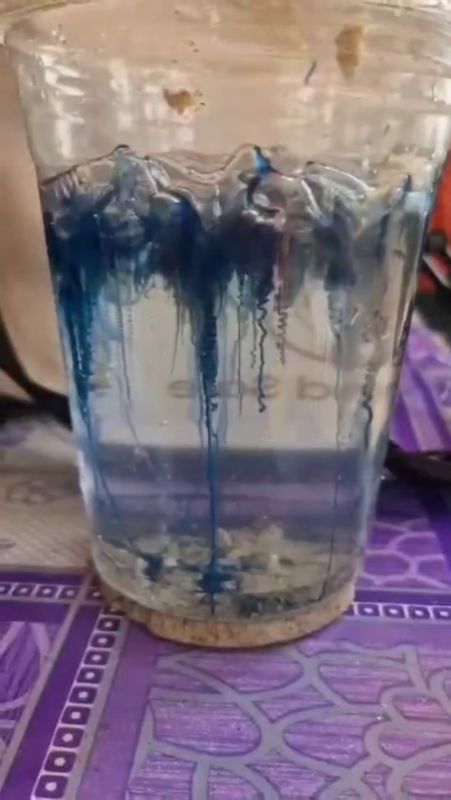
The DMCR’s Upper Andaman Sea Marine and Coastal Resources Research Centre investigated reports from lifeguards and local monitoring networks and confirmed the presence of bluebottles (Physalia sp.) stranded along Kata Noi Beach.
According to the department, strong winds and waves at the time of the survey likely contributed to the strandings. Officials found bluebottles measuring approximately two to three centimetres scattered along the shoreline, with an average density of 0.5 animals per 100 square metres.
No injuries have been reported in connection with the latest sightings.
Authorities have also warned that Portuguese man o’ war may be encountered in other areas, including Nai Harn Beach, Yanui Beach and around Racha Island, and have instructed lifeguards and local networks to remain vigilant.
Despite their jellyfish-like appearance, Portuguese man o’ war are not true jellyfish but colonial marine organisms equipped with long venomous tentacles. Their stings can cause intense burning pain, swelling and skin irritation, while some victims may experience chest tightness, breathing difficulties or severe allergic reactions.
Officials noted that the tentacles can remain capable of delivering venom even after the animal has died and washed ashore.
The DMCR has urged the public not to touch any Portuguese man o’ war found on beaches. Anyone stung should rinse the affected area with seawater, avoid using fresh water and seek medical attention if symptoms are severe.