


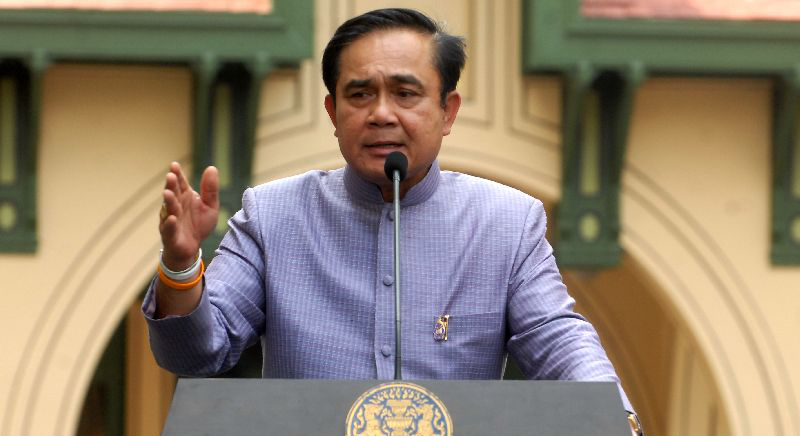
"This morning, someone said the media needs to be impartial. No. I don't think they should say that. It isn't good," Gen Prayuth told reporters.
"What they should say is, first, media should report news that is factual. Second, they should support the government's efforts to move the country forward. And third, they should help reduce conflicts in society, and create understanding about the government's policies that give clear results. Can you not do these three or four things together, dears?"
He continued, "If this person says, this side good, that side not good, if media keeps presenting news like that, when will our country have peace?"
The general then wished the media happiness and told the journalists to "be good reporters, be quality reporters, and be lovely reporters."
"It's good that some media do cooperate with the government, but some media are not so good. However, I don't want to say their names," said Gen Prayuth.
Urged by reporters to identify the offending news outlets by name, the junta chairman replied, "No I won't say it. I can’t be bothered."
Since seizing power from an elected government on May 22, 2014, Gen Prayuth has significantly curtailed freedom of expression in Thailand by imposing a ban on public protests, sending violators to face trial in martial court, and urging the media not to criticise his regime.
On February 27, Gen Prayuth warned that any news anchors or talking heads who present opposing views about his government on television may be summoned for "discussion."
"Many shows and many channels still have problem with this," he said in a televised address to the nation. "I may need to summon you for a discussion.
“I am not censoring you. But you invite academics and guests who give totally opposite views of the issues. They talk about things that are incorrect and inaccurate."
See original story here.