


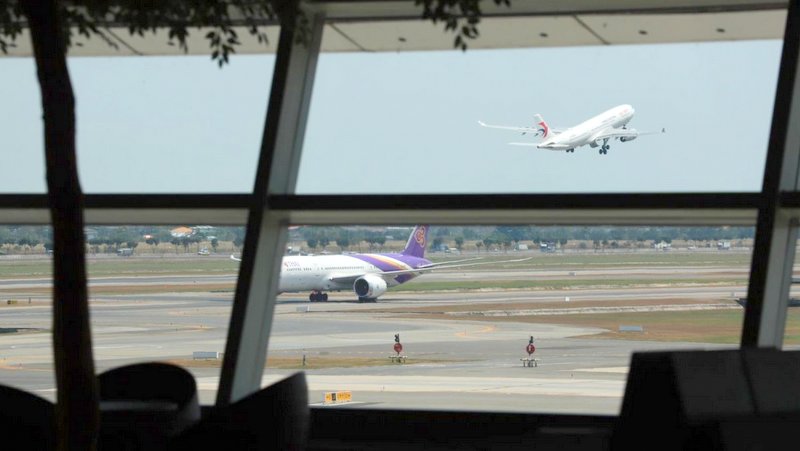
Representatives of the Airlines Association of Thailand (AAT), airports and regulators held a meeting with the Tourism and Sports Ministry last month. The ministry asked airlines to act as an intermediary platform to collect a tourism fee on behalf of the government, reports the Bangkok Post.
As the National Tourism Policy Act, which governs the levy, does not cover Thais, collecting the fee from them would be unlawful. The ministry proposed airlines charge a standard fee to all passengers and subsequently reimburse Thais, with the ministry covering the associated administrative costs.
Sheldon Hee, regional vice-president for Asia-Pacific at the International Air Transport Association (IATA), said collecting a tourism tax through airlines is infeasible and would create additional complications.
Typically, passengers are not required to provide their nationality, passport details or residential address to airlines during the booking process. Airlines only need a passenger’s name and destination, said Mr Hee.
Collecting a tourism fee could also compromise operational efficiency at airports. For instance, he asked what happens if an airline discovers a passenger subject to the tourism tax has not made the payment? It would be difficult for airlines to manage such payments at airports as this is not typically where payments are processed, said Mr Hee.
A better option would be to collect the fee through the TDAC, the digital immigration system foreign visitors are mandated to complete before entering Thailand, he said.
The AAT and aviation stakeholders agreed with this conclusion at the recent meeting.
The AAT said Thai airlines operate with different back-office systems. With more than 100 foreign airlines flying to Thailand, embedding the fee with the airfares would further complicate implementation for operators.
A more convenient option is to collect the fee via the TDAC, as it is administered by the Immigration Bureau and reports directly to the government, unlike airlines, which are largely independent of the state, noted the association.
While the issue could raise concerns for the International Civil Aviation Organization, whose principles advocate non-discriminatory treatment of all passengers, every country has the sovereign right to determine its own policies, said Mr Hee.
IATA’s role is to advise on any unintended consequences of such policies and identify more effective alternatives. Introducing an additional fee would likely discourage travel to Thailand, particularly among regional travellers, he noted.
Over time, Thailand could lose growth potential if travel costs become less attractive, especially as the country seeks to restore tourism to pre-pandemic levels, said Mr Hee.
IATA called for greater cooperation between airlines and other aviation stakeholders to promote transparent discussions on taxes and charges, noting that some levies may not be viable for airlines or travel demand, despite their objective of improving aviation infrastructure.