


The proposal to pipe raw water from Ratchaprapha Dam to Phuket has long been touted by politicians and senior bureaucrats as the definitive solution to the island’s recurring drought fears.
The scheme is intended to prevent a repeat of the severe shortages experienced during extended dry seasons, most notably in 2019, when reservoir levels hit record lows and parts of the island saw water pressure “reduced” to the point of effectively shutting off mains supply.
At the height of that crisis, resorts were forced to truck in water by tanker as emergency deliveries were sent to communities where taps had simply run dry. Residents in a government-built housing estate in Ratsada, constructed for low-income families, staged a protest after being forced to spend what little money they had buying water from private suppliers for months ‒ because supply to their neighbourhood had been cut before similar restrictions were imposed elsewhere.
Since then, drought warnings have become an almost annual feature, with officials repeatedly urging residents and businesses to conserve water during delayed monsoon periods. As recently as 2023, local authorities warned that late rains could trigger mass outages in key areas across the island.
With Phuket now welcoming about 14 million visitors annually, tourism accounts for a significant share of total water consumption, adding further strain to reservoirs and groundwater sources.
Against this backdrop, the B26bn mega-project is being positioned as a long-term answer to the island’s growing demand ‒ but it remains firmly on the drawing board.
That is despite a direct order issued during a high-profile visit to Phuket in 2024 by then Deputy Prime Minister Anutin Charnvirakul ‒ who as of last Friday (Feb 27) has become Thailand’s 32nd Prime Minister.
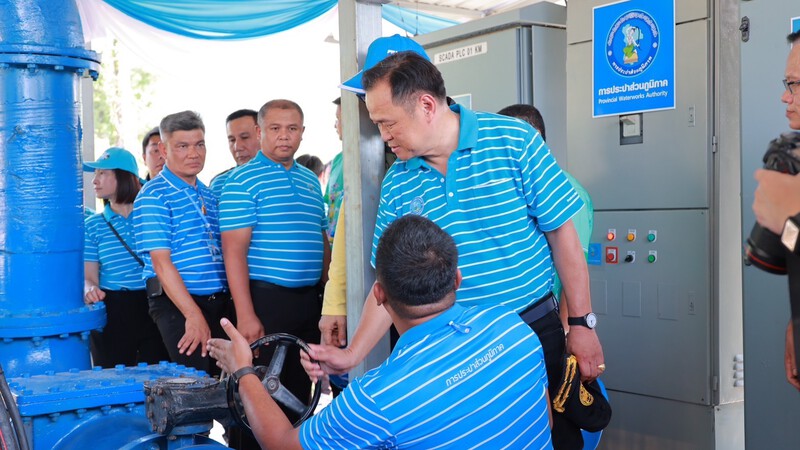
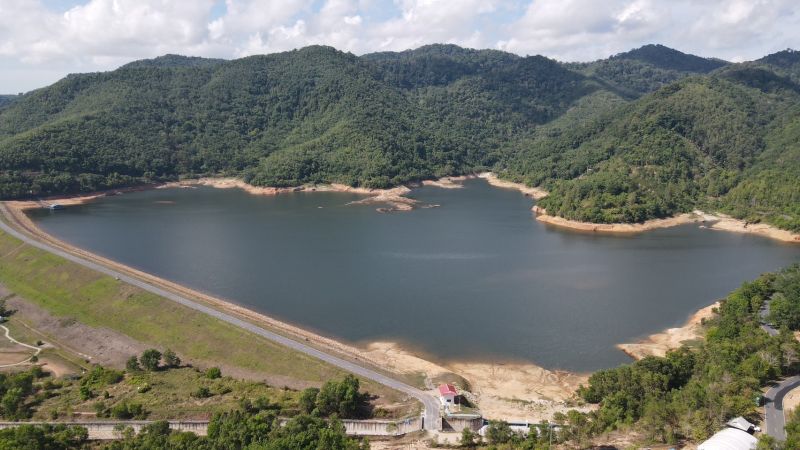
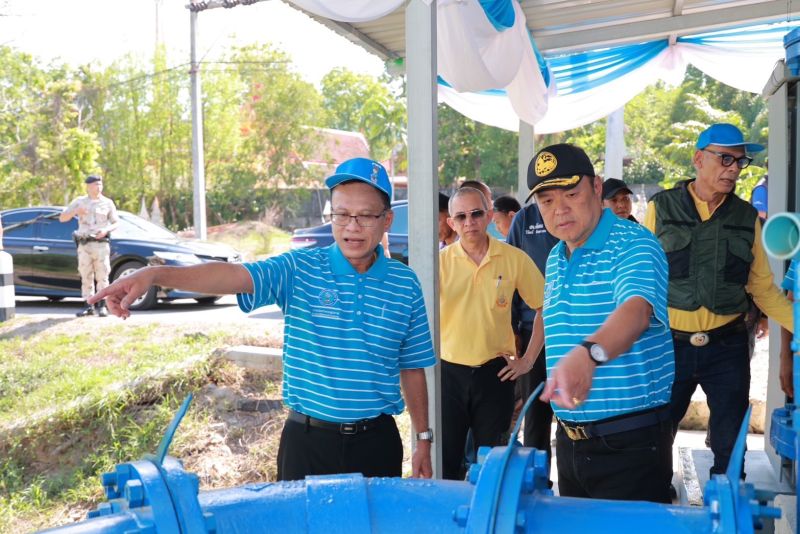
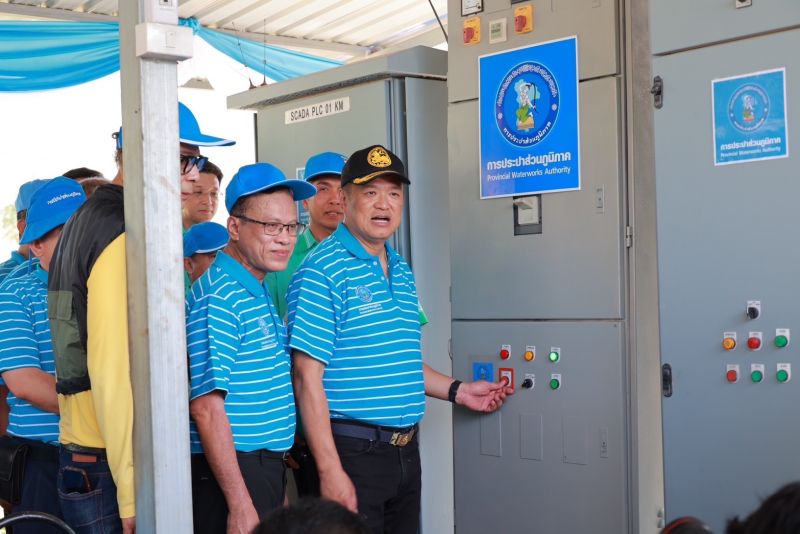
During an inspection at Bang Neow Dum Reservoir in Srisoonthorn, now-PM Anutin instructed the Provincial Waterworks Authority (PWA) Phuket branch to expedite key water supply projects to alleviate recurring dry-season shortages and outages.
He specifically ordered the PWA to accelerate the long-discussed pipeline project to Phuket to ensure long-term water security for consumption.
“The Provincial Waterworks Authority (PWA) should urgently study and coordinate with relevant agencies to expedite implementation. This will ensure sufficient water for consumption in the Andaman provinces, meet the needs of the population, promote tourism, support economic growth, and generate income for the local population,” he said at the time.
The PWA was instructed to submit the study results ‒ the first report ‒ to the Cabinet for information by September 2024. That did not happen.
DAM LINK
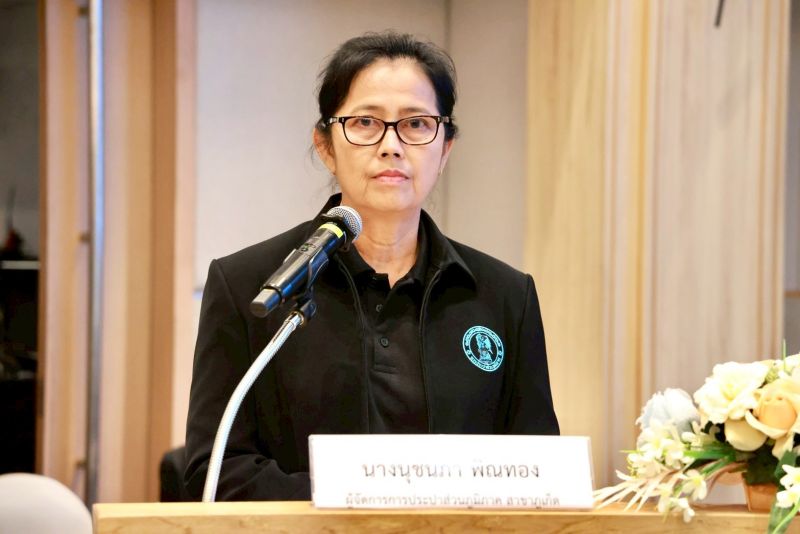
Nuchanapa Pinthong, Manager of the PWA Phuket Branch, last week outlined progress on a 20-year plan to supply treated water from Surat Thani to Phuket, Phang Nga and Krabi.
She said the project stems from a Cabinet resolution dated Apr 9, 2024, directing the PWA to review water production plans and expand transmission networks to support economic growth in Phuket, Phang Nga, Krabi and Surat Thani. The review also includes examining whether the scheme could proceed under a Public-Private Partnership (PPP) model under the 2019 PPP Act.
According to the PWA’s website, the feasibility study was commissioned to TEAM Consulting Engineering and Management Plc at a cost of B49.2mn. The study began on July 10, 2024 and is due to run until Feb 24, 2027.
The scope includes updating demand forecasts, assessing raw water sources, designing transmission and treatment systems, evaluating environmental impacts and preparing documentation required for PPP approval and private-sector selection.
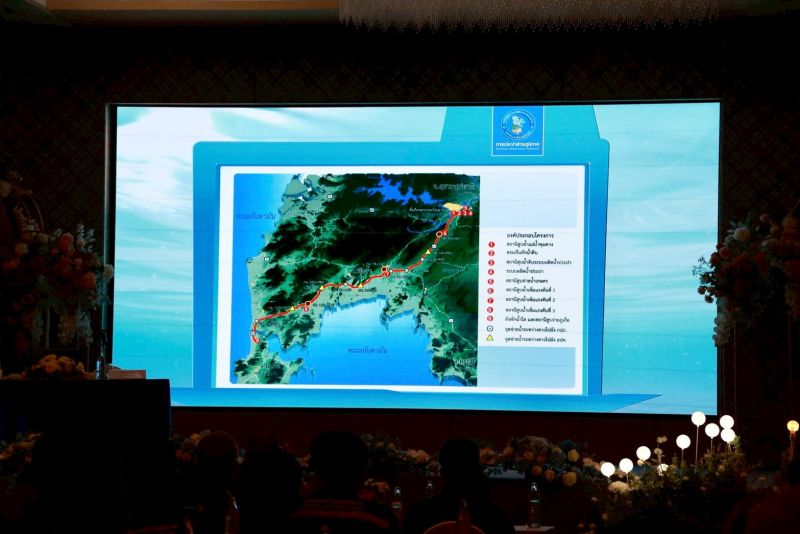
Preliminary proposals identify Khlong Phum Duang in Ban Ta Khun District, Surat Thani, as the raw water source. Plans include constructing a weir, a pumping station and a treatment plant with a total capacity of 14,000 cubic metres per hour.
Actual delivery of water, however, is years away. The project is divided into two phases: Phase 1 (2031-2040) with production of 7,000 cubic metres per hour, and Phase 2 (2041-2050) adding another 7,000 cubic metres per hour.
A 300.7-kilometre transmission pipeline would run from Surat Thani through Krabi and Phang Nga before reaching Phuket, supplying six PWA branches along the route.
Total investment is projected at more than B26bn.
Demand forecasts for the six branches and 21 local administrative organisations along the route project peak tap-water demand of 61.55mn cubic metres per year between 2031 and 2040. Between 2041 and 2050, demand is forecast to rise to 123.18mn cubic metres annually. Raw water requirements would increase from 67.71mn to 135.51mn cubic metres per year across the two phases.
Ms Nuchanapa described the dam link as a “strategic backbone” project to secure long-term water resources as tourism and investment continue to expand.
However, environmental assessments and PPP analysis remain underway, and no construction timeline has been announced. Participants at recent consultation meetings have suggested expanding coverage to Khao Lak in Takua Pa District, Phang Nga, another tourism hub facing similar supply pressures.
For now, the B26bn dam link remains a long-term vision rather than an imminent solution.
PHANG NGA PLAN
Closer to implementation is the Phase 1 Phang Nga–Phuket waterworks expansion project, with a budget of B3.49bn.
The project covers Muang and Takua Thung districts in Phang Nga and Thalang District in Phuket, and includes construction and improvement of transmission and distribution systems and installation of new pipelines.
The Environmental Impact Assessment has been approved, and construction progress stands at about 2.5%, with completion expected in 2028. That is despite earlier instructions in 2024 under the previous administration calling for completion by 2027.
PWA Phuket acknowledged that land acquisition for pumping stations and pipeline routes remains under negotiation.
At the same time, pressure-management measures are under way in Chalong, Rawai, Karon, Patong, Kamala and Wichit to address complaints of low pressure and discoloured water. Measures include booster pumps, dividing supply zones, leak detection and repair, flushing sediment, replacing ageing steel pipes, expanding the Kamala network, increasing pressure in Laem Panwa and installing a reserve tank near Ao Nam Bor School in Wichit.
The Khu Muang Water Supply Station is scheduled to begin operations on Mar 1 and is expected to improve pressure in parts of Phuket Town, including Soi King Kaew and Khuan Din Daeng.
RESERVOIRS ‘MANAGEABLE’ FOR NOW
Amid long-term infrastructure discussions, officials say the current situation remains under control.
Thanit Yuthong, chief of the Phuket branch of the Royal Irrigation Department, said main reservoirs are about 69-70% full and not at a critical stage.
Citing Meteorological Department data, he said rainfall in March and April is expected to be relatively low, but May rainfall could exceed 300 millimetres, significantly replenishing storage.
“Based on current water volumes, Phuket would be able to cope with drought conditions for approximately three months,” he said, adding that Songkran water use is not expected to pose a risk.
Plans are in place to dredge Bang Wad Reservoir to increase capacity. The Kaem Ling (‘monkey cheeks’) project, overseen by the Medium-Sized Irrigation Construction Region 15 Office, remains in the study and design phase.
Yet Mr Thanit still admitted that no large-scale irrigation construction projects have commenced this year, either within Phuket or for inter-provincial transfer schemes. All major projects remain at planning or feasibility stages.
For an island that has repeatedly flirted with water shortages, the message is cautiously reassuring in the short term. But until major infrastructure moves beyond studies and into construction, Phuket’s long-term water security remains dependent on rainfall ‒ and hope.