


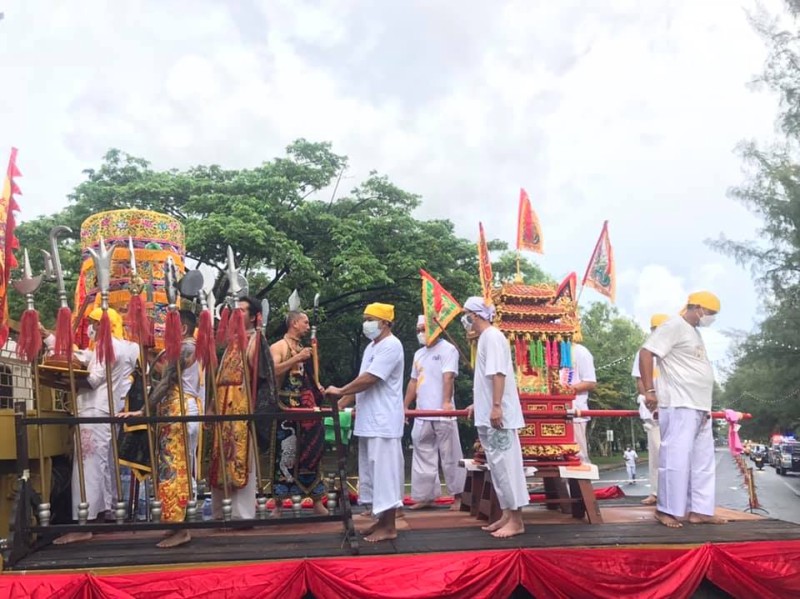
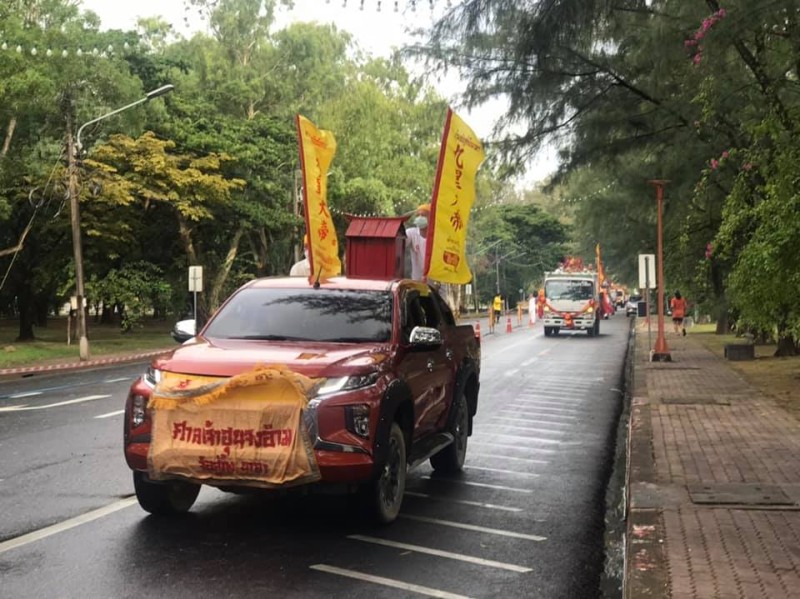
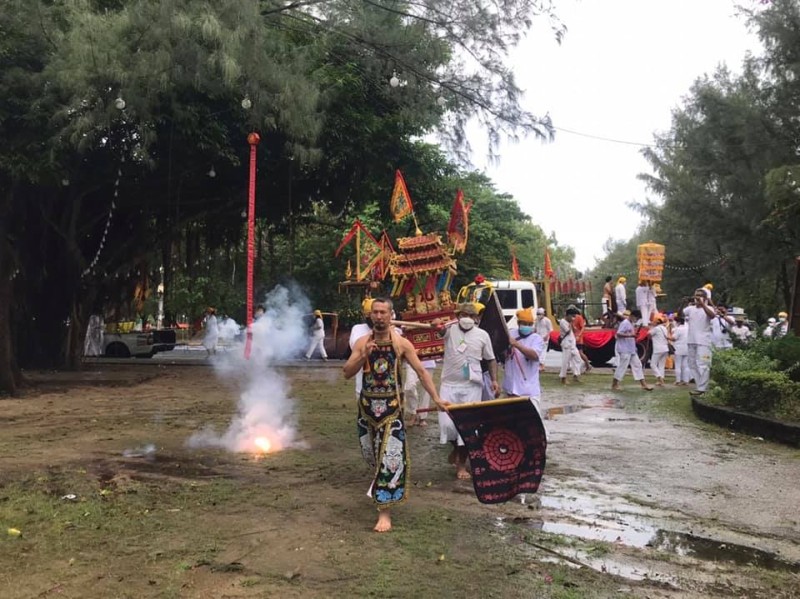
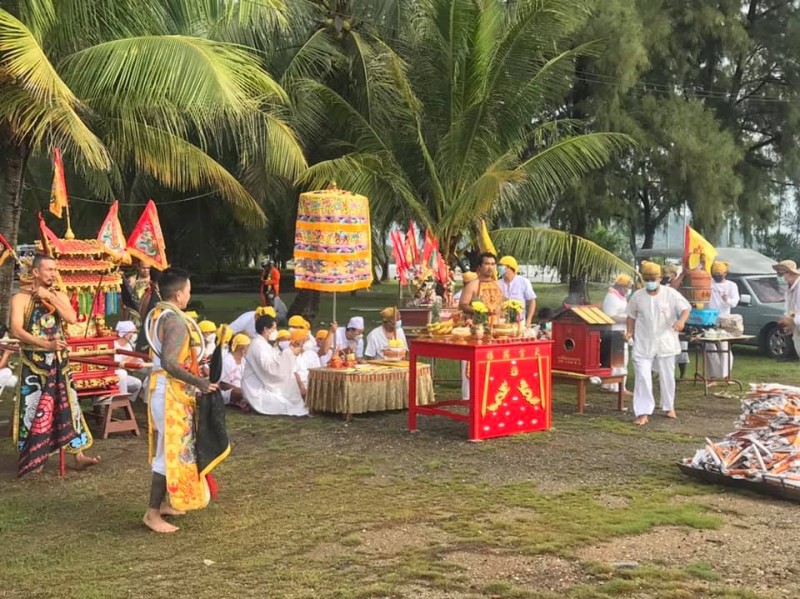
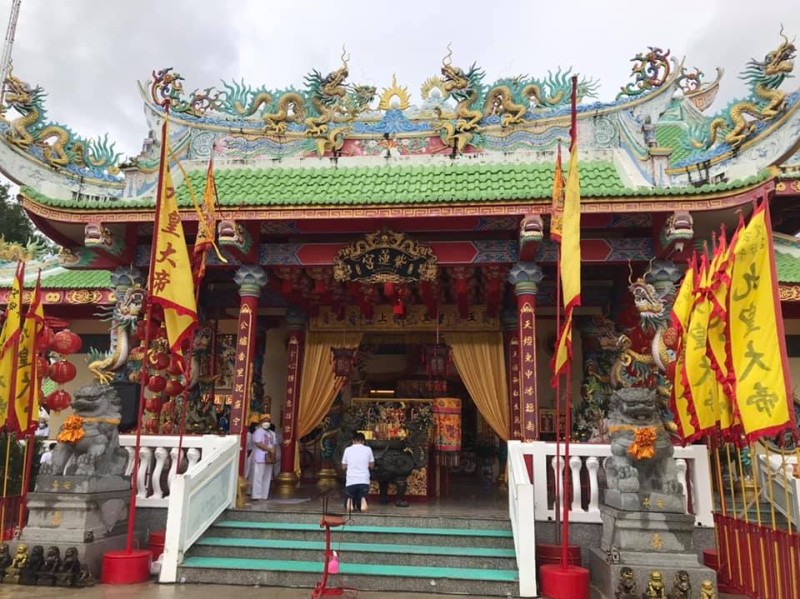
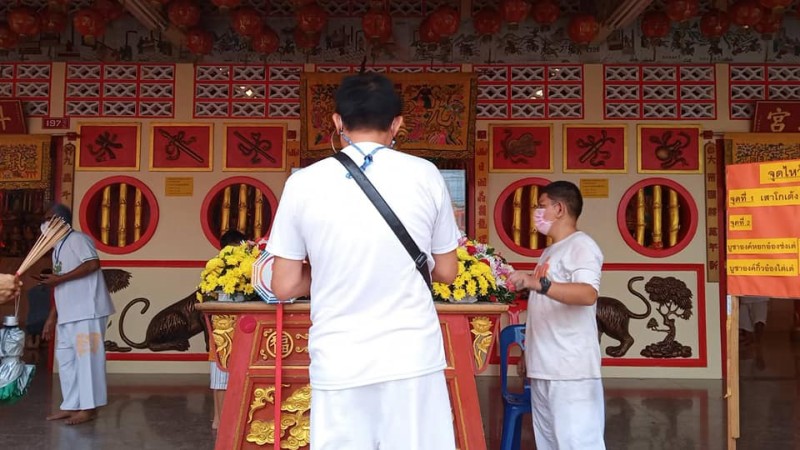
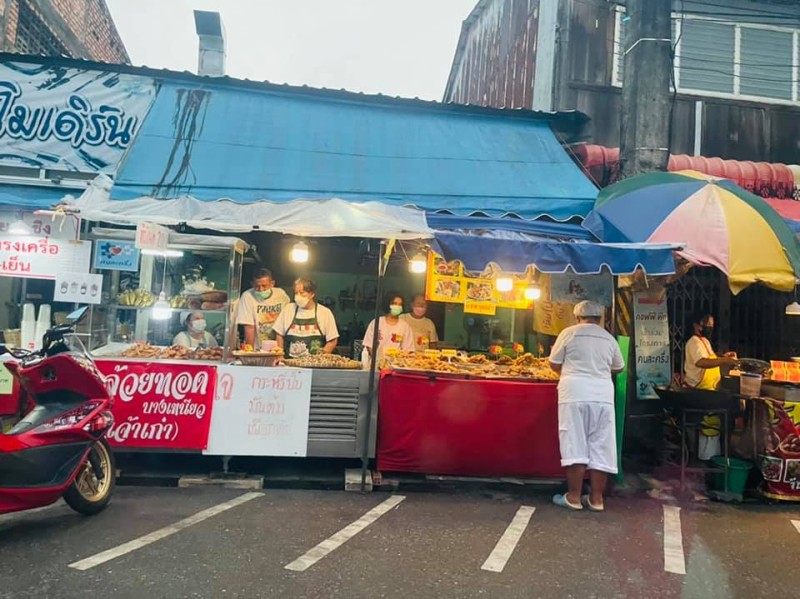
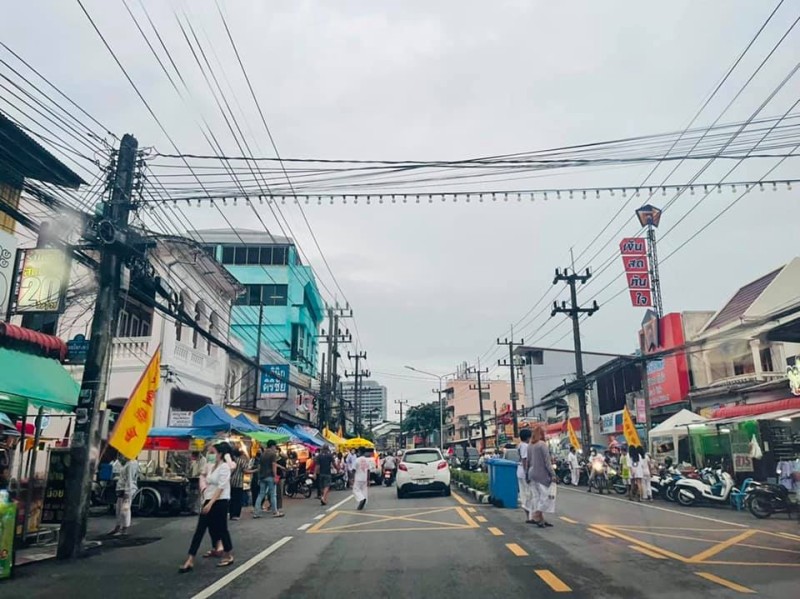
The motorcade proceeded from the shrine on Chao Fa Luang Rd, north along Chao Fa West Rd, right onto Wirat Hongyok Rd and into Phuket Town, where the procession continued south to Saphan Hin.
In stark contrast to years past, very few people lined the streets to watch the procession pass by.
In accordance with requests from provincial officials for Ma Song and their devotees to abide by COVID prevention measures, the shrine asked all Ma Song to avoid wearing any piercings, the likes of which had previously made the Phuket Vegetarian Festival famous around the world, with spirit mediums sporting beach umbrellas, bicycles and even handguns protruding through their faces.
The traditional practice of face piercings is to carry sacred objects, such as blessed sceptres, rods and sometimes swords.
Of the four to five Ma Song who took part in the street procession this morning, none wore face masks, though all their assistants did.
The street procession scheduled for tomorrow, regardless of the heavy downpours and strong winds across the island, is for devotees and Ma Song from the Bang Khu Shrine in Koh kaew to proceed along the the streets of Phuket Town.
The turnout of spectators is expected again to be very low, as the Vegetarian Festival this year suffers its worst attendance in years.
The atmosphere around many of the participating Chinese shrines across the island has been quiet, with few people even venturing out to sample the special vegetarian dishes sold by vendors during the annual festivities.
Following the example set by Jui Tui Shrine on Ranong Rd in Phuket Town, which serves as one of the busiest shrines during the festival, many participating shrines this year have asked vendors to not even set up stalls along the streets in front of the shrines as a precaution against causing a cluster of COVID infections.
A QUIETER TIME
The Phuket Vegetarian Festival over the years has inspired a host of many similar festivals now held across the country for Thai-Chinese communities elsewhere to observe, including in the Yaowarat area in Bangkok.
The “vegetarian festival season” had previously served as a key event on the domestic tourism calendar, and “has always been a major drive in economic growth”, reported state news agency NNT.
However, the University of the Thai Chamber of Commerce (UTCC) is expecting this year’s festival not to be as lively as before due to economic strains from the COVID-19 pandemic, said the NNT report.
“The UTCC’s Center for Economic and Business Forecasting has just released the results of its survey on consumers’ spending behavior for this year’s vegetarian festival, during which weaker economic activities can be expected,” it said.
The survey, conducted with 1,208 participants across the country, showed that only 39.1% of the respondents would be observing this festival this year, with 62.9% of respondents intending to observe the vegetarian diet for the entire festival, which by officials’ account is held from Oct 6-14. The actual closing of the festival will be on Oct 15, when the participating shrines lower the Go Teng poles.
“Most people responded they would be making the same amount of spending for their grocery items, while some intended to leverage on the government’s aid campaigns, particularly the 50:50 co-pay campaign where up to half of their individual purchases could be subsidized,” NNT reported.
Only 10.1% of the respondents said they intended to visit places of worship this year, mostly within Bangkok and neighbouring provinces.
UTCC President Thanawat Polvichai said total spending from this year’s vegetarian festival across the country is expected to be around B41.15 billion, which is some 14.5% lower than last year’s figure at B46.98bn.
The decrease in spending would be the first in 14 years since 2008, Mr Thanawat said.