


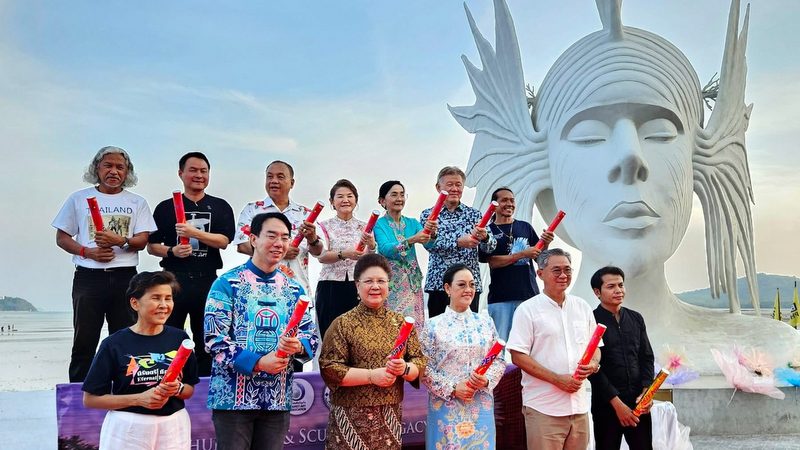
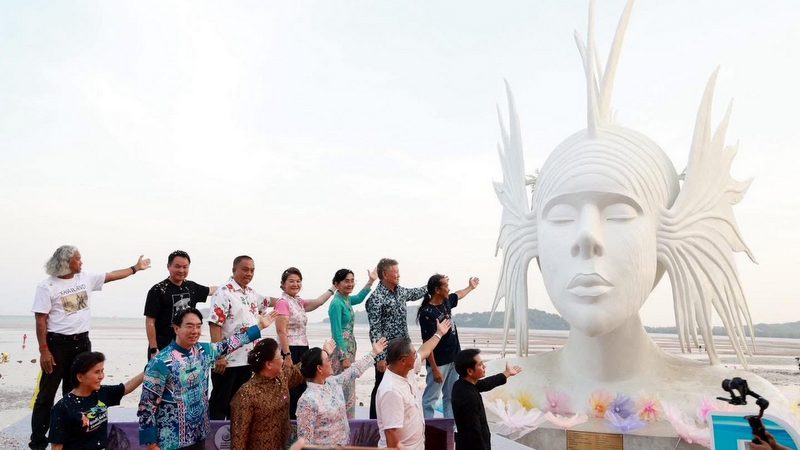
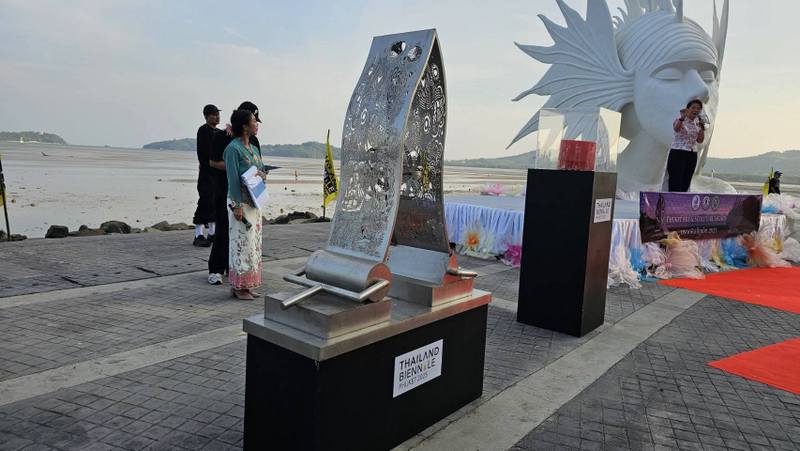
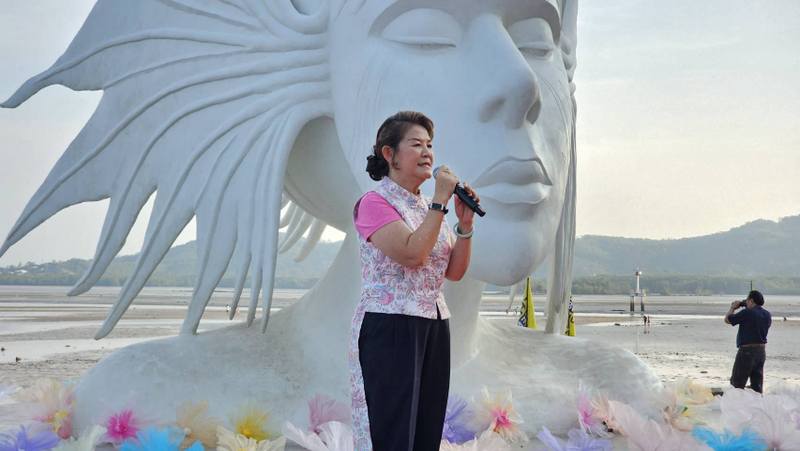
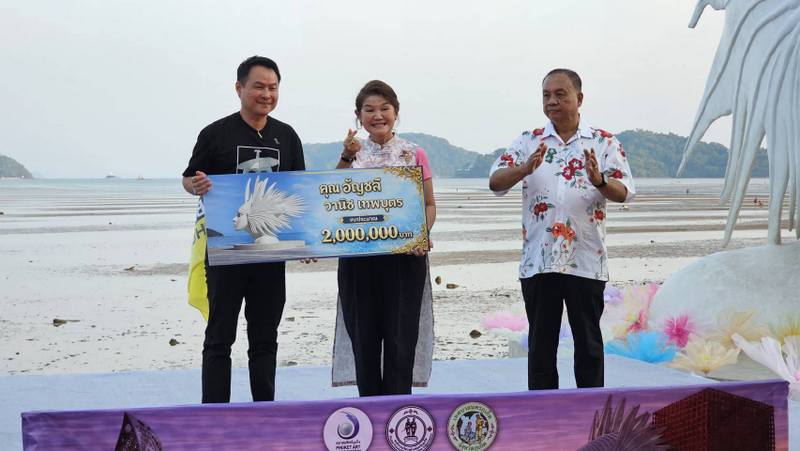
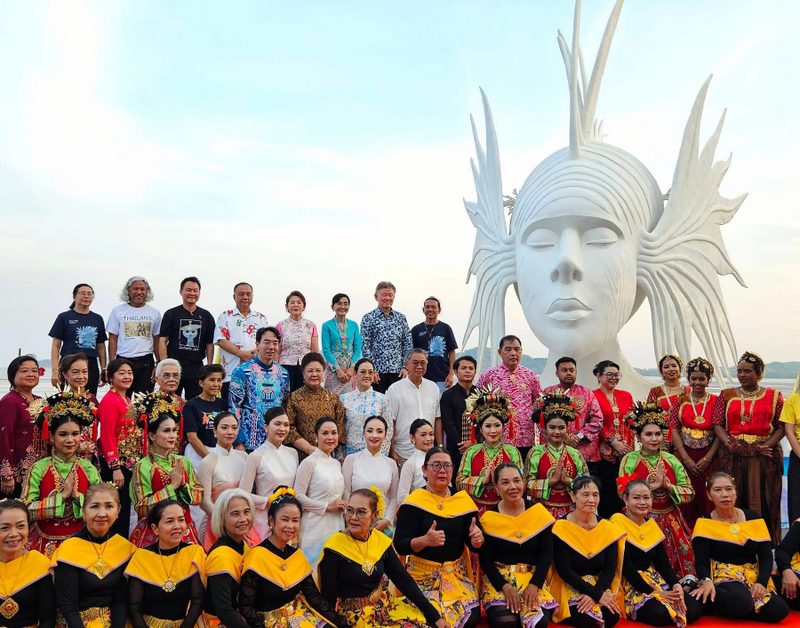
The handover ceremony, held at Saphan Hin Cape on Sunday (Apr 5), formed part of the “Phuket Artistic Heritage 2025” initiative linked to the upcoming Thailand Biennale Phuket 2025, said an official report of the handover.
The event was presided over by Phuket Arts Association President Anchalee Vanich Thepbutr and attended by senior officials including Phuket Provincial Administrative Organisation (PPAO) President Rewat Areerob, Phuket City Mayor Suppachoke Laongphet and Phuket Provincial Culture Officer Puangphaka Chaowai, along with representatives from government and the private sector.
The three sculptures ‒ now under the care of Phuket City Municipality ‒ are ‘Dhewina’, ‘Rabyrinth #2’ and ‘Richest Roller’.
Each piece was supported by major funding “contributions”, said the report.
‘Dhewina’ was created by a B2 million donation from the Phuket Arts Association, with Ms Anchalee credited for the donation.
‘Rabyrinth #2’ was created by another donation of B2mn from the Merlin Group, while ‘Richest Roller’ was funded through a B2mn contribution from the PPAO, with an additional B500,000 donated by Ms Anchalee.
Of note, Ms Anchalee and leading officials have so far declined to specify how much of the reported B59mn budget that has been poured into the Thailand Biennale arts expo was handed out to artists and local organisations.
Yet, Culture Minister Sabida Thaiseth has claimed that the Thailand Biennale in Phuket drew more than 2.4 million visitors and generated B28.97 billion in economic activity.
Meanwhile, the three works of art handed over are intended to become permanent fixtures in Phuket Town, “contributing to a growing public art landscape tied to the Biennale programme”, said the official report.
Speaking at the ceremony, Mr Rewat highlighted the role of public funding in supporting cultural initiatives as part of broader urban development, while Mayor Suppachoke said the municipality is committed to ensuring the long-term preservation and maintenance of the artworks.
Ms Anchalee said the project reflected a wide-ranging collaboration between artists, government agencies, private sponsors and the local community.
“I firmly believe that art can create and transform cities,” she said. “This success comes from cooperation across all sectors ‒ from artists and sponsors to public agencies and the community.”
She also acknowledged support from the Ministry of Culture, the Office of Contemporary Art and Culture, Biennale organisers and local stakeholders involved in coordinating artists and funding.