



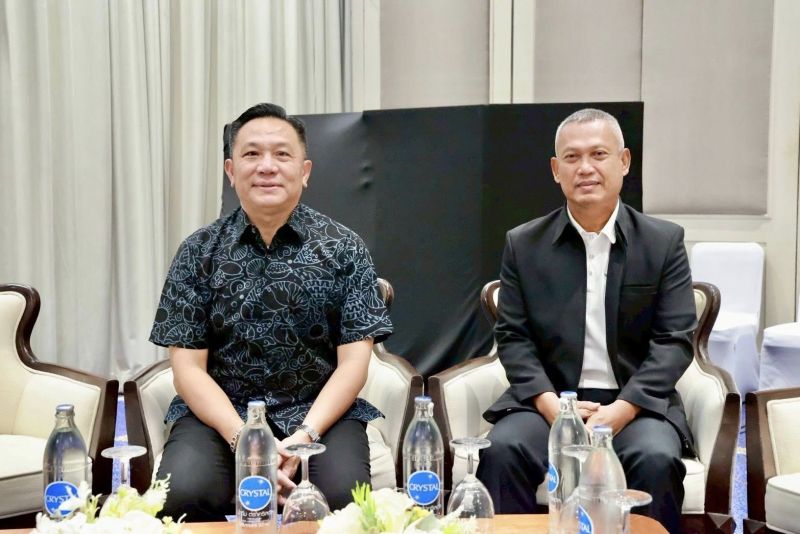
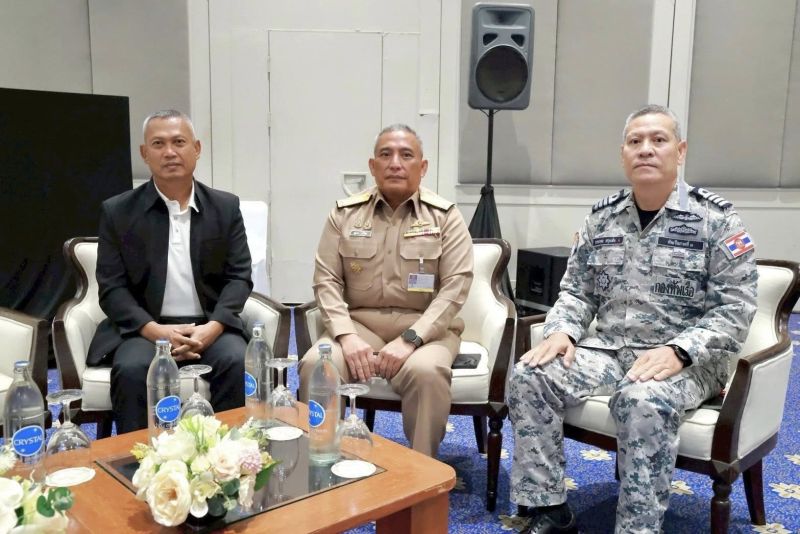
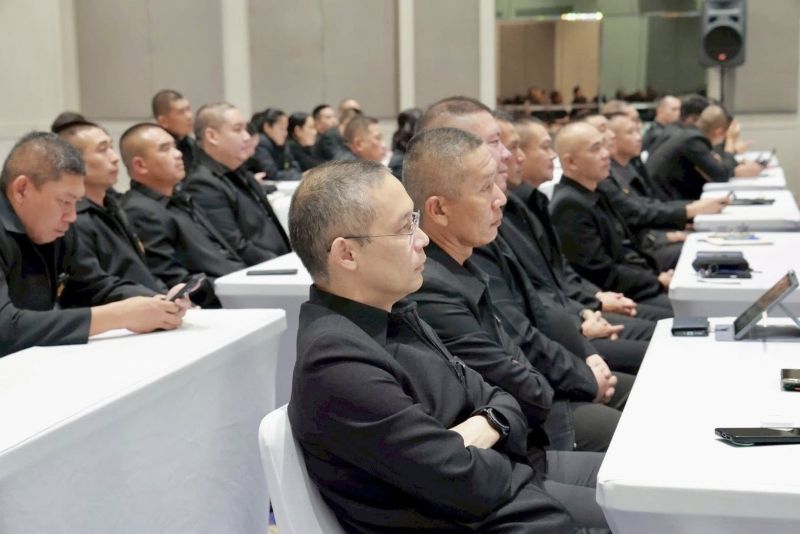
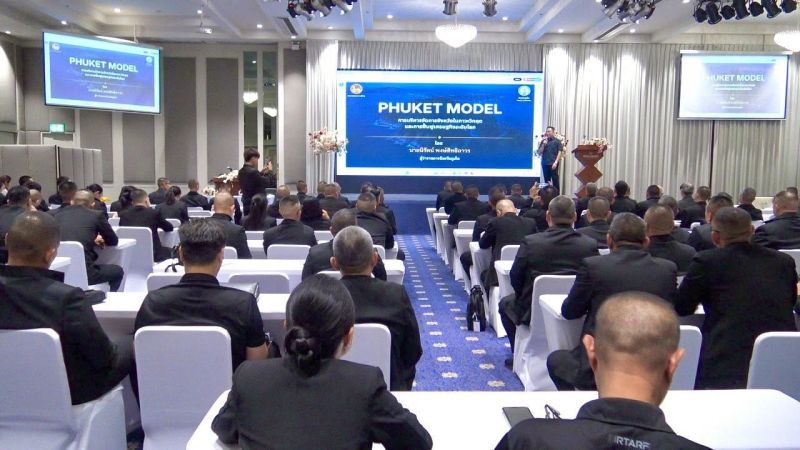
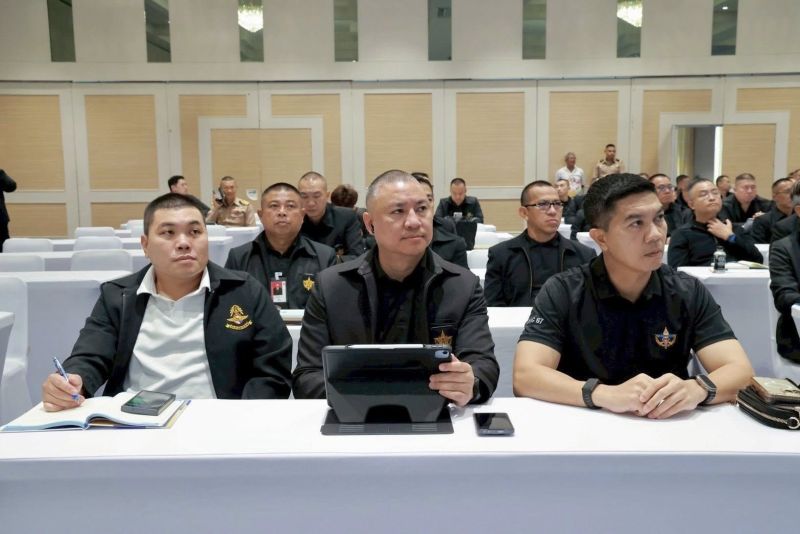
Speaking to participants of the 67th Military Staff Officer Course and the 7th Joint Staff Officer Course at the Royal Phuket City Hotel, Governor Nirat outlined the province’s approach to crisis management, economic development and inter-agency cooperation.
“Phuket’s strength lies in its adaptability,” Governor Nirat said, citing the island’s response to fluctuations in international tourism markets.
He explained that when arrivals from traditional European markets declined, Phuket successfully expanded into emerging markets such as India and the Middle East, helping offset seasonal downturns and maintain tourism revenue.
The governor also highlighted Phuket’s resilience during the low season, noting that the island’s changing weather patterns continue to attract visitors even during the rainy months.
As an example of the importance of maintaining reliable transport links, stressing that year-round aviation connectivity remains essential to Phuket’s economy.
Governor Nirat told the audience that Phuket generates annual economic activity of about B500 billion.
Of that amount, only around B20bn leaves the province, while more than B480bn continues to circulate within the local economy, Gov Nirat claimed.
He said accommodation and food services each account for roughly 30% of economic activity, reflecting Phuket’s high levels of tourism-related spending.
Despite the strong economic performance, Governor Nirat identified increasing domestic production as a major challenge. He said greater use of locally produced goods would help spread income to other provinces while reducing dependence on imported products.
Among the examples cited were seafood imports, including grouper from Myanmar and deep-sea pomfret from Sri Lanka. He encouraged greater promotion of locally produced products, including Phuket lobster, to strengthen the province’s economic competitiveness.
Turning to crisis management, Governor Nirat said cooperation between agencies was essential.
“The key in a crisis is cooperation and teamwork,” he said, adding that strong working relationships should be built before emergencies occur and that all sectors must work within the framework of the law.
He also outlined a three-tier model for cooperation between civilian authorities and the military, with the armed forces serving as the “frontline”, the administrative sector acting as the “backline”, and local administrative organisations forming the “deepline” responsible for supporting management and implementation at community level.
Governor Nirat said effective coordination between the three levels would improve national development and crisis response capabilities.
The lecture formed part of a study tour programme for 160 participants, including military officers, police officers, civil servants, state enterprise employees and officers from friendly nations including Malaysia and Indonesia.
The programme is designed to strengthen understanding of military administration, national strategy and joint operations while encouraging cooperation between agencies involved in governance, security and public administration.