


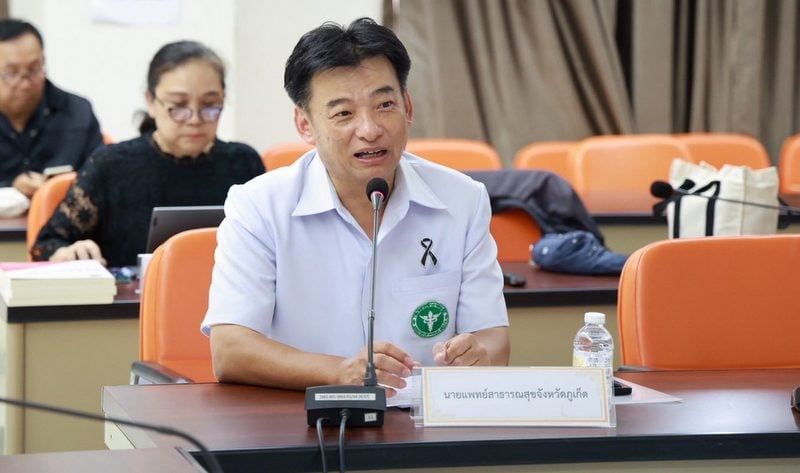
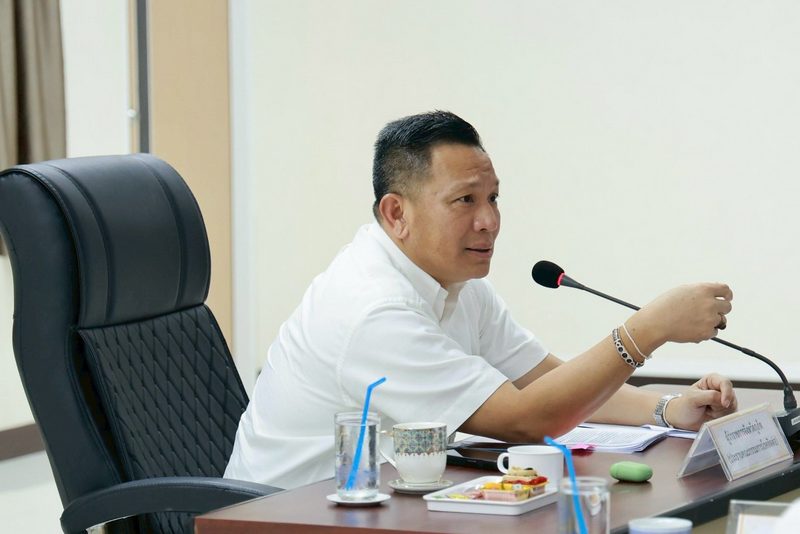
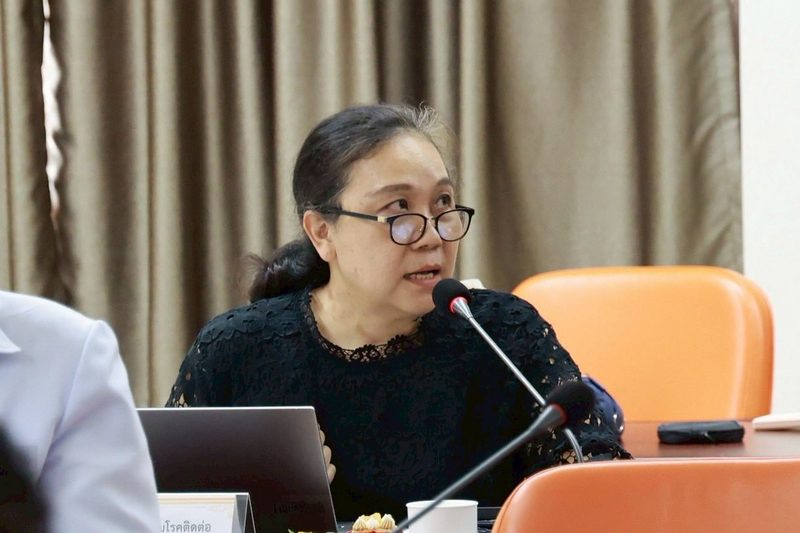
The measures were discussed yesterday (May 26) during the first 2026 meeting of the Phuket Provincial Communicable Disease Committee, chaired by Phuket Governor Nirat Pongsitthaworn at the Phuket Provincial Public Health Office (PPHO).
Governor Nirat said Phuket must act as a frontline defence because of the island’s status as a major international gateway with numerous direct international flights.
“We have direct experience from the COVID-19 event, so we must not be complacent,” he said.
“We have strong emergency response and surveillance measures in place to prevent further damage.”
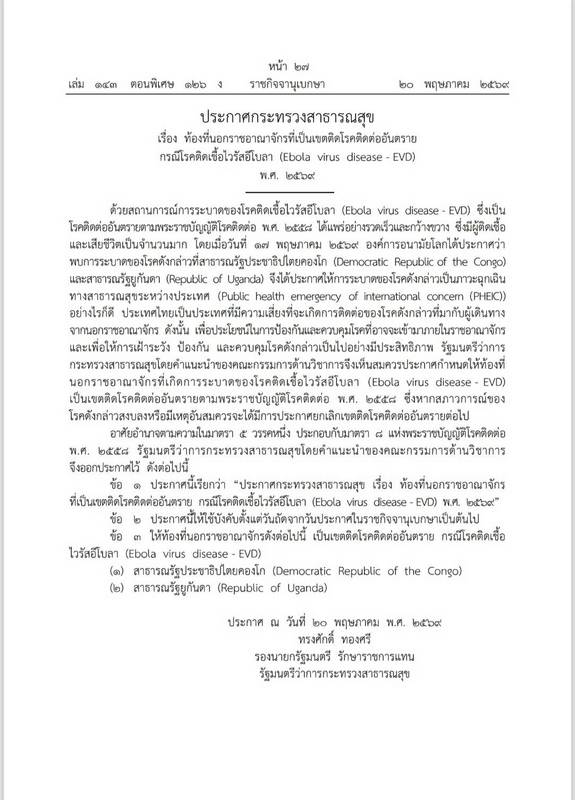
The meeting followed a Ministry of Public Health directive issued after the World Health Organization (WHO) declared Ebola outbreaks in the Democratic Republic of the Congo and Uganda a Public Health Emergency of International Concern (PHEIC).
The Royal Gazette on May 20 published the ministry’s announcement officially designating the Democratic Republic of the Congo and Uganda as areas affected by a dangerous communicable disease under Thailand’s Communicable Diseases Act, effective from May 21.
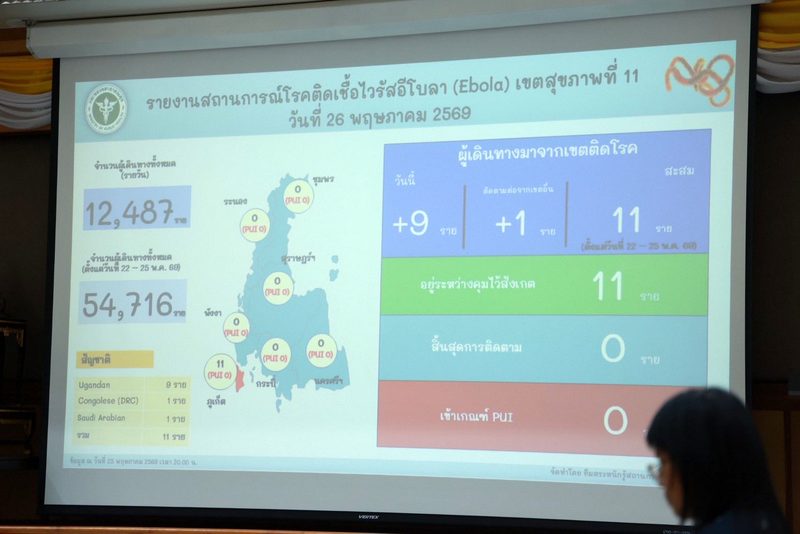
According to PPHO Chief Dr Dusadee Kongtrakulsap, around 11 travellers from high-risk countries are currently staying in Phuket.
“All are normal tourists without symptoms and are under close monitoring by authorities,” he said.
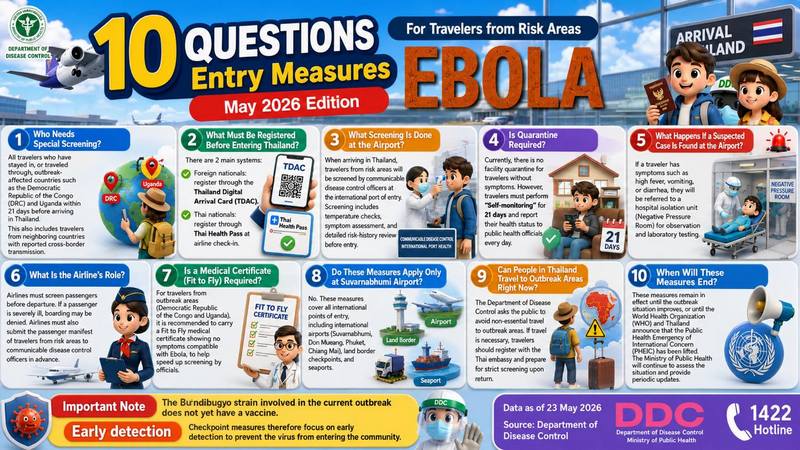
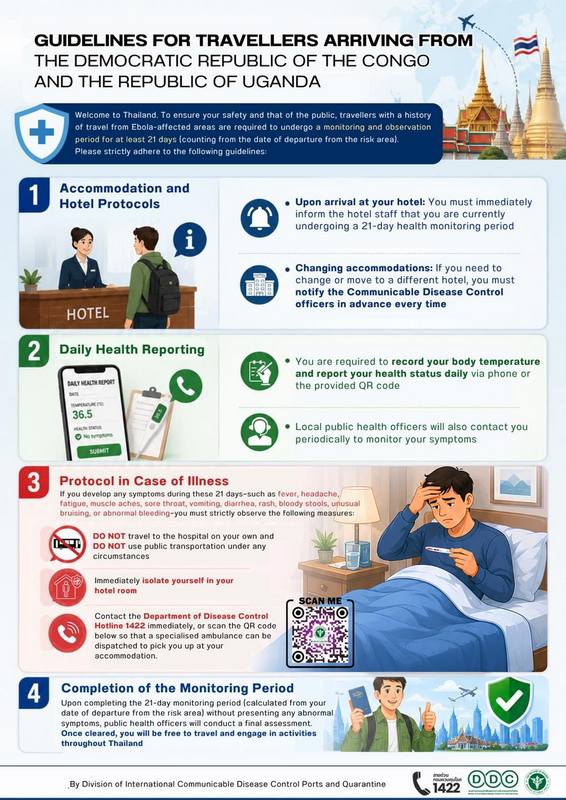
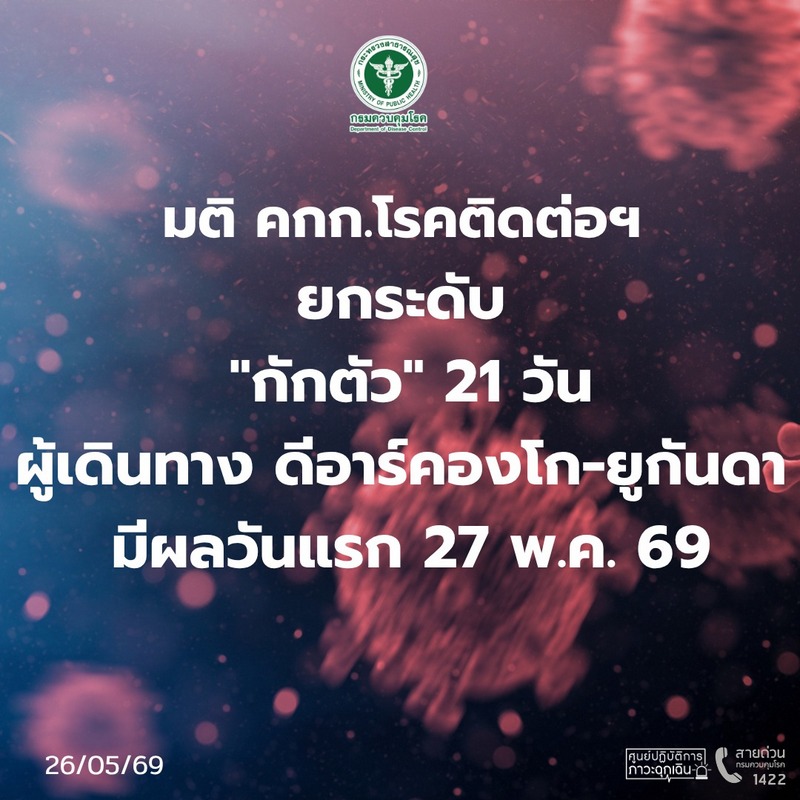
One of the strictest measures now being enforced is a mandatory 21-day quarantine for travellers arriving from high-risk countries.
Authorities are also preparing for a possible national-level adjustment that would require flights from high-risk countries to land only at Bangkok’s Suvarnabhumi Airport, with Phuket prepared to manage any remaining arrivals under enhanced monitoring procedures.
To make the understanding abundantly clear, Dr Dusadee at the meeting yesterday repeatedly stressed that Ebola spreads very differently from COVID-19.
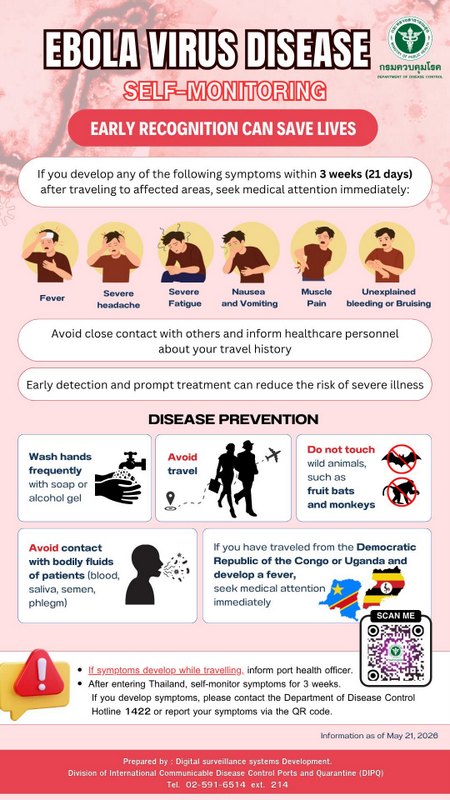
Ebola is not airborne and is not spread through coughing or sneezing. Instead, transmission occurs through direct contact with blood, bodily fluids or secretions from infected patients, with the highest risk typically among close caregivers and family members, Dr Dusadee explained.
The disease has an incubation period of between two and 21 days, he noted.
While there is currently no specific cure for Ebola, treatment focuses on supportive care and survival depends heavily on the patient’s immune response, he added.
Historical mortality rates have ranged from 39.5% to 66%, though recent outbreaks in the Democratic Republic of the Congo have recorded lower fatality rates of about 11% to 32.5%, he said.
Despite the heightened preparedness measures, Dr Dusadee stressed that there are currently no confirmed or suspected Ebola cases in Thailand.
Phuket Provincial Administrative Organisation (PPAO) President Rewat Areerob said local administrative bodies and the private sector were closely monitoring developments and remained confident in the public health system following lessons learned during the COVID-19 pandemic.
Both Governor Nirat and Mr Rewat urged residents and tourists to rely only on official information from the Phuket Provincial Public Relations Office and the PPHO to avoid panic caused by rumours or misinformation.
Meanwhile, despite the increased preparations, the PPHO has yet to issue any direct public warning notices regarding Ebola.
The Ministry of Public Health and the Department of Disease Control have instead focused on enhanced screening procedures at international entry points, including airports and border checkpoints.
Under the national measures, airlines must notify passengers arriving from affected countries to register travel details before departure. Foreign travellers are required to use the Thailand Digital Arrival Card (TDAC) system, while Thai nationals must register through the Thai Health Pass system.
Communicable disease control officers are also conducting temperature checks, health assessments and monitoring travellers from affected countries for 21 days after arrival.
The Department of Disease Control has advised Thai citizens to avoid non-essential travel to outbreak areas and urged anyone returning from high-risk countries who develops fever or unusual symptoms within 21 days to seek immediate medical attention and disclose their travel history.