


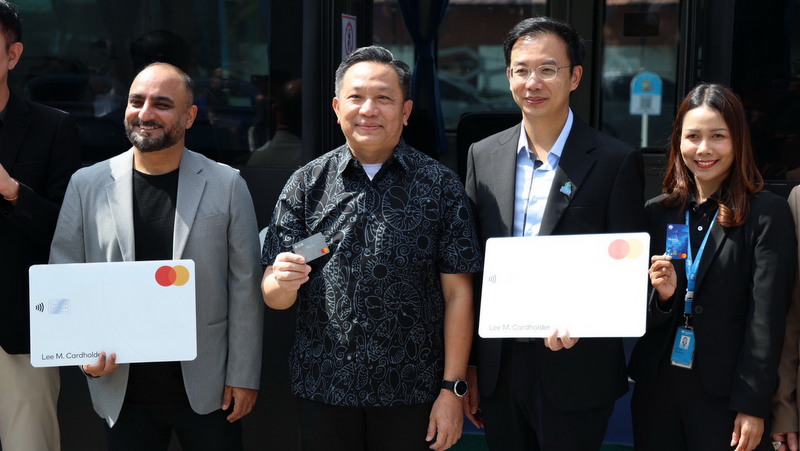
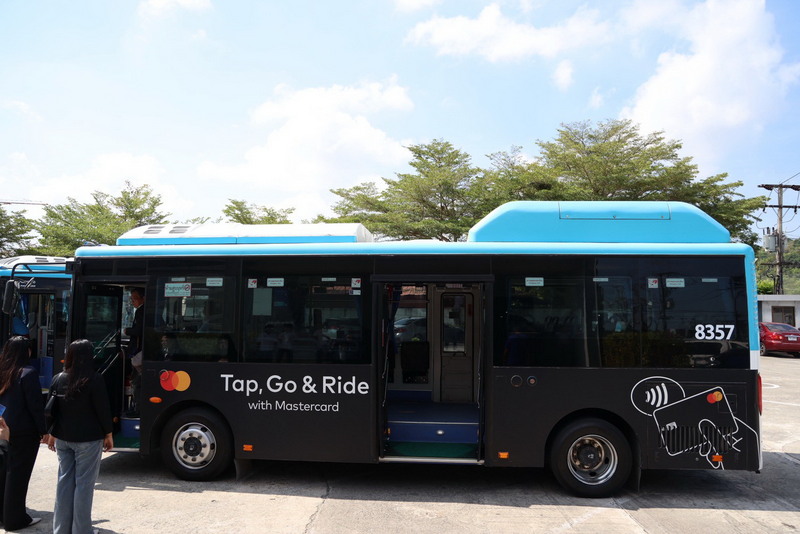
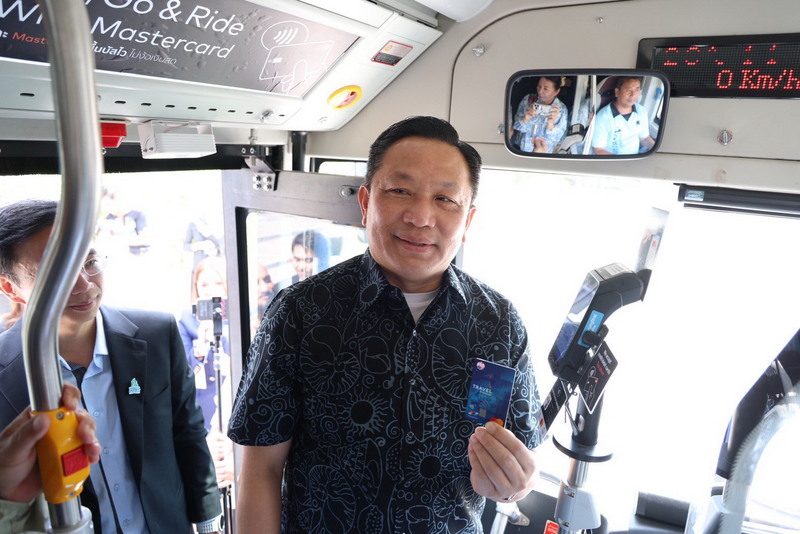
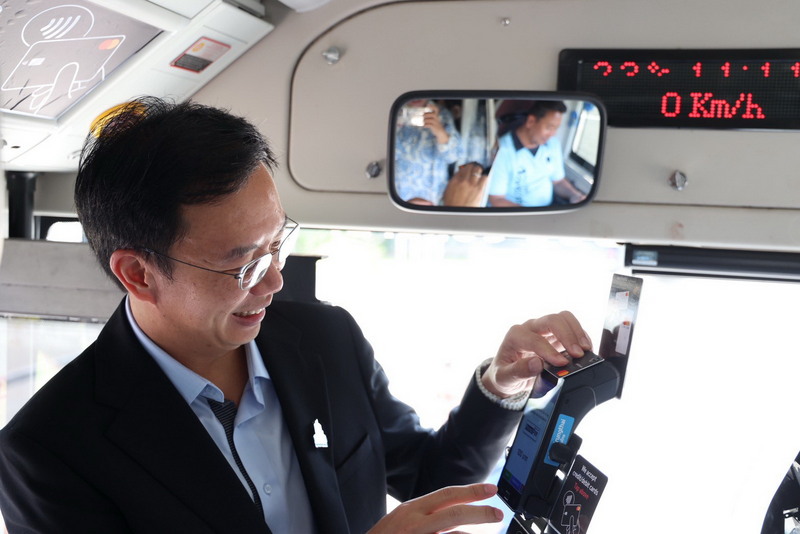
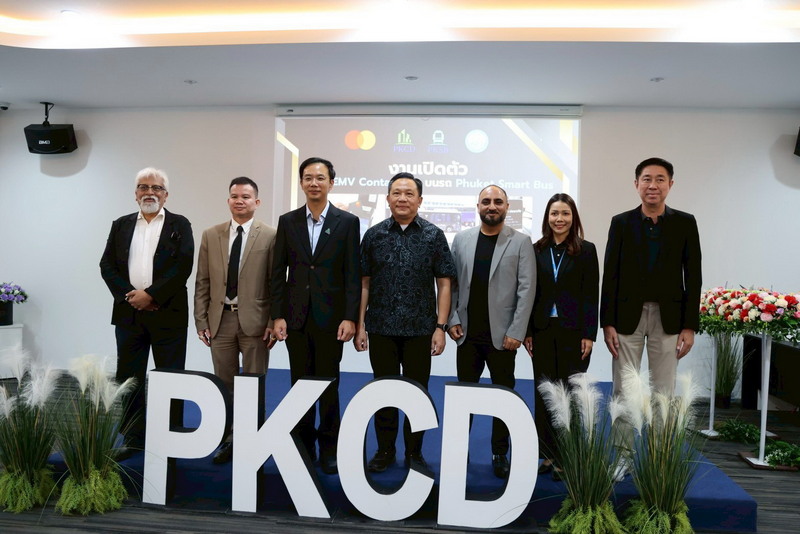
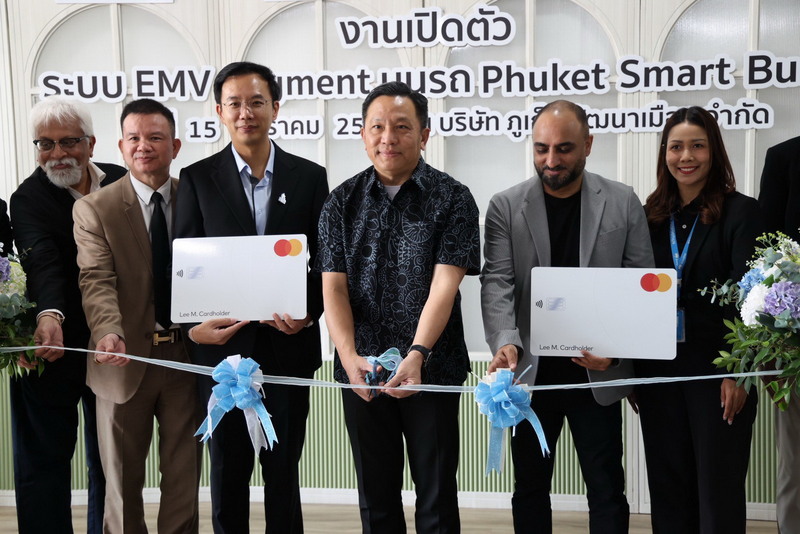
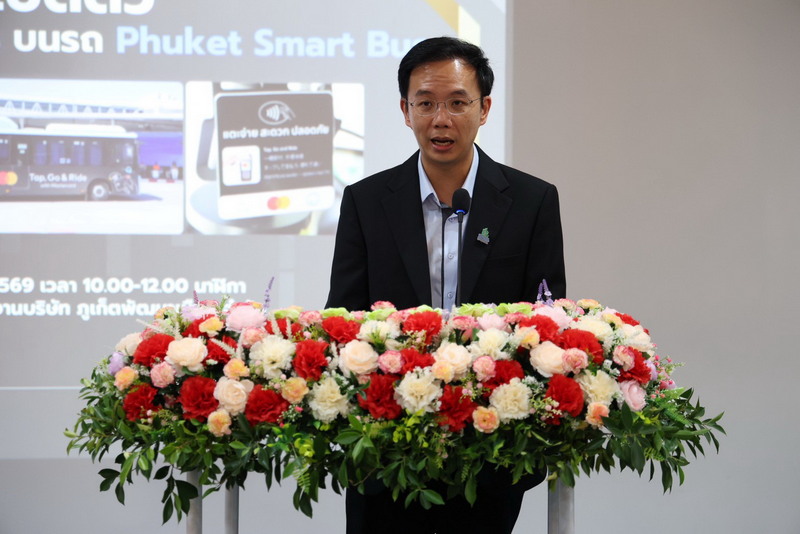
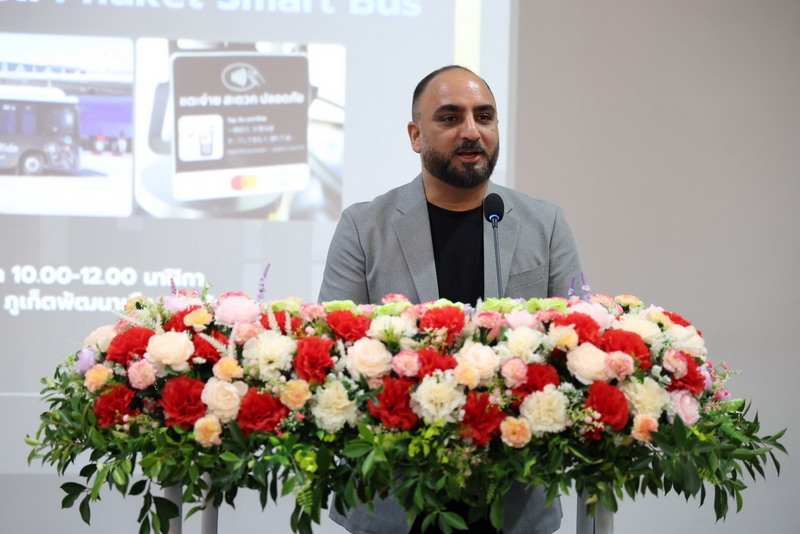

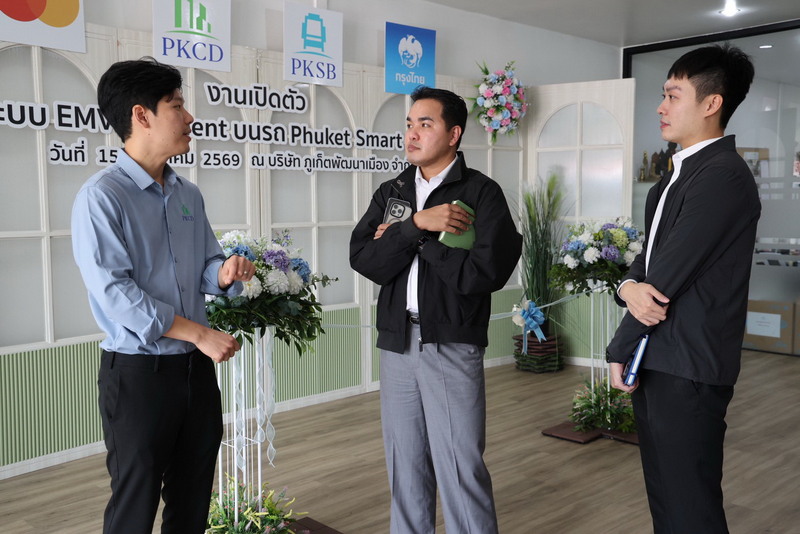
The EMV Contactless fare payment system was formally launched yesterday (Jan 15) at a ceremony presided over by Phuket Governor Nirat Pongsithavorn, together with Phuket City Development Co Ltd (PKCD) CEO Waithat Upatisring, representatives from government agencies, the private sector, financial institutions and the media.
Governor Nirat said Phuket’s status as one of Thailand’s leading global tourist destinations made the development of a modern, convenient, safe and environmentally friendly public transport system essential to the province’s long-term competitiveness.
“Tourist and resident behaviour is changing. Convenience, speed and safety in travel and spending are now key factors that influence satisfaction and travel decisions,” he said. “Introducing EMV Contactless ‘Tap & Go’ payments on public buses improves transport efficiency and clearly demonstrates Phuket’s readiness to move towards a cashless society.”
The Governor noted that the system aligns with national smart city policy and sustainable tourism goals, while also delivering tangible improvements to quality of life through the use of digital technology.
He also praised PLCD and Phuket Smart Bus Co Ltd for their continued efforts to modernise the province’s public transport system, and thanked Mastercard (Thailand) Co Ltd for supporting the project. Krungthai Bank was acknowledged for maintaining the payment system and back-end infrastructure to ensure stability and security.
Executives from PKCD said public transport payment systems in Thailand have historically struggled to gain widespread acceptance. The introduction of open-loop contactless payments is intended to offer greater flexibility, reduce reliance on cash and better suit Phuket’s role as a major international tourism hub.
“Tourists will no longer need to carry large amounts of cash, which reduces risk and increases safety while travelling,” company representatives said, adding that the system would initially be monitored for stability before encouraging wider adoption across additional bus routes in the province.
They also confirmed that cooperation with Mastercard could be expanded into other areas in the future as part of broader digital development.
Usage figures for the Phuket Smart Bus continue to show steady growth. In 2024, approximately 430,000 passengers used the service, while numbers in 2025 are projected to rise to around 490,000, approaching the 500,000 mark.
Officials explained that usage patterns vary by route. The Airport–Rawai route is primarily used by tourists, while the Patong–Bus Terminal 1 route serves a mix of students, local residents and visitors. The Dragon Line is used by both locals and tourists, and there are plans to expand this route to Saphan Hin, Klong Ko Phi, Muang Chao Fa and Central shopping mall in the future.
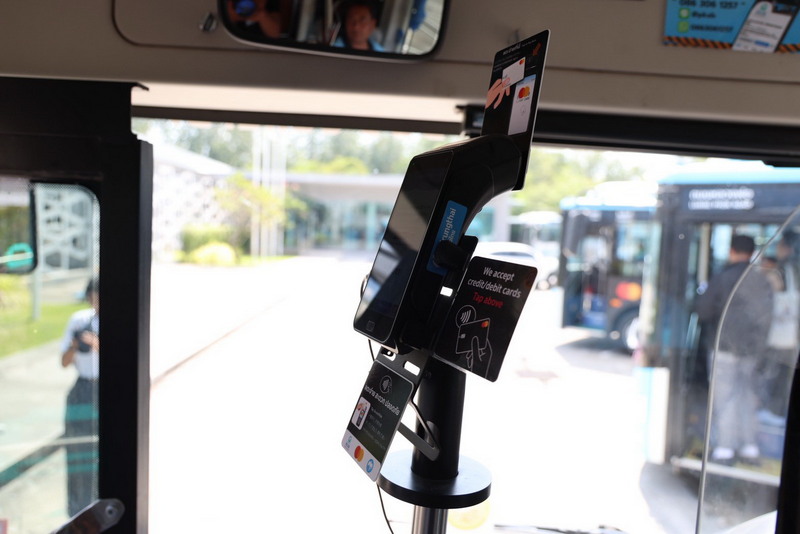
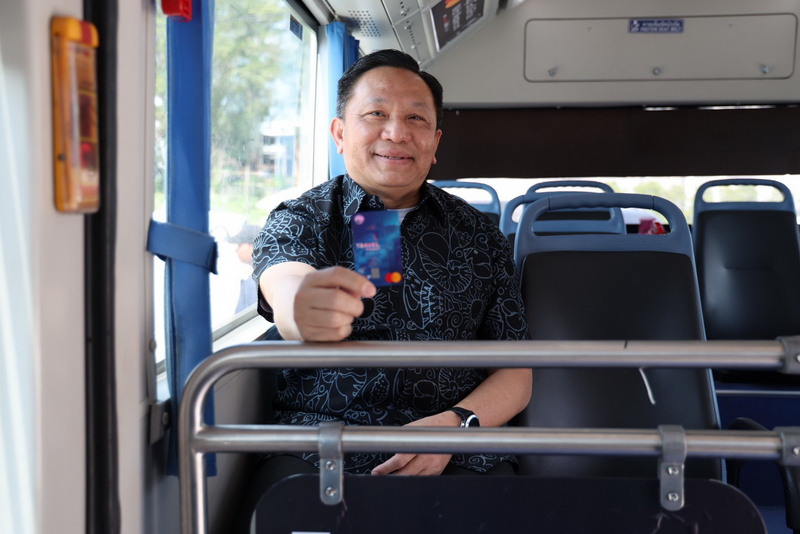
A representative from Mastercard said the launch of the EMV Contactless open-loop payment system allows passengers to use credit cards, debit cards or smart devices issued by most financial institutions for immediate ‘tap and go’ travel.
“Passengers do not need to carry cash, download an application or purchase a special transit card,” the representative said.
The EMV Contactless open-loop system is an international standard already in use in more than 390 cities worldwide, including London, New York, Singapore and Sydney. Phuket’s adoption of the system places it within a global network of cities offering seamless, interoperable public transport payments.
Officials said the move is expected to help reduce barriers for visitors, encourage greater use of public transport, decrease reliance on private vehicles and ease traffic congestion, while also supporting long-term sustainability goals.