



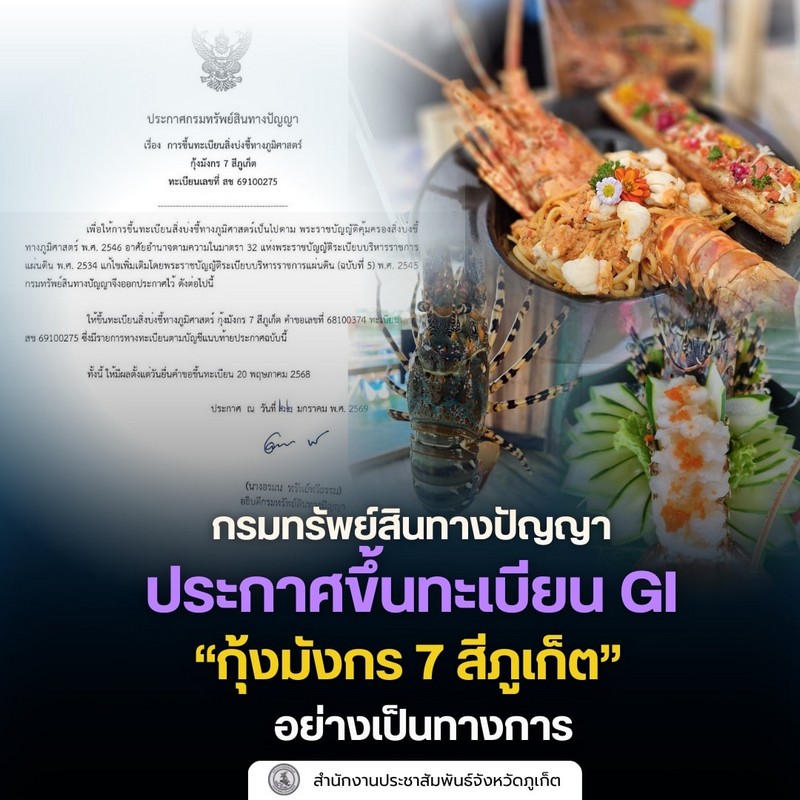
The registration was formally announced on Jan 22 by Oramon Sapthaveetham, Director-General of the Department of Intellectual Property (DIP), confirming that the Phuket seven-coloured lobster possesses unique characteristics of origin, quality and reputation that cannot be replicated elsewhere.
The GI certification guarantees that only lobsters raised in Phuket under approved standards can be marketed under the name, strengthening consumer confidence and increasing the product’s value for local producers.
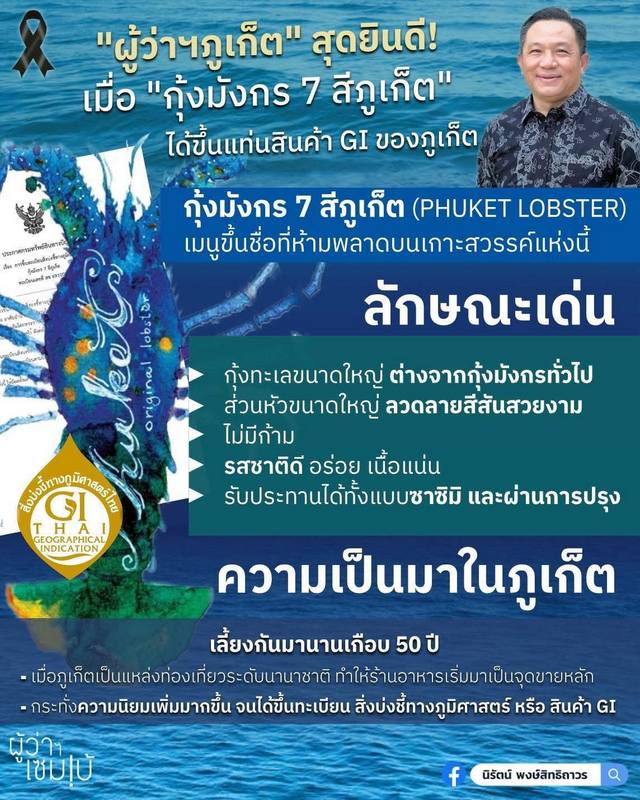
Phuket Governor Nirat Pongsitthaworn welcomed the announcement, describing the GI registration as both a source of pride for the province and a practical economic benefit for local communities.
The governor noted that the designation would help increase income for local fishermen and aquaculture operators, while also supporting the development of premium seafood menus across restaurants, hotels and tourist venues on the island.
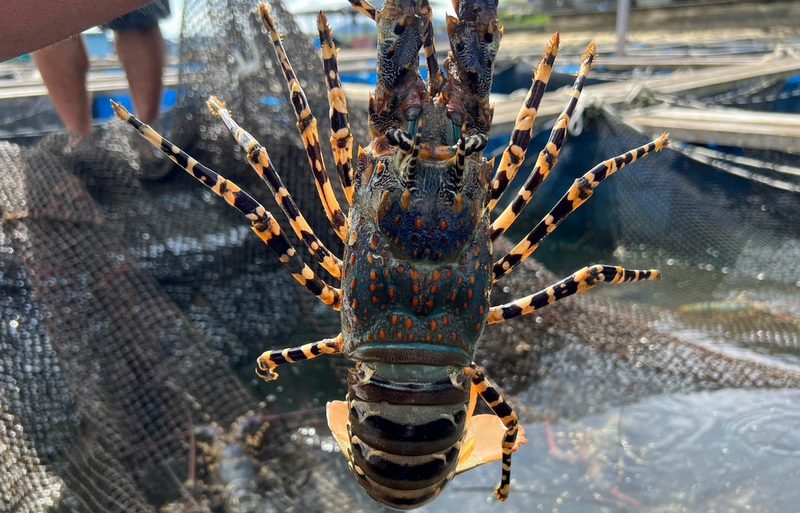
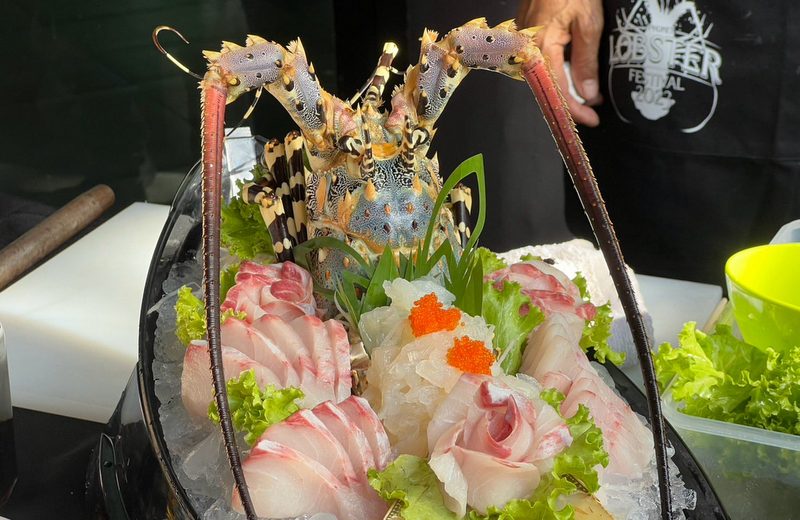
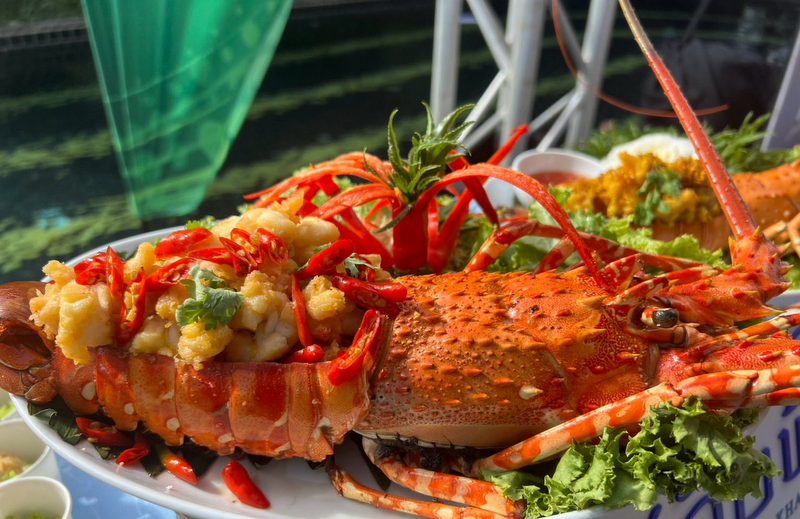
Often referred to internationally as ‘Phuket Lobster’, the seven-coloured lobster is known for its large size, distinctive colourful shell patterns, clawless form and firm, flavourful flesh. It is commonly served both cooked and as sashimi, and has long been regarded as a signature local delicacy.
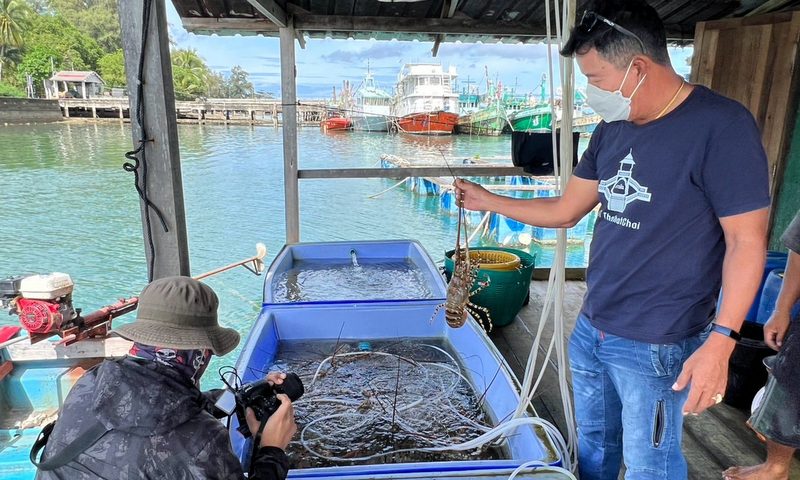
According to provincial officials, the lobster has been farmed in Phuket for nearly 50 years, gaining prominence as the island developed into a major international tourism destination. Its rising popularity and premium pricing ‒ frequently exceeding B1,800 per kilogramme ‒ prompted efforts to secure GI protection to safeguard its identity and reputation.
Beyond economic value, officials said the GI registration reflects a broader strategy to use Phuket’s local products as soft power across multiple dimensions, including gastronomy tourism, coastal community lifestyles, local wisdom in aquaculture and conservation, and sustainable resource management.
The certification is expected to support food-focused tourism experiences while promoting collaboration between government agencies, private operators and educational institutions to improve innovation and environmental standards in aquaculture.
Phuket’s push to secure GI status for the lobster has been underway for several years. In November 2023, officials released 700,000 lobster larvae off Koh Thanan as part of the ‘Phuket Seven-Coloured Lobster Bank’ project, aimed at replenishing stocks and supporting sustainable farming practices. The initiative targeted the release of 1.7 million young lobsters into Phuket waters.
Inspections of lobster farms in Mai Khao and other areas followed in late 2023, led by officials from the Ministry of Commerce and the Phuket Fisheries Office, as part of preparations for the GI application.
The seven-coloured lobster becomes the second aquatic product from Phuket to receive GI status, following the Phuket pearl.
As defined by the World Intellectual Property Organization (WIPO), a geographical indication is a sign used on products that originate from a specific location and possess qualities or a reputation linked to that origin. GI protection allows authorised producers to prevent misuse of the name by products that do not meet approved standards.
Thailand has actively promoted GI registration nationwide under its ‘One Province, One GI’ policy, with well-known examples including Doi Tung coffee, Trang roast pork and Surat Thani oysters.
Provincial officials said the GI designation for the Phuket seven-coloured lobster not only protects a prized local product, but also strengthens Phuket’s international identity as a world-class destination with a distinctive culinary heritage.