


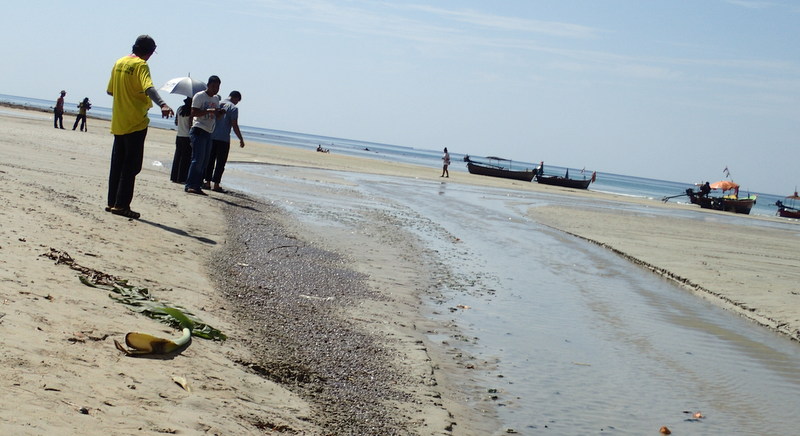
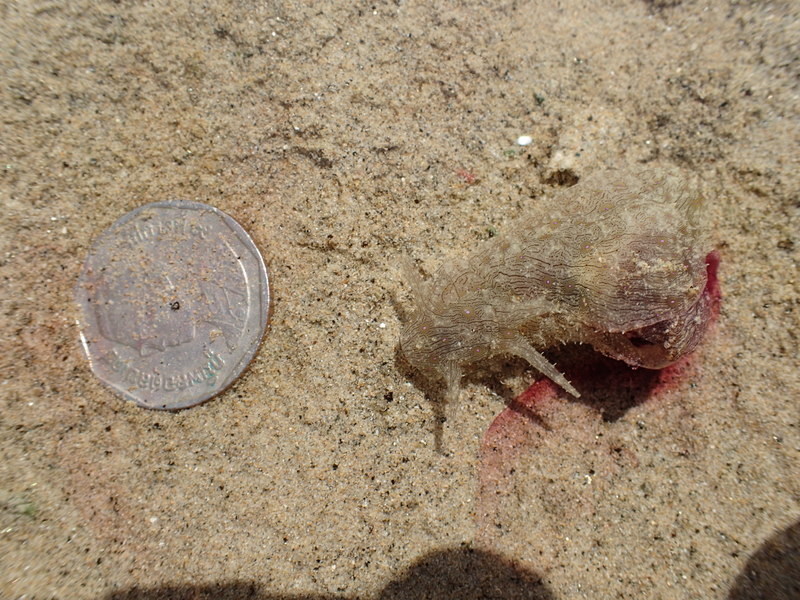
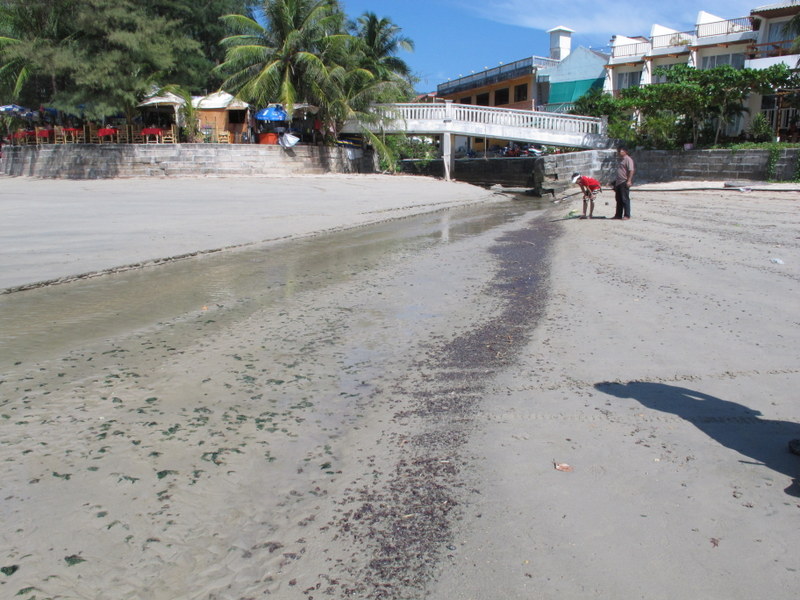
“The creatures, known as ‘sea hares’ or Stylocheilus striatus, died naturally. It is part of their lifecycle before their colony can bloom and thrive again,” said Somkiat Khokiattiwong, Chief of the Phuket Marine Biological Centre (PMBC).
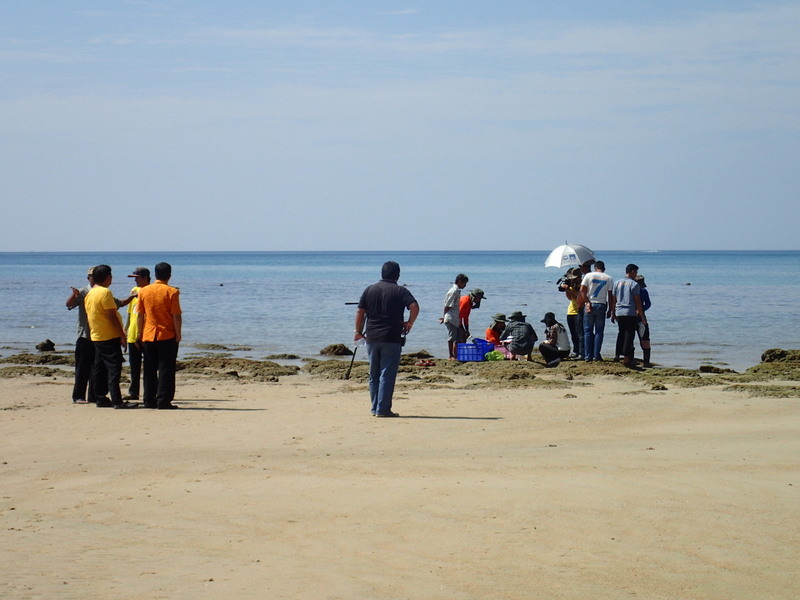
“We took samples and tested the water for pollutants, but the test results were within normal parameters,” he added, but declined to provide to The Phuket News a copy of the the water test results.
Local marine life experts Suphasit Boonpienpon, also of the PMBC, confirmed that water samples taken covered the area that would have affected the sea hares.
“Our sample area covered 500 meters along the beach, whereas the sea hares washed up along only 350m,” he said.
However, Mr Suphasit also declined to provide to The Phuket News a copy of the the water test results.
Yet he added, “I have records marking similar incidents in Prachuap Khiri Khan province (in 2009) and Bangsaen, Chonburi province.
“It has been hot in Phuket, and heat is a catalyst for accelerating their lifecycle,” he said.