


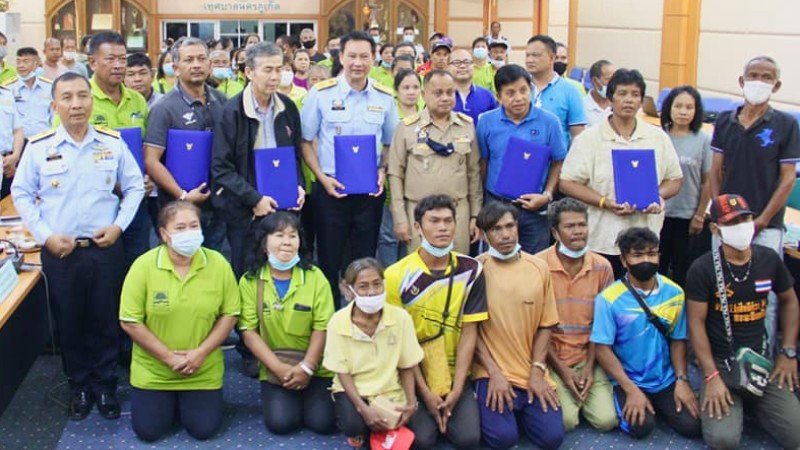
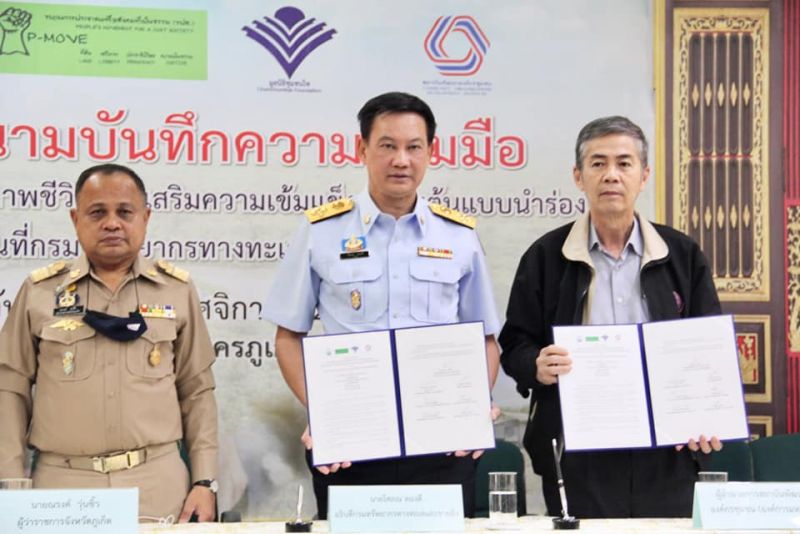
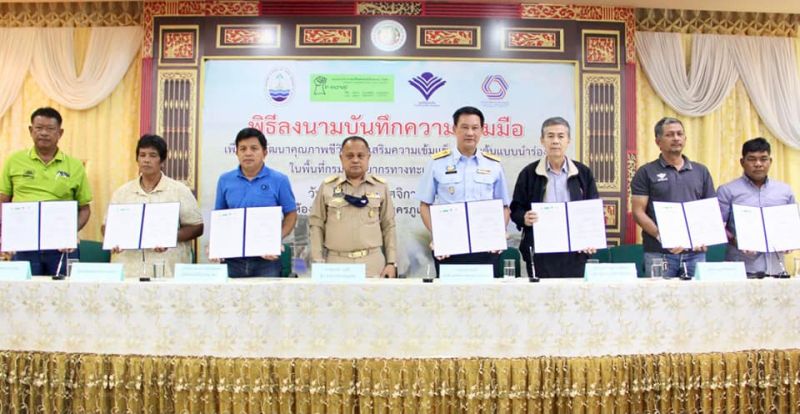
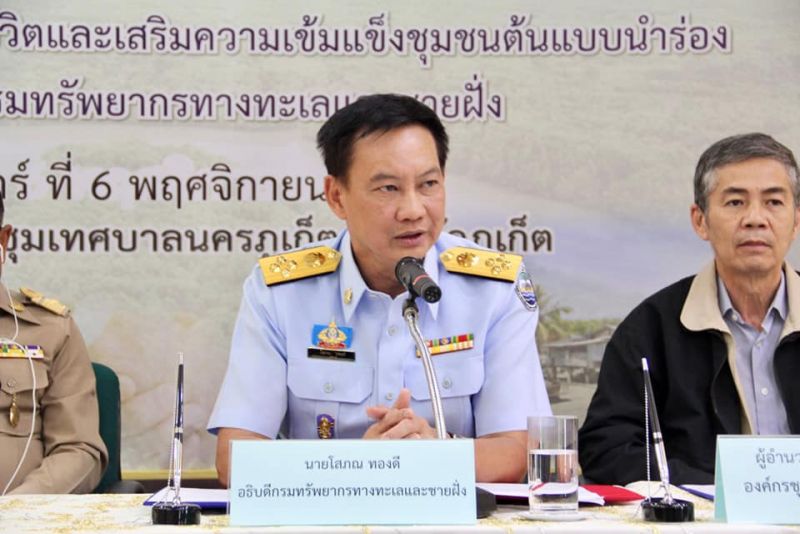
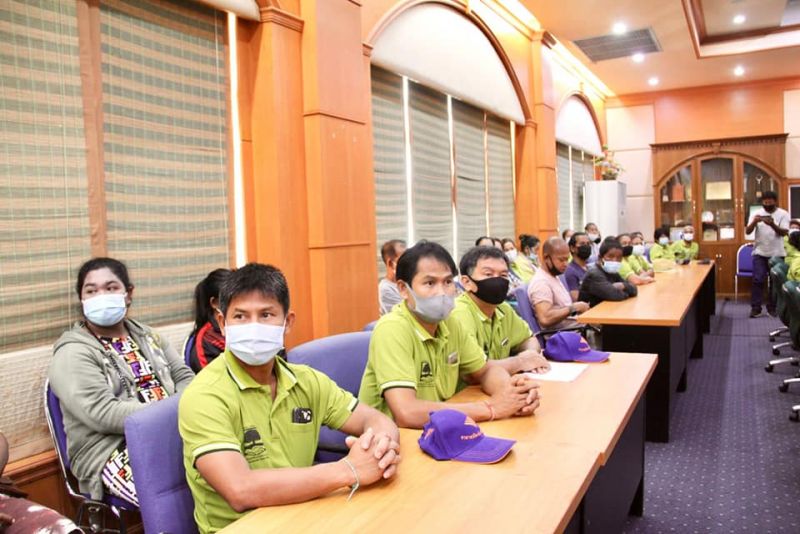
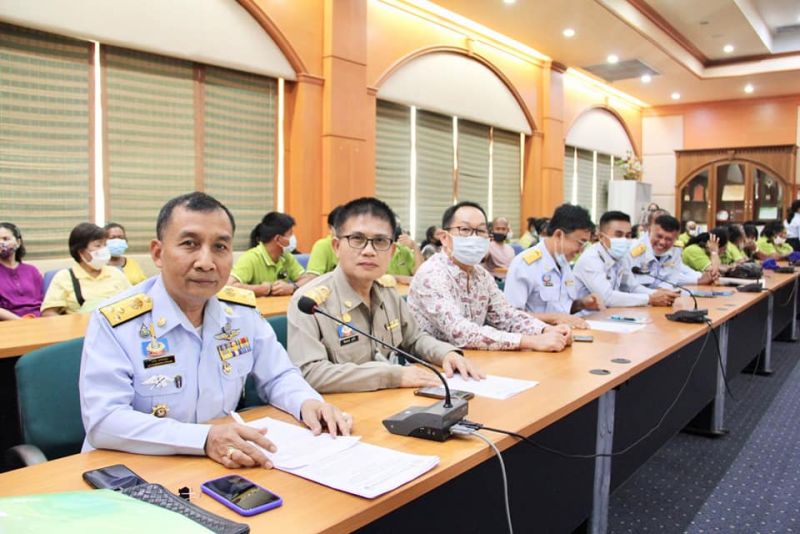
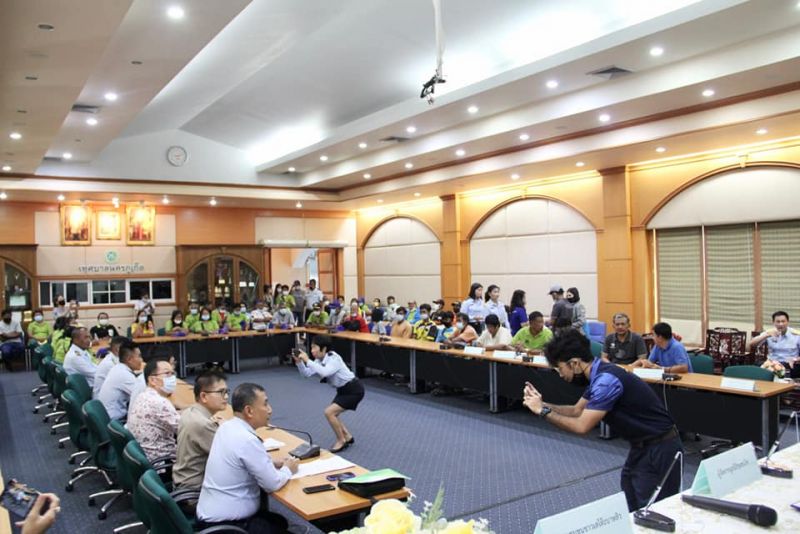
The news was announced at the unveiling of a Memorandum of Understanding (MoU) at Phuket City Municipality offices in Phuket Town yesterday (Nov 6).
The main signatories to the MoU include the Department of Marine and Coastal Resources (DMCR) and the Ministry of Natural Resources and Environment (MNRE).
Other signatories to the MoU include the Community Organisations Development Institute (CODI) government agency, as well as the Chumchonthai Foundation and People’s Movement for a Just Society (P-Move).
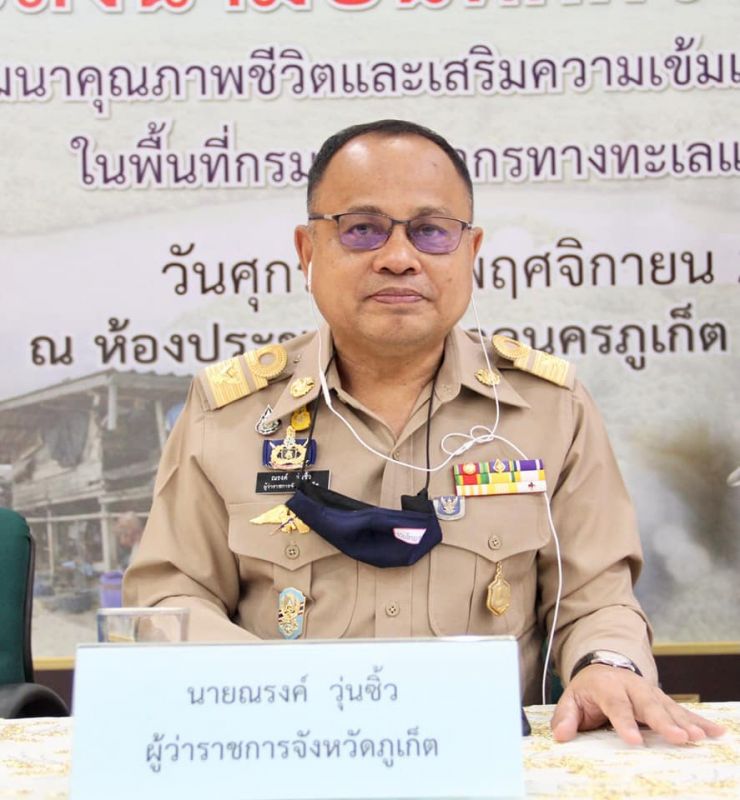
DMCR Director-General Sopon Thongdee presided over the signing ceremony, joined by DMCR Acting Deputy Director-General Apichai Eakwanakul and Phuket Governor Narong Woonciew.
Mr Apichai explained that the pilot project to dedicate state land to sea gypsies followed an initiative proposed by the P-Move through talks on Jan 13 this year.
The result was that the DMCR has designated three pilot areas for development. In Phuket, the sea gypsies living in the Sa Ton Pho community have been granted an area of four rai two ngan in the Pa Chai Len National Forest Reserve, a protected mangrove forest in the Khlong Bang Chee lao - Khlong Tha Jeen area on which to live.
The other two communities to benefit are the sea gypsies living on Koh Lao, in Tambon Pak Nam, Ranong, who have been granted four rai 52 square wah in the Klong Hua Khiao and the Klong Sui reserved forest areas, and the Chao Letho Ba Liu community in Tambon Saladan in Koh Lanta District, Krabi, who have been seven rai one ngan of state land to live on.
Under the MoU, the granting of the land also includes the provision of government funds to provide public utilities and other public benefit projects, such as the installation of electricity and water supply, and road repairs.
Somporn Jaiharn, a representative of P-Move, applauded the government for mediating and thereby helping to address long-standing land disputes with the sea gypsies reported the Bangkok Post.
The DMCR has allocated 18,000 rai of land for farmers to use for agricultural purposes, said Mr Sopon, the report added.
Between 2016 and 2017, it had issued land use documents for 14,376 rai of land to be farmed so more than 3,200 people could make a living.
In addition, the department has also allocated 10,789 rai of land for housing purposes, Mr Sopon said.
Between 2016 and 2017 alone, the DMCR issued 63 land use documents covering 548 rai of land benefiting 7,180 people residing in 51 communities.
Currently, the DMCR is expediting the distribution of the remaining land for housing purposes and by the end of the year at least 60,000 people in 494 communities are expected to benefit from it.
Minister of Natural Resources and Environment Varawut Silpa-archa said yesterday that the government had stepped up efforts to solve land-related problems to relieve the plight of poor landless villagers around Thailand.
He said that Prime Minister Prayut Chan-o-cha, who chairs the National Land Policy Committee, had instructed officials to distribute land for agricultural and housing purposes to those most in need.
However, the government must also strike a balance between land usage and conservation of the natural environment to ensure sustainability, Mr Varawut said.
Land rights for sea gypsies in Phuket has been a long-standing issue, with sea gypsies forced off land they have lived on for generations as landowners later presented themselves with land documents issued by the Phuket land officials as evidence as their claims to the land.
With no documents to support their own claims, sea gypsies appeals to the courts have repeatedly failed to rule in their favour.
However, the tide began to change in recent years as national officials started to support land rights for the Andaman’s indigenous people, especially the sea gypsy community in Rawai after the Department of Special investigation (DSI) began its own investigations to present evidence to support their right to live there.