


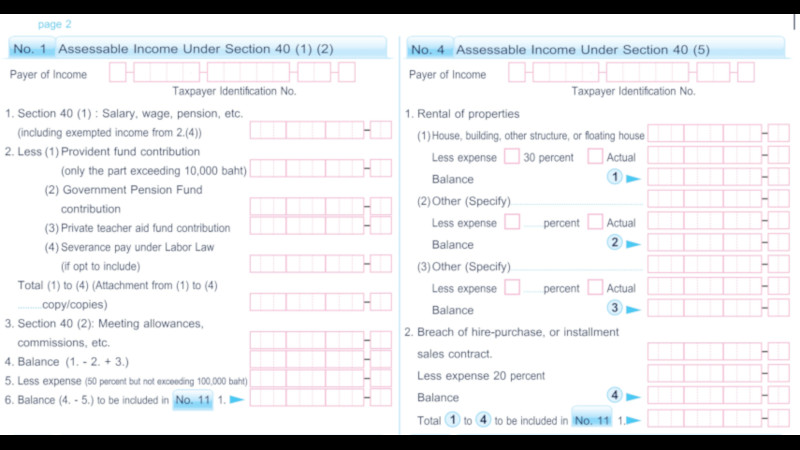
Why is it that so many property buyers in Phuket are either wilfully or unwittingly ignorant of the need to pay tax on their rental income?
Albert Einstein once said, “The hardest thing in the world to understand is the income tax,” but calculating the tax on your Thai rental income doesn’t require a theoretical physicist.
All Thailand-sourced income is taxable, including Phuket rental income, regardless of where you live, and is based on your marginal income tax rate. After allowable deductions it’s really quite reasonable.
Withholding tax does depend on your residency, and comes due as the rental income is collected. Tax residents of Thailand must withhold 5% if the income is paid from a “juristic person”. Rent received from an individual has no withholding tax. If you are not a Thai tax resident, the withholding tax is a flat 15%. (Note: landlord and tenant are jointly liable for paying the withholding tax!)
Owners may take a 30% deduction for upkeep and expenses, but if you’ve spent more than this, you may itemise your deductions – so keep receipts for everything! “Owner” in this case should be taken literally. If you’re renting out a leasehold villa, you’re not the owner of the property, but are technically sub-letting it. As such, you are not entitled to the deduction.
Speaking of villas, a surprising number of people aren’t aware that buying a villa through a Thai company creates an income tax liability if you live there. If you are a director of that company, or the villa is a benefit in kind (i.e. a perk of your job), then the fair market rent of your home is taxable as income. This also applies to bungalows and condos, not only villas.
Finally, what are the penalties for failing to pay your tax? The penalty can be as much as the unpaid tax itself, effectively doubling your tax bill. There is also an additional surcharge of 1.5% per month as long as the tax remains unpaid.
OK! That’s the scary part. So what about the nuts and bolts?
When are taxes due? Taxes must be filed before the end of March each year (e.g. March 31, 2020 for income earned in 2019).
How do I pay my taxes? Most people don’t want the hassle of doing their own taxes, so they find an experienced local accountant.
If you want to do it yourself, however, the Revenue Department has an English-language website with guidelines and downloadable forms (click here.)
There are also four offices in Phuket. Two are in Phuket Town (including the main Revenue Department for Phuket Province), and one each in Kathu and Thalang. (For contact numbers for each office here.)
How much do I have to pay? Assuming you have a rental income on your Phuket condo of US$1,500 per month (about B47,000 per month, totalling about US$18,000 per year), your tax payable would work out to 3%. On rental income of $144,000 per year (US$12,000pm), it would still be less than 16%.
For only 3% to 16% tax, is it really worth trying to bilk the taxman?
This article is from the 2018/2019 Thai Residential Phuket Property Guide. To download the 2019/2020 Guide visit ThaiResidential.com/phuket-property-guide. +66 9484 11918.