


Someone reading Thailand’s Land Code may be a little confused by what the letter of the law says about foreigners owning land in the Kingdom. Instead of specifically prohibiting foreigners from owning land, the letter of the law surprisingly states that foreigners (referred to as “aliens”) are allowed to own land.
This is a direct quote from the Land Code Promulgating Act (Section 86): “Aliens may acquire land by virtue of the provisions of a treaty giving the right to own immovable properties…”
What Section 86 does not mention is that the last treaty extending such a right expired in 1970.
So while the intent of the Land Code Act is pretty obvious, the literal wording is not there. In any other country, you may think that this creates a loophole in the law which you can exploit. But in Thailand, the lawmakers’ intent – also called “The Spirit of the Law” - can and does form the basis of some legal decisions.
In the absence of any treaty, the spirit of the law in the case of Section 86 of the Act above is clearly to forbid foreign ownership of land in Thailand. And this “spirit” is regularly enforced.
The laws regarding freehold condominium ownership, on the other hand, are considerably clearer, and far more agreeable.
Ownership of a freehold condominium is fairly clear-cut. Under Thai law, there may be up to 49% foreign ownership of a condominium. This means a minimum of 51% of the unit area in any condo development must be owned by Thai nationals, which may also include Thai companies.
Clearly, this the best way for foreigners to own property in Thailand because they can own a condo fully and legally. With the title in their own name, condo ownership is permanent and in perpetuity until the foreign owner makes a decision to sell it.
Freehold condominiums also enjoy favourable legislation on inheritance, that is to say a foreigner is entitled to pass a Thai condominium on to an heir.
Condominiums are not always high-rise buildings They can be clusters of low-rise buildings, townhouses in developments with specific licensing, or even sprawling villa-like units, which you barely realise are semi-detached. (There will be more on types of property in later articles in this column.)
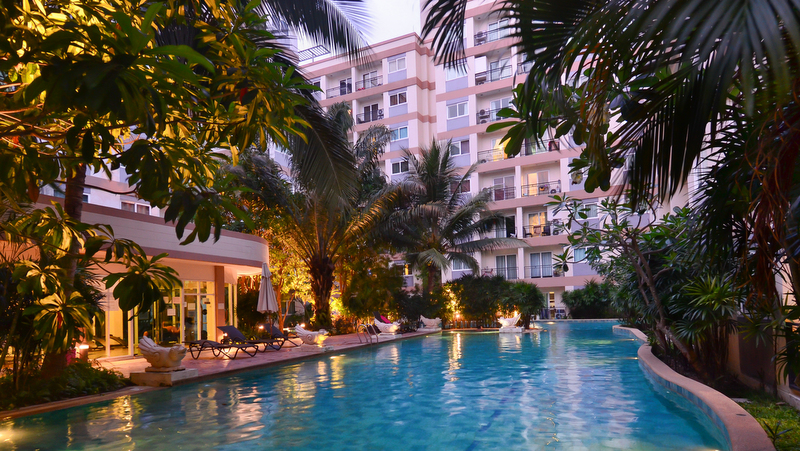
In each case, however, your condominium title will give you a “fractional interest” in the building. This means you technically own part of the common area such as the swimming pool, gymnasium, gardens, car park and the reception area.
When you receive a title to your condominium unit, it should not only specify the square footage (metreage) of the actual unit, but also the total common area. It should then state what percentage interest in the common area is owned by the unit.
It is also worth noting that the fractional interest will also correspond to the voting interest each owner holds in the owners/residents association.
If you are seeking nothing less than full titled freehold ownership, then you must look at a condominium or condo-licensed residence.
This article is from the 2018/2019 ThaiResidential Phuket Property Guide. To download the 2019/2020 Guide visit: https://thairesidential.com/phuket-property-guide/ or call +66 9484 11918.