


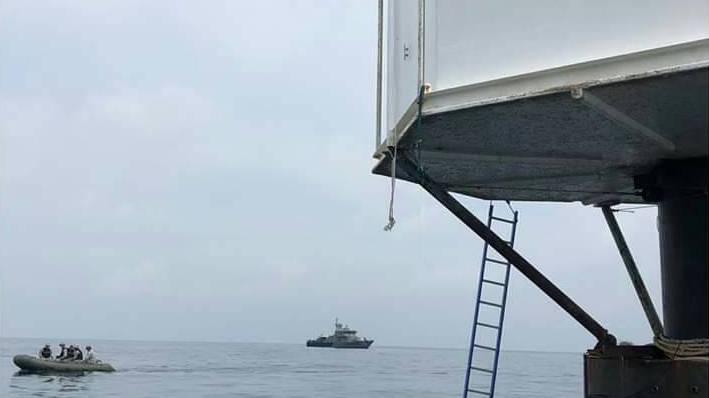
On learning of the charge, the couple went into hiding, reportedly fearful for their safety. That may sound ludicrous, but the couple were facing a charge under Section 119 of the Criminal Code, and that section is no laughing matter.
The section concerns any acts that cause the country or parts of it to fall under the sovereignty of a foreign state or deterioration of the state’s independence. The law is parked in the same section of the Criminal Code as lese majeste, which is only a few paragraphs earlier as Section 112.
Unlike lese majeste, which incurs a punishment of three to 15 years’ imprisonment if found guilty, breach of Section 119 is punishable by death or life imprisonment.
No one would believe that the Navy officials involved in the seastead case are actually pursuing that level of punishment. They were just looking for the legal right to have the structure removed. Did they make this clear to the public? No, they did not. And that is where they failed to understand the use of the law.
If their intent was simply to have the seastead removed, they missed the goal by a mile. All the Navy had to do was point to Thailand as a signatory to the United Nations Convention on the Law of the Sea (UNCLOS). A quick read of the first few pages reveals that signatory nations may claim a straight line between outlying islands of the country as included in the “12 mile” definition of territorial waters.
Did they first discuss the issue with the builders and ask for the structure to be removed? No, they did not, despite talks being the standard first step for anyone found encroaching on protected forest or even national park land, a practice that the Navy itself has had plenty of, well, practice, in on this very island.
Instead, we saw heavy-handed, unilateral decision-making at its finest. If you want to create a climate of fear, this is what you get.
Now compare this to handling of the forest hillside in Chiang Mai raped to make way for an “accommodation development” literally one year ago – and even the generals in Bangkok backed down on that one. The accommodation, built on the foothills of one of the best-known national parks in the country, was allowed to stay. Apparently, even for the top brass, it would be difficult to win a court case against the very judges deciding it.
Instead, the project is now to be used for “public benefit”, said Deputy PM Gen Prawit Wongsuwan in delivering the news to the press. “Perhaps as a vacation spot,” he said. Indeed.
The seastead debacle also came at the end of the same week that Phuket’s “image” suffered from ridiculous headlines in the international media – including among respected publications – of the death penalty for taking selfies on the beach near the end of the runway.
By the time airport management figured out it was best to denounce the stories it was too late. The news had spread like a virus.
Considering all the hyperbole about preserving Phuket’s image as an international tourism destination, you’d have thought that the key players on the island would have learned this one by now. Step up, be rational, speak your intent clearly and do it. Apparently not.
But one thing that has surfaced from the seastead farce: a whole new form of tourism accommodation that remains an unexplored segment in holiday properties. One has to wonder if any noses are out of joint that they didn’t think of it – or get to it – first.