




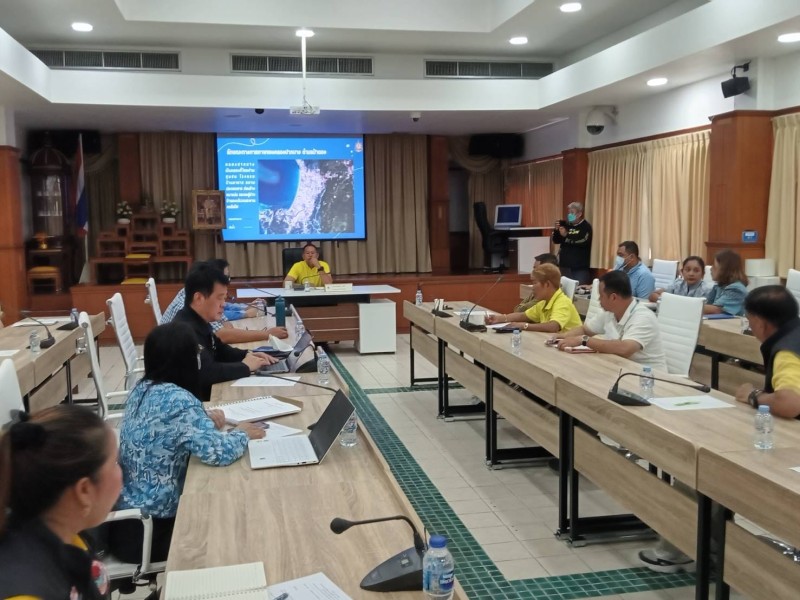
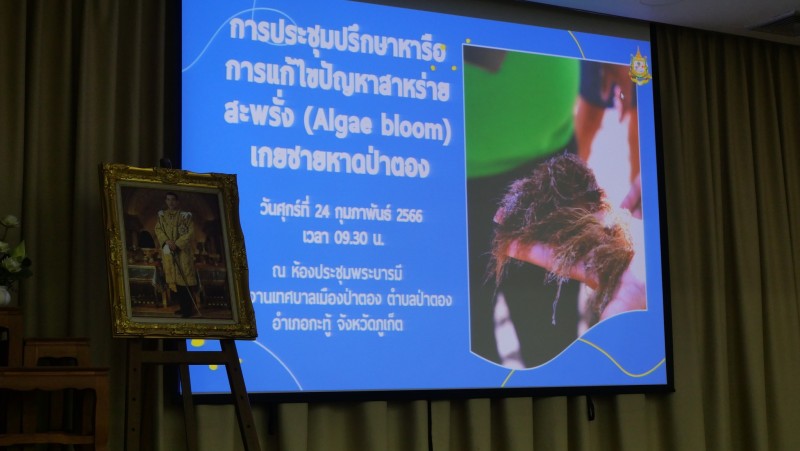
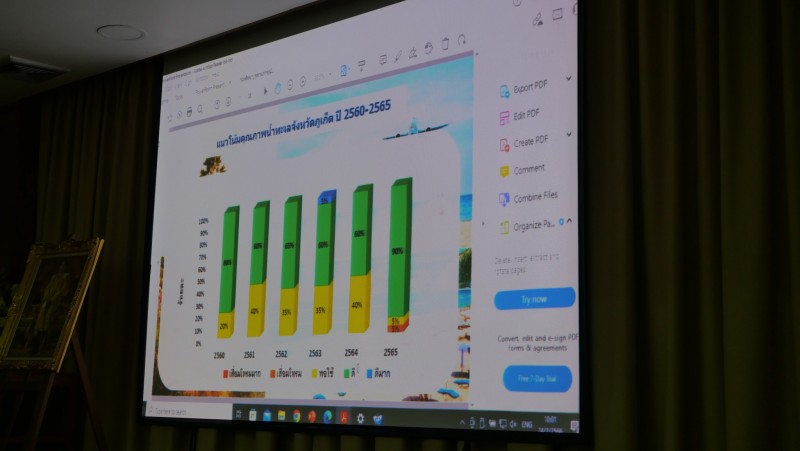

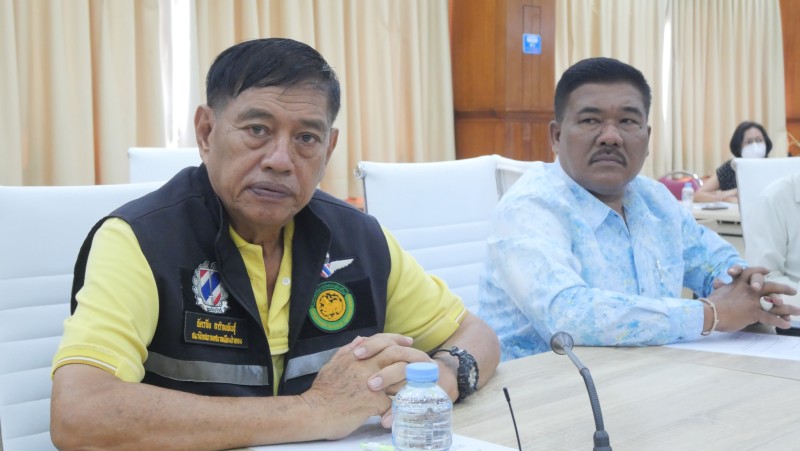
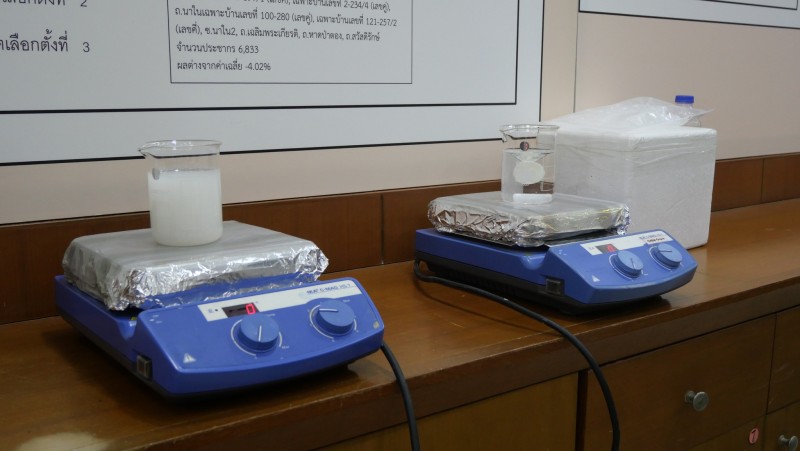
Patong Mayor Chalermsak Maneesri chaired a meeting of more than 50 officials, including Wattanapong Suksai, Chief of the Ministry of Natural Resources and Environment Phuket office (MNRE Phuket), at the Patong Municipality offices on Friday (Feb 24).
The meeting was called “to discuss algae bloom problems at Patong Beach”, said an official report of the meeting.
Mr Wattanapong pointed out that the algae bloom had remained a persistent problem that had become a considerable drain on the resources of the Patong Municipality Division of Public Health and Environment.
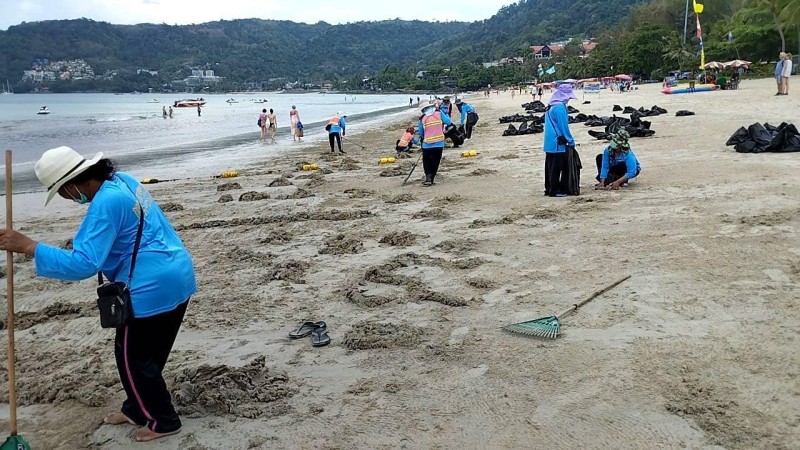
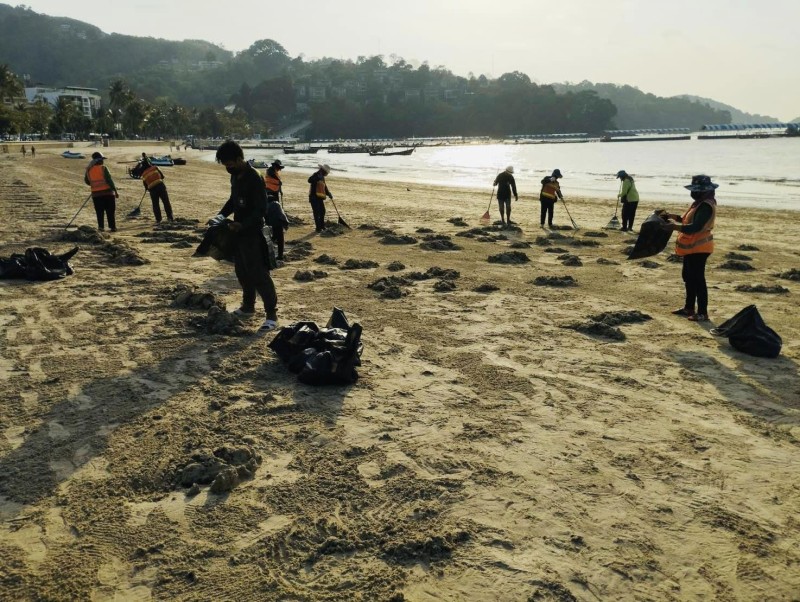
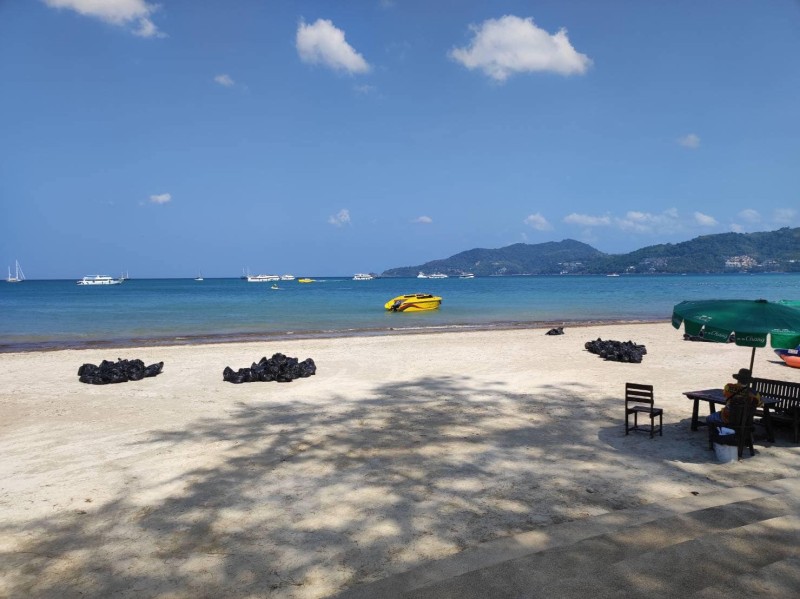
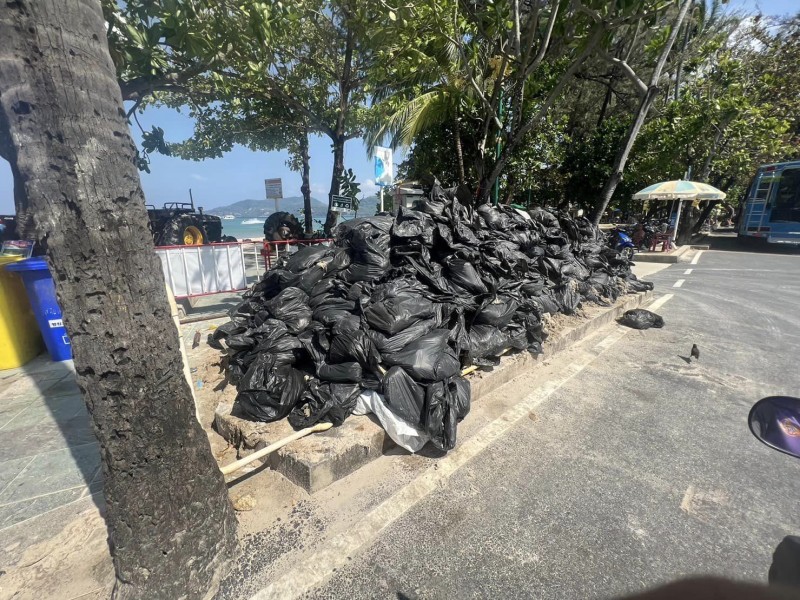
The health and environment division had staged a mass cleanup of the beach last Wednesday (Feb 22), with workers assigned to clean up the beach in an all-day effort.
Teams worked across three shifts, with the first session from 5am to 10am, the second session from 2pm to 4pm and the third from 5pm throughout 8pm that night.
A second team was assigned to help the beach cleanup from 5am to 9am and again from 3pm to 7pm at night.
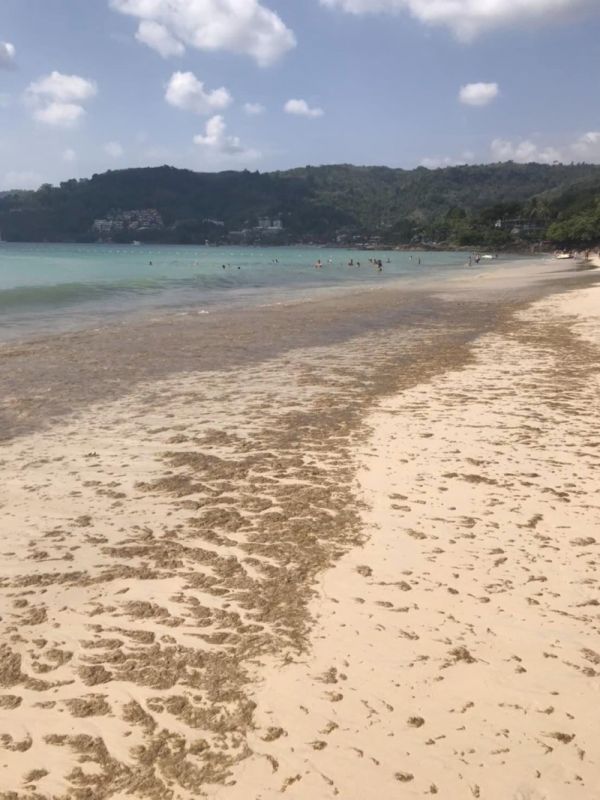
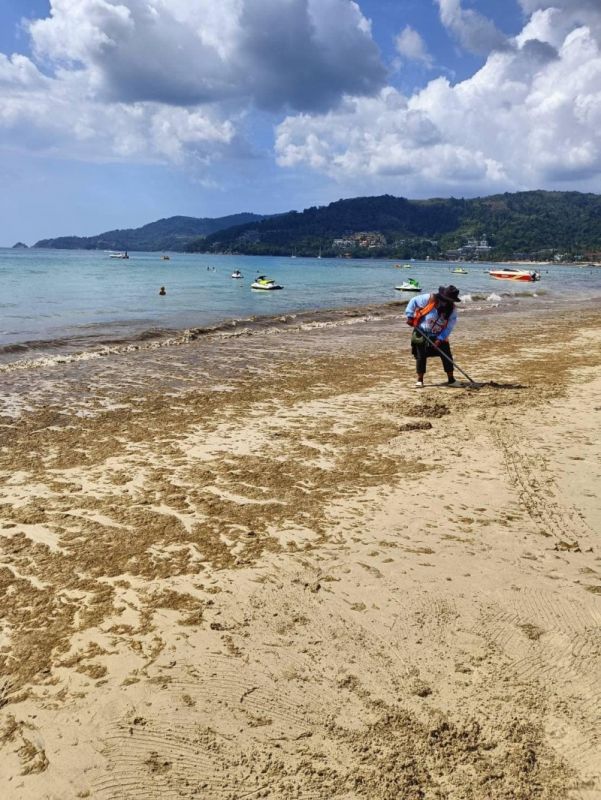
The volume of algae collected, initially reported as ‘seaweed’, was not reported, but photos of the cleanup evidenced that the amount was considerable. (See image gallery above.)
“It affects the water recreation activities of tourists in the Patong beach area,” Mr Wattanapong said on Friday.
“Since there are many tourists traveling each day now, measures must be put in place to prevent and take care of all aspects,” he added.
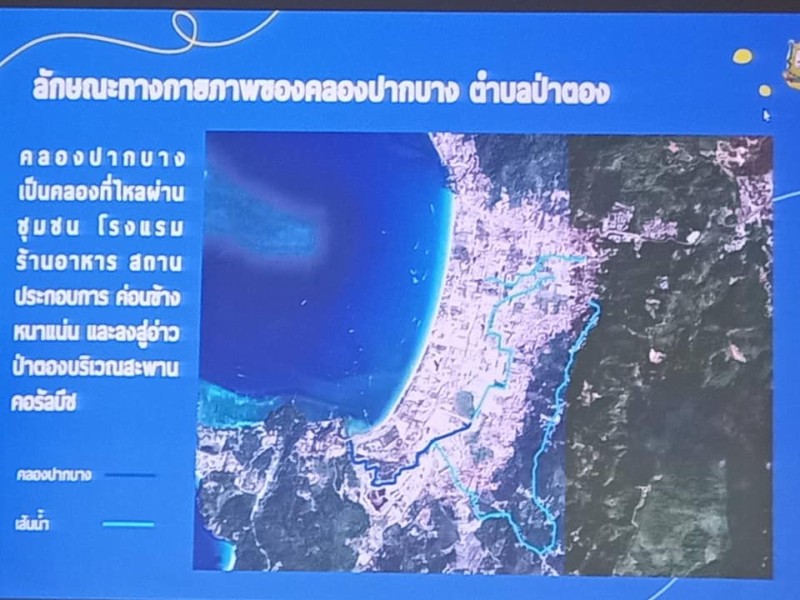
At the meeting the officials discussed “every aspect” of measures to solve the problem, including the issue of boats mooring in the bay and “solving wastewater problems”, said an official report of the meeting.
However, the official report gave no indication what measures are to be taken.
The report made no mention of the sole wastewater-treatment plant in Patong, which is still undergoing its expansion project, or of the drain network throughout the town, or of any water quality tests conducted by environmental officials.
WARNINGS
Earlier this month, Mr Wattanapong as MNRE Phuket Chief warned operators of hotels, condominiums, large housing projects and other accommodation establishments that they could face fines of up to B1 million if they failed to provide their required annual environmental impact reports on time.
More than 2,000 venues in Phuket are required to file Initial Environmental Examination (IEE) and Environmental Impact Assessment report (EIA) monitoring reports each year, Mr Wattanapong explained.
Most locations are required to file IEE and EIA monitoring reports annually, but some must file such reports twice a year. However, by Feb 6 the MNRE Phuket office had received ‘only’ hundreds of reports, he said.
Operators had until Mar 2 to file their environmental assessment reports before the MNRE Phuket office would take legal action against them, Mr Wattanpong said.