


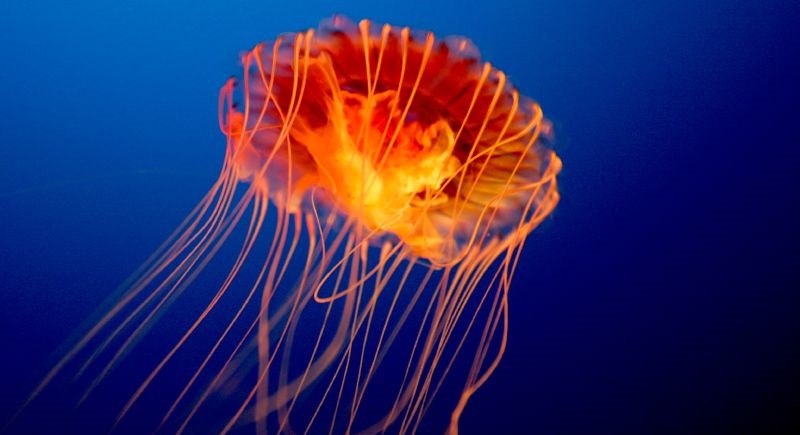


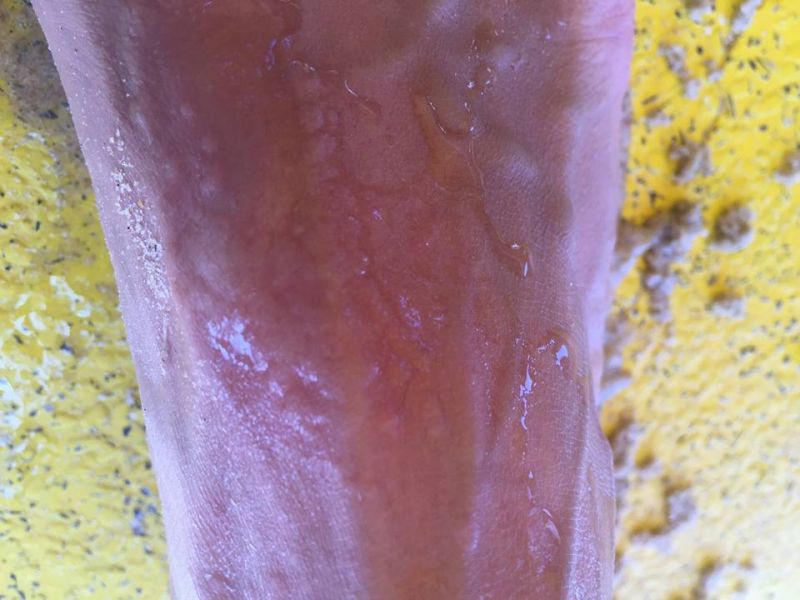
Yesterday (June 18), the Phuket Lifeguard Service posted two separate jellyfish sting cases with photos to their Facebook page, one from Bang Tao Beach, the other from Kamala Beach.
“We used vinegar as a standard treatment for the stings. For Thai skin, we use sea morning glory, but it is not medically authorised and may irritate foreigners’ sunburned skin further so we do not use it for foreigners,” Phuket Lifeguard Club President Prathaiyut Chuayuan told The Phuket News today (June 19).
“If you are stung by a jellyfish, do not urinate on the sting. It’s an ancient myth,” Mr Prathaiyut warned.
“Flame jellyfish normally live in deep waters. They like warm temperatures, not too hot or cold. Now as it’s low season they are more likely to be found closer to shore, especially in the morning when the water temperature is warm.
“In the afternoon they go back out to the deep water as the water close to shore becomes too hot,” he explained.
“The sting of the flame jellyfish is not too serious, but will cause a a patchy rash similar to mosquito bites.
“Please use a wetsuit or a shirt to protect your skin when swimming or ask local authorities about whether the zone is safe, as there is a possibility that the jellyfish will be within the red zones,” he warned.