




The hospital issued a clarification after a popular Facebook page, ‘Koh Kalok’, posted a message claiming that “seven Indian nationals are infected and quarantined at Siriroj Hospital”, citing information allegedly provided by a nurse.
The post urged the public to wear masks and use alcohol-based disinfectant, and quickly attracted significant attention online.
The claim prompted a wave of comments from social media users, with some questioning the accuracy of the information while others expressed concern about disease transmission and a lack of confidence in official communication from relevant agencies.
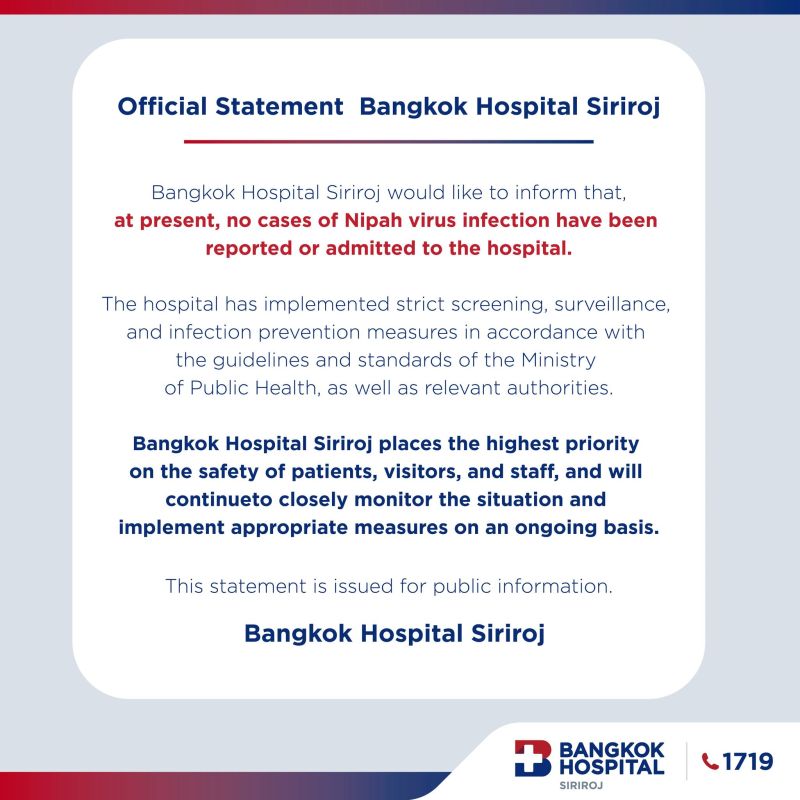
In response, Bangkok Hospital Siriroj released an official notice stating that there are currently no Nipah virus cases at the hospital.
“Bangkok Hospital Siriroj would like to inform that, at present, no cases of Nipah virus infection have been reported or admitted to the hospital,” the statement said.
The hospital added that it has implemented strict screening, surveillance and infection prevention measures in accordance with guidelines and standards set by the Ministry of Public Health and relevant authorities.
“Bangkok Hospital Siriroj places the highest priority on the safety of patients, visitors and staff, and will continue to closely monitor the situation and implement appropriate measures on an ongoing basis,” the statement said.
The hospital also urged the public to rely on information from its official social media channels or from authorised provincial government agencies, stressing that verifying information before sharing helps reduce confusion and unnecessary public concern.
Health officials have repeatedly warned that unverified claims related to public health can spread rapidly online and cause unnecessary alarm, urging the public to follow updates from official sources only.
Nipah virus is a zoonotic disease that can be transmitted from animals to humans, with fruit bats recognised as a primary reservoir. Human infections can occur through contact with infected animals, consumption of food contaminated with bat secretions, or close contact with bodily fluids of infected individuals.
Symptoms may range from mild to severe and include high fever, headache, fatigue, cough, sore throat and vomiting. In severe cases, infection can lead to encephalitis, seizures, unconsciousness and death. While some outbreaks have recorded relatively high mortality rates, the virus is generally considered less easily transmissible than respiratory diseases such as COVID-19.
There is currently no vaccine for Nipah virus, and treatment focuses on managing symptoms. Public health advice includes avoiding contact with sick or wild animals, washing hands frequently, consuming properly cooked food and avoiding raw fruit or sugarcane juice that may be contaminated.