


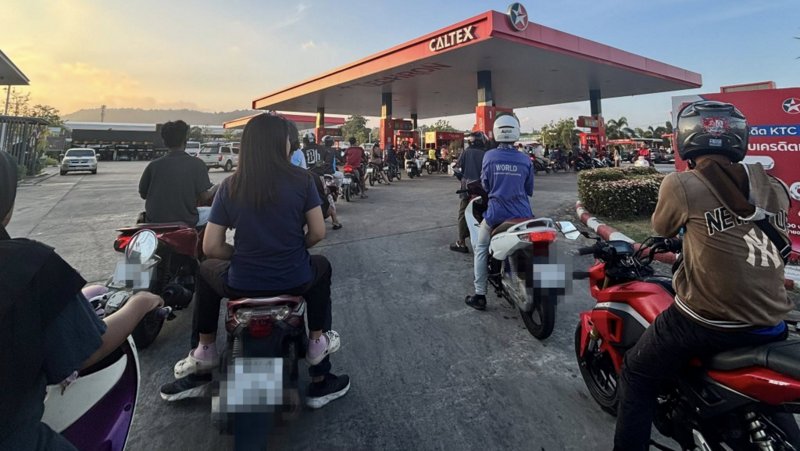
Rattakorn Klinchan, Chief of the Phuket Energy Office, said the rush on fuel in Phuket was prompted by fears of global oil prices skyrocketing amid the fallout from the conflict in the Middle East.
“News of the conflict and concerns over global oil prices prompted many residents and transport operators to fill their tanks more frequently than usual,” he said.
Mr Rattakorn explained that the sudden increase in demand had temporarily strained supplies at some stations.
“Sales at some petrol stations have doubled from an average of about 10,000 litres per day to more than 20,000 litres, temporarily causing delays and short-term shortages at certain locations,” he said.
However, he confirmed that overall fuel supplies remain adequate and deliveries are continuing as normal.
Fuel shipments are continuing to arrive from depots in Surat Thani, and several petrol stations have already received additional deliveries to replenish stocks, he noted.
Mr Rattakorn also pointed out that Thailand does not rely solely on oil transported through the Strait of Hormuz.
“About 40% of the country’s oil imports pass through that route, while the remainder comes from other regions, including Southeast Asian suppliers such as Malaysia, Vietnam and Brunei,” he said.
Even if imports through the strait were temporarily disrupted, Thailand maintains domestic refining capacity and strategic reserves sufficient for at least a few months, he added.
To help stabilise fuel costs, the government has also temporarily frozen diesel prices until Mar 17. Prime Minister Anutin Charnvirakul may also use the Oil Fuel Fund to help cushion any further price fluctuations, Mr Rattakorn explained.
He urged residents not to hoard fuel, warning that excessive refuelling could create unnecessary shortages despite the overall supply remaining adequate.
“People should refuel only as needed,” Mr Rattakorn said. “The system has sufficient fuel to meet demand.”