


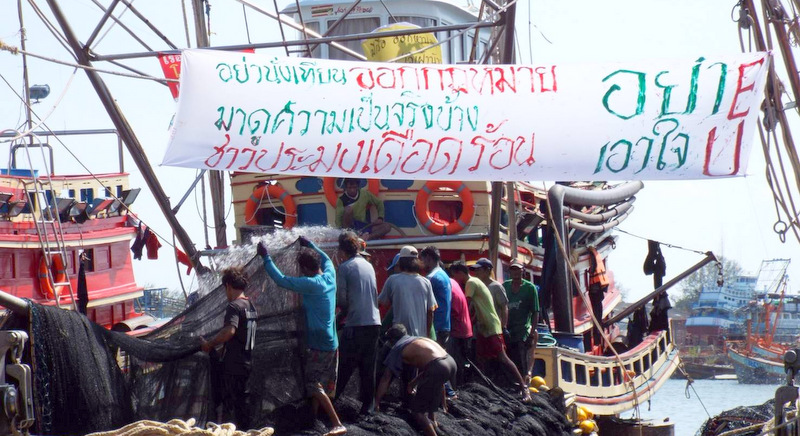
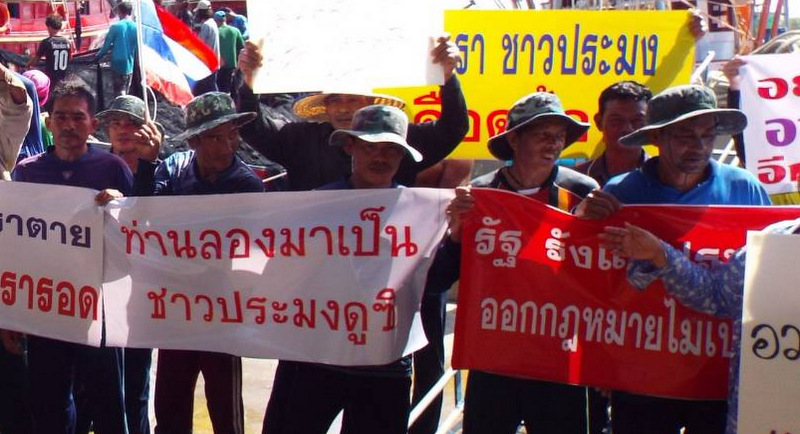
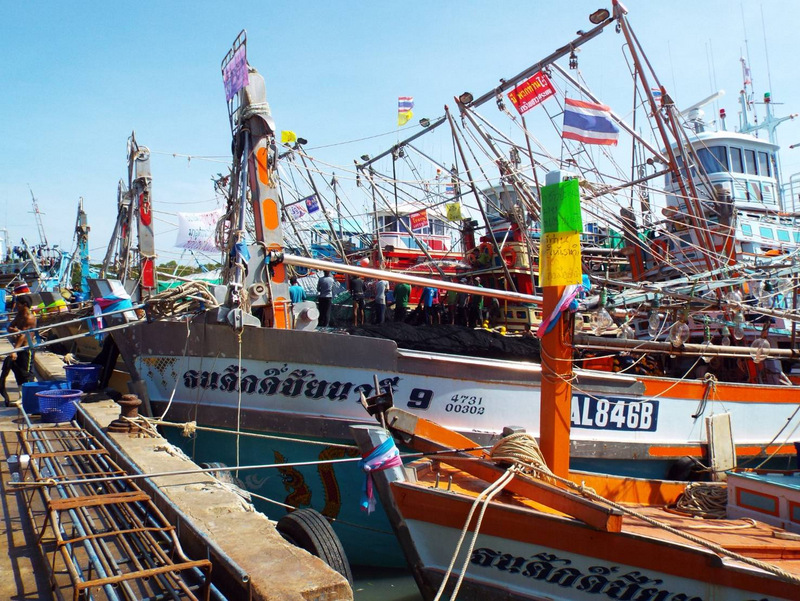
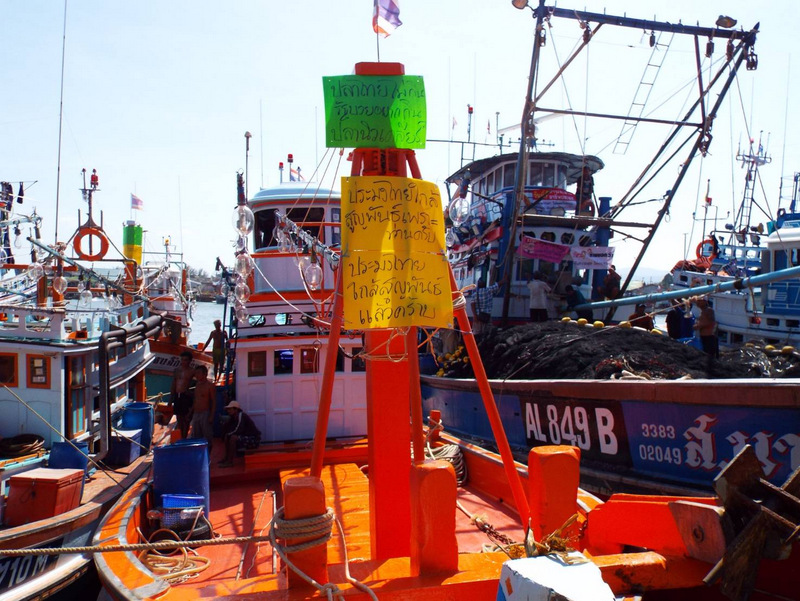
The protesters, carrying placards that read, “We don’t want EU” and “Stop EU threatening Thailand and Thai fishing industry”, peacefully gathered at the Rassada Fishing Port at about 3pm.
Speaking to the press, Duangjan Eakthana and Wanee Sripaowadee said fishing operators were tired of trying to comply with the new laws, which they said were impeding their ability to fish and costing the industry too much.
“The tightening of the regulations is killing us,” Ms Duangjan said.
“The new laws are not fair. You say ‘return happiness to the people’, but NGOs are quietly wiping us out. We are tired of the new laws... Let’s see some reality. Fishermen do not want to be in the EU,” she added.
Ms Duanjan pointed out that although he fellow fishing operators disagreed with the new regulations, they were being forced to comply, or be forced out of business.
“If we don’t abide by the law, there will be arrests and heavy penalties, including large fines and even equipment seized,” she noted.
“We ask for justice from the government and related agencies because operators are not able to bear this burden,” Ms Duanjan said.
The protesters listed 17 regulations that they say need reviewing, including the requirement of VMS tracking devices and the restricting fishing of each vessel to 255 days per year.
Also contested was the need to report two hours before and after every time a fishing boat enters and leaves port.
“If a boat is to leave port at 7am, you have to register your departure by 5am or it will be too late,” Ms Duangjan explained.
“But if the boat or the crew are not ready by that time, the boat cannot leave. You have cancel the departure report and wait two hours until you can start again, which costs us time fishing,” she added.
“Also, VMS tracking devices currently in use cost B20,000-30,000 per unit and the fee for using the system costs B1,500 to B2,000 per month. But next year it will be compulsory to upgrade to ‘Gen 2’, which costs from B50,000 to B70,000 for the equipment and the monthly fee will increase to B4,000 to B5,000 baht per month.
“There is no need to change this. It is a wasteful mistake,” Ms Duangjan said.
Other issues were the problems in maintaining an accurate logbook for each vessel, and fixing any inaccurate entries, she added.
“And the staff of each agency have to review the document, but there is no consistency among the authorities although they come from a single agency. The practice is not the same,” she said.
However, also noted in the complaints were the regulations forcing employers to be able to prove by documents the wages paid to crewmen, including migrant workers, and holding the employer responsible for the safekeeping of all official registration documents of migrant workers in their employment.
The two key issues were introduced in the crackdown on human slavery within the Thai fishing industry exposed in 2015 that led to the EU sanctions on fishing product imports from Thailand into Europe.