


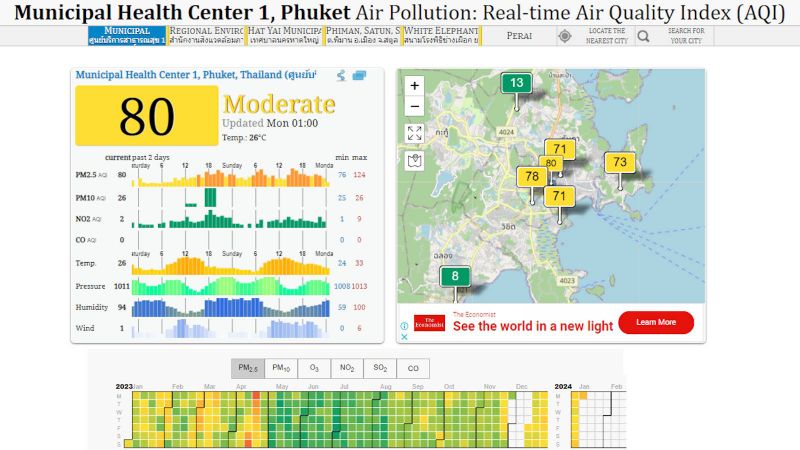
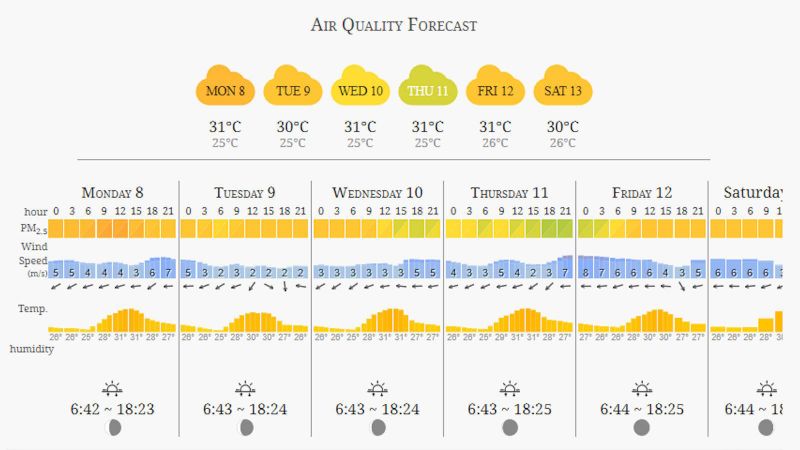
The concentration of hazardous PM2.5 fine particulate matter in Phuket is expected to remain “moderate” in the following week, according to the World Air Quality Index project (AQICN).
The project provides transparent air quality information, covering more than 250,000 air quality monitoring stations globally, including 10 in Phuket.
Since Jan 1, 2024, the aforementioned Phuket stations have recorded six days with “moderate” average PM2.5 pollution (between 75 and 84 points) and one day with good air quality (70 points on Jan 3).
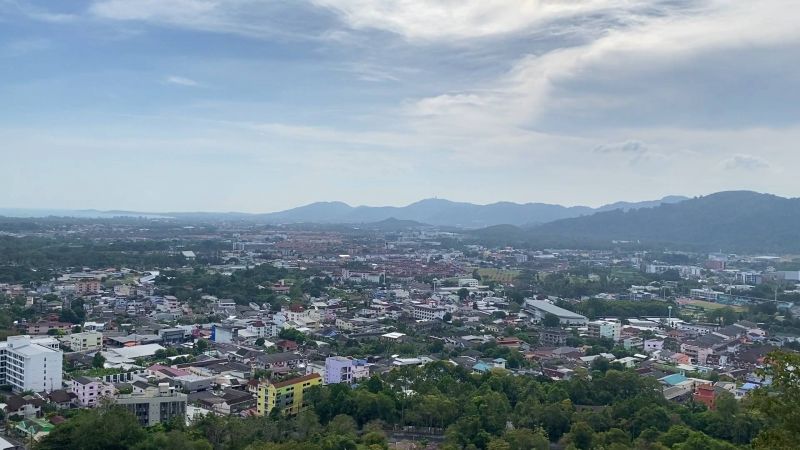
The haze was visible on certain days in certain areas, while in some other parts of Phuket, the skies remained picture perfect.
AQICN’s worst reading over the past weekend (Jan 5-7) was 119 points, which is categorised by the monitoring service as “unhealthy for sensitive groups”.
“Members of sensitive groups may experience health effects. The general public is not likely to be affected,” AQICN says about readings in the range of 101-150 points.
“Active children and adults, and people with respiratory disease, such as asthma, should limit prolonged outdoor exertion,” says the recommendation for all readings within 51-100 (“moderate”) and 101-150 (“unhealthy for sensitive groups”) ranges.
Hazy future on agenda
Thailand will enter its annual haze season earlier than usual this year, due to higher levels of accumulated microdust in the atmosphere, reports Bangkok Post, citing data from the Pollution Control Department (PCD).
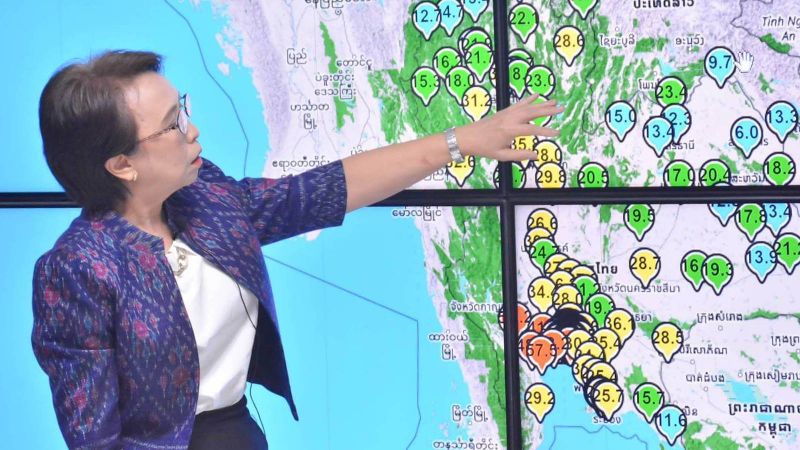
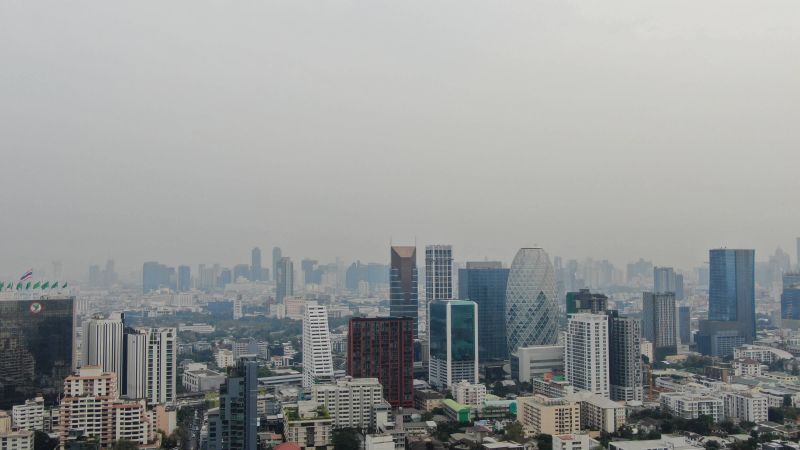
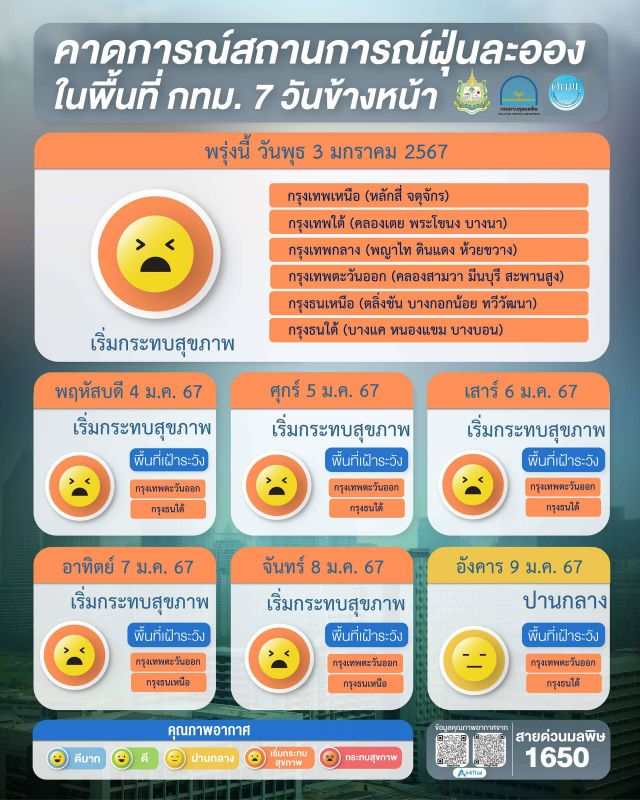
While Phuket mostly enjoys clear skies, the PM2.5 situation in Bangkok “is beginning to have an impact on health in some areas,” according to the most recent reports by the PCD.
Bangkok already suffered heavy air pollution over the New Year, with 16 of its 50 districts falling into the red zone for serious health impacts on Dec 29.
Preeyaporn Suwanaket, the PCD’s newly appointed chief, said that air quality in the capital and nearby provinces on Friday (Jan 5) was moderate but still prone to affect health, which was in contrast to the northern and northeastern regions that had good air quality.
However, the air quality in Metropolitan Bangkok and lower northern provinces is likely to get worse by this coming Friday (Jan 12) due to high air pressure.
The major source of air pollutants is from heavy traffic in the capital and agricultural burning in provinces surrounding the capital, Ms Preeyaporn said. The negative effects from Bangkok’s heavy traffic are mostly limited to the metropolitan areas, while the agricultural burning is a nationwide problem for both Thailand and neighbouring countries.
According to the PCD, between Dec 29 and Jan 3 there were 1,207 burning hotspots in Thailand, of which 38% were found in paddy fields, 13% on sugar cane farms, 6% on corn farms and 11% in forests.
For preparation against hazardous PM2.5 fine particulate matter, the PCD will work with related parties in every province to control sources of air pollutants and ban any open-air burning, Ms Preeyaporn said.
“Provincial and related agencies around the metropolitan area should strictly supervise and monitor open burning,” said a PCD pollution report released on Jan 3.
“The PCD recommends that people watch their health, reduce time spent doing outdoor activities or use self-protection equipment. In case of health symptoms, people should consult a doctor.
“It is recommended that people monitor the situation through the Air4Thai application (on Google Play and the App Store) and the Air Pollution Solution Communication Center fan page. The information should be used by people to plan their daily lives, especially outdoor activities,” Ms Preeyaporn said.
The interactive map on the Air4Thai portal was not functioning during Jan 5-7 when The Phuket News was working on this story.
Entrenched farming practices
Ahead of the beginning of the haze season, the government is set to establish a centre for sustainable air pollution management* chaired by Deputy Prime Minister and Minister for Natural Resources and Environment (MNRE) Patcharawat Wongsuwan, reports the Bangkok Post.
The centre will focus on reducing the number of forest fires in 11 conservative forest zones and 10 national reserved forests, which have a bad record of forest fires during the drought season, explained MNRE deputy miniter Rachata Phisitbanakorn.
Information on air pollutant sources in each area will be sent to related authorities to deal with the problem at its sources, he added.
Prime Minister Srettha Thavisin told Parliament during the fiscal budget debate that the government has undertaken the task to elevate people’s quality of life, which should include the right to breathe clean air.
PM Srettha further added that PM2.5 is closely associated with entrenched farming practices, but the government is trying to offer alternatives to burning, such as buying unwanted yields as well as using corn cobs for making fertiliser and as a source of renewable energy.
As a separate step, the Clean Air Bill is expected to be forwarded to the Parliament on Jan 11. The bill will include measures to increase taxes on imported crops that have come from neighboring countries where the practice of open-air burning remains tolerated.
See also:
- announced Nov 4, 2020