



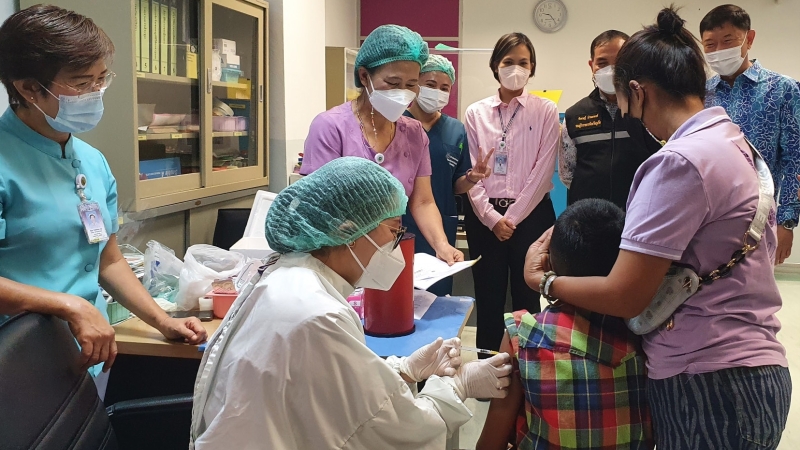
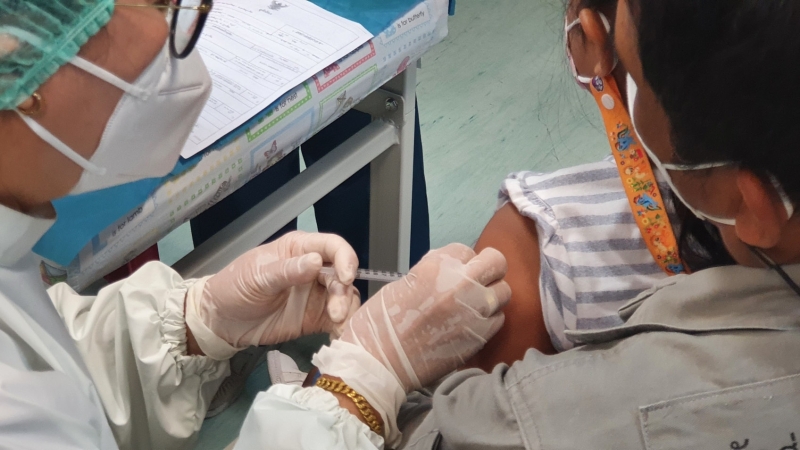
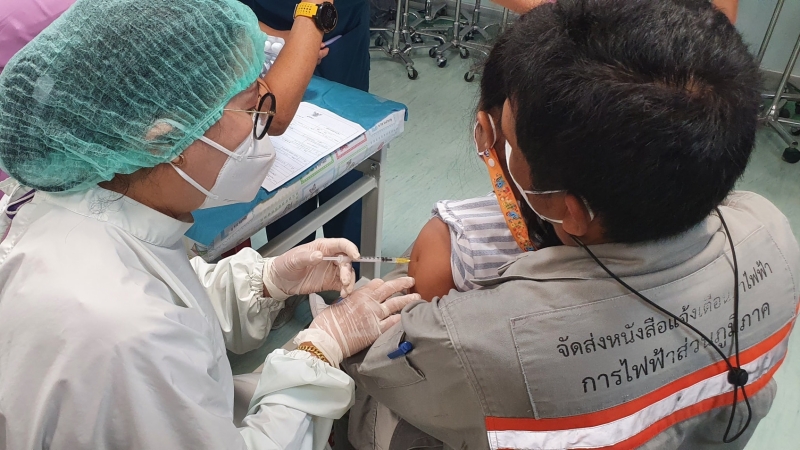
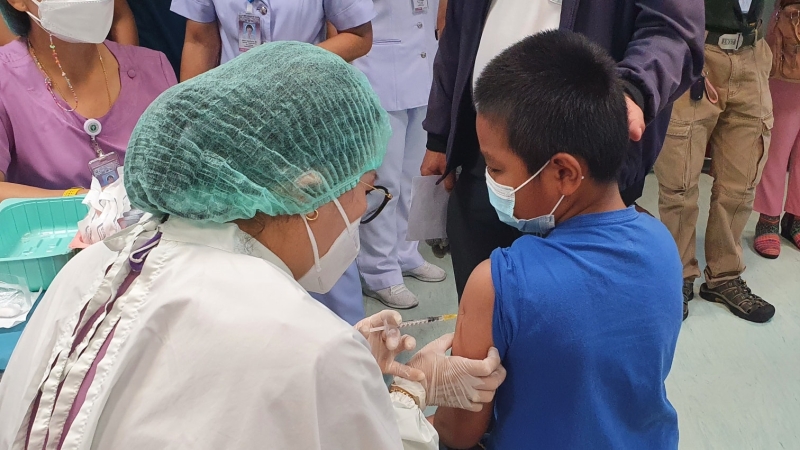
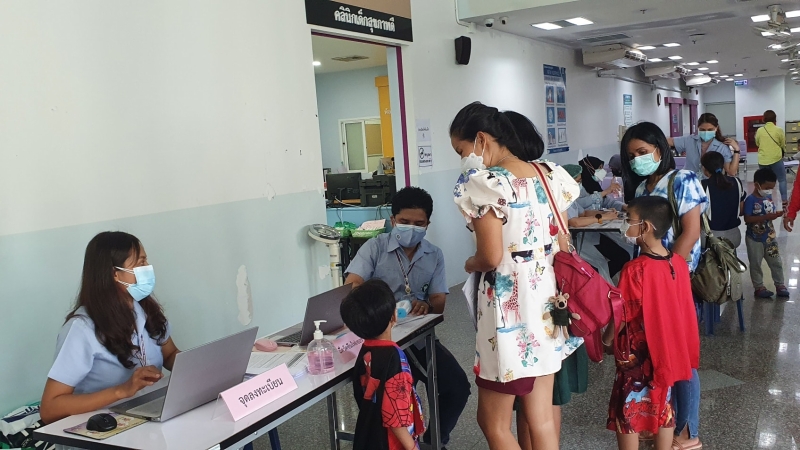
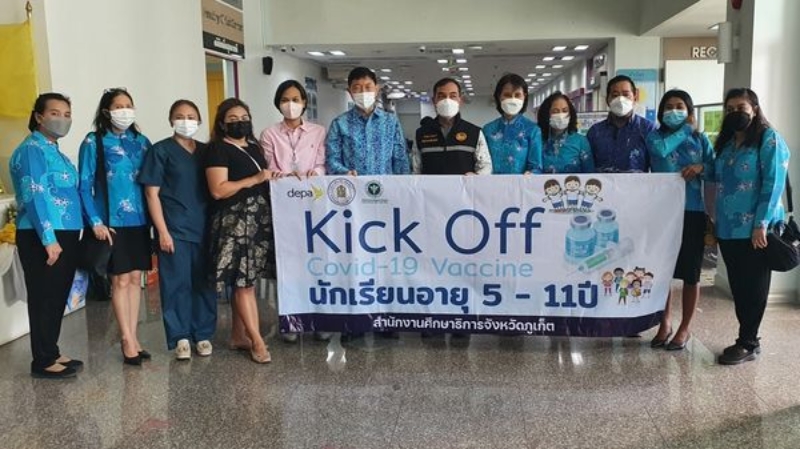
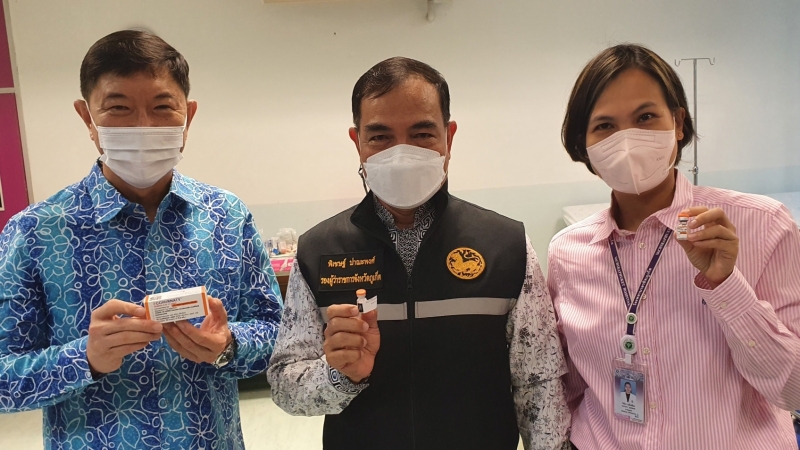
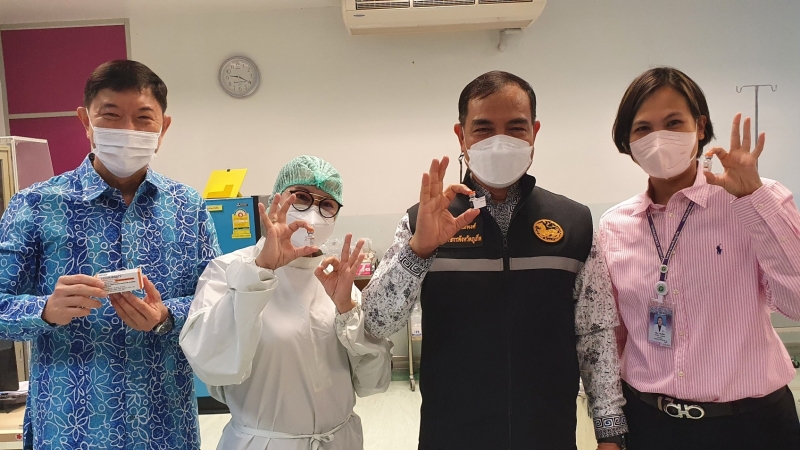
Phuket Vice Governor Pichet Panaphong said the goal was to provide injections to 100 children a day.
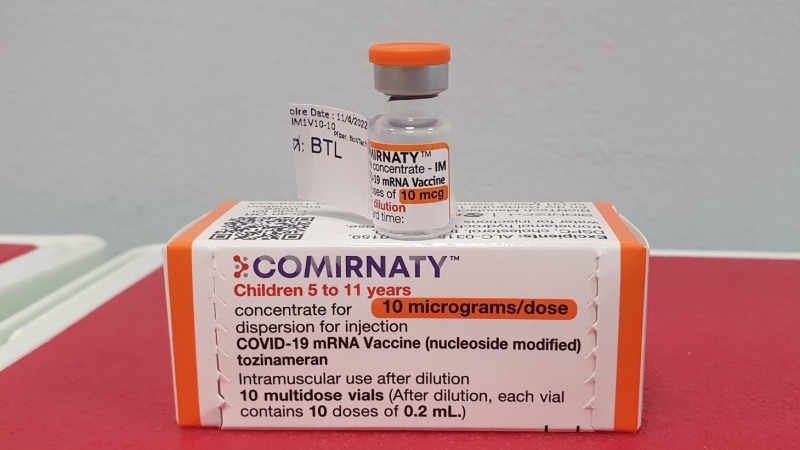
The vaccine being administered to children is a diluted version of the Pfizer vaccine, identified by the orange lid on the vial, he noted.
“One vial of the vaccine will be able to provide10 injections because children of this age need only a small amount, just 0.2 millilitres per person,” Vachira Phuket Hospital Director Weerasak Lorthongkham said.
Dr Weerasak urged parents to feel reassured about having their children vaccinated.
“For vaccinating children, the safety and efficiency of the vaccines is the top priority that Phuket officials considered,” he said.
Children with congenital illness and those who have already recovered from being infected with COVID-19 may experience some serious symptoms, he said.
"Some children, after recovering from [being infected with the] coronavirus, will develop inflammation of the blood vessels in different parts of their body. These symptoms occur in children who were not vaccinated when they became infected with COVID," he said.
"According to current data, we do not find inflammation of the blood vessels in children who have been vaccinated and then become infected, but it has been found in children who were not vaccinated and then became infected," he added.
“It [inflammation of the blood vessels] has also been found among children with congenital diseases who became infected with COVID-19. These children have needed treatment in the ICU," Dr Weerasak explained.
“I hope that this information will help parents decide whether or not to let their children be vaccinated,” he said.
Dr Witita Jang-iam, Deputy Director of Vachira Phuket Hospital, noted, “Phuket has received 1,950 doses of vaccine, but children in the target group number more than 30,000. It is necessary to select children who are at risk, who belong to the group of seven recognised diseases, to receive the vaccine first.”
The seven underlying medical conditions long recognised by the Ministry of Public Health as posing a greater danger of hosts developing serious infections from COVID-19 are chronic respiratory disease, cardiovascular disease, chronic kidney disease, neurovascular disease, cancer, diabetes or obesity.
“The general children [noit among the ‘seven-disease group’] ] will be vaccinated after the at-risk children have been vaccinated,” Dr Witita said.
“This first group of children [deemed as at-risk] have been given their vaccination injections here at the hospital in case a child has any side effects after the injection,” Dr Witita noted.
“For the rest of the children we may set up a new injection site outside the hospital,” she added.