


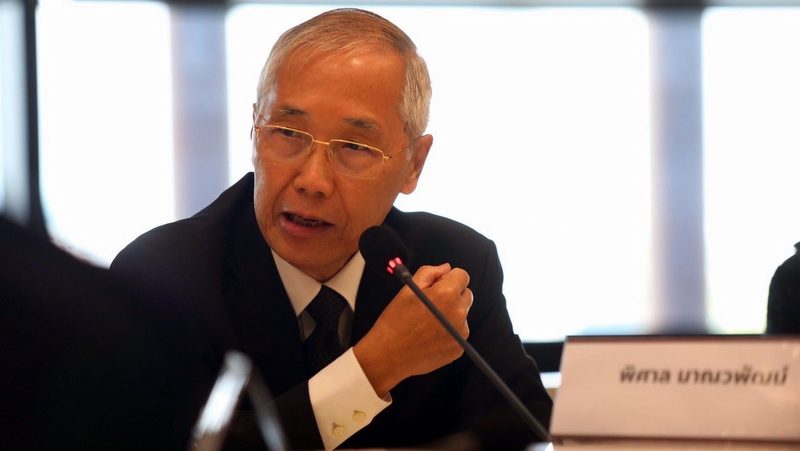
Speaking on Monday (May 25) after the weekly shadow Cabinet meeting, Pisan Manawapat of the PP’s executive team said Thailand must strengthen screening for special long-stay permits and address vulnerabilities "at the source".
He identified two schemes requiring urgent scrutiny: the Thailand Elite Card and long-term visa programmes, reports the Bangkok Post.
The Elite Card allows foreign nationals to stay in Thailand for five to 20 years in exchange for payments of 650,000 to 5 million baht.
While intended to promote long-term residency and economic activity, Mr Pisan said it contains loopholes, including weak checks on applicants’ sources of funds, behaviour and post-approval qualifications.
He said some holders were fugitives, subjects of international arrest warrants, or repeat offenders who could still travel in and out of the country, citing the case of Ming Chen Sun. He claimed the largest group of cardholders was of the same nationality most frequently linked to such offences.
He also pointed to long-term visa programmes introduced between 2022 and 2025, under which more than 7,000 permits have been issued to attract skilled professionals.
Authorities will be summoned on June 4 to examine possible money laundering and extortion cases.
Immigration authorities, he said, should work with agencies such as the Office of the Narcotics Control Board to identify permit holders on watchlists, with regular reviews disclosed to the public and parliament.
Peangpanor Boonklum, who oversees public-sector reform in the PP’s policy team, said enforcement gaps persist, particularly in visa overstays despite existing laws. Foreigners working in occupations reserved for Thais should face fines and deportation, with stricter enforcement coordinated with embassies.
She said visa extension requirements should be clearer, including proof of return travel, financial means and accommodation, while businesses facilitating unlawful stays must be held accountable. A broader review of visa-free policies is also needed, she added.
Ms Peangpanor cited a case of six Nigerian nationals who entered on student visas but overstayed, raising questions over extension approvals and institutional oversight.
She said agencies already have relevant data but need stronger coordination, and called for action against misconduct by state officials. Foreign land ownership via nominees, she warned, risks sidelining Thai citizens.
Pijarn Chaowapattanapong, the party’s secretary-general, described the issue as a security crisis driven by grey capital penetrating the economy that needed to be resolved.
He added that economic gains must not come at the expense of national security, insisting Thailand should welcome tourists, not serve as a base for transnational crime.