




The stepped-up response follows an Apr 17 meeting of local agencies, where Kathu District Palad Thamrong Chuayaksorn instructed officials to take stricter action against foreign tourists exhibiting inappropriate behaviour.
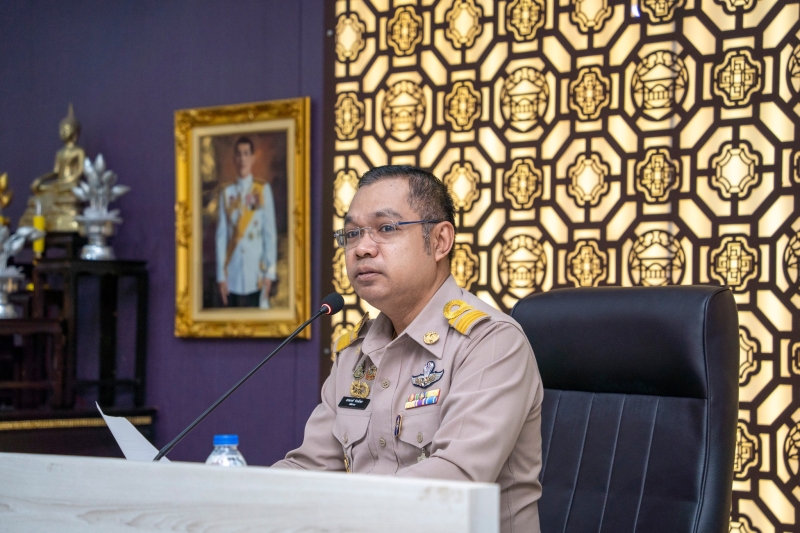
Patong Police Chief Pol Col Korakrit Khantakrue says officers have apprehended nearly all suspects involved in recent crimes in Patong, while stepping up preventative measures to curb repeat incidents.
“Regarding the various disturbances and many cases that have already occurred, we are pursuing the perpetrators. We’ve apprehended almost all of them now,” Col Korakrit said.
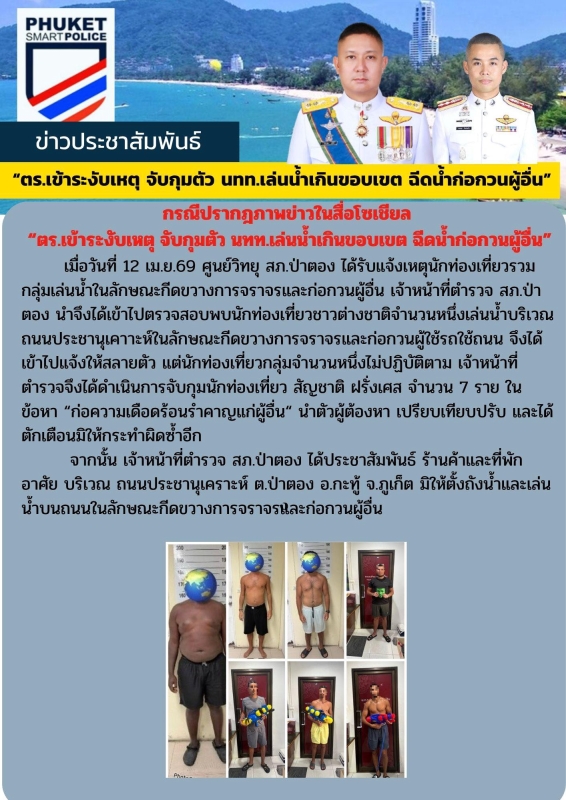
The case comes amid multiple Songkran-related incidents. On Apr 12, police arrested seven French tourists on Prachanukhro Rd for obstructing traffic and over-agressively splashing water at passers-by.
“The group was charged with causing a public nuisance, fined and warned,” said a police report on Facebook.
In a separate case, two French nationals were arrested after allegedly assaulting a Thai man during Songkran celebrations, leaving him with facial injuries. Police confirmed both suspects were taken into custody and face legal proceedings for assault.
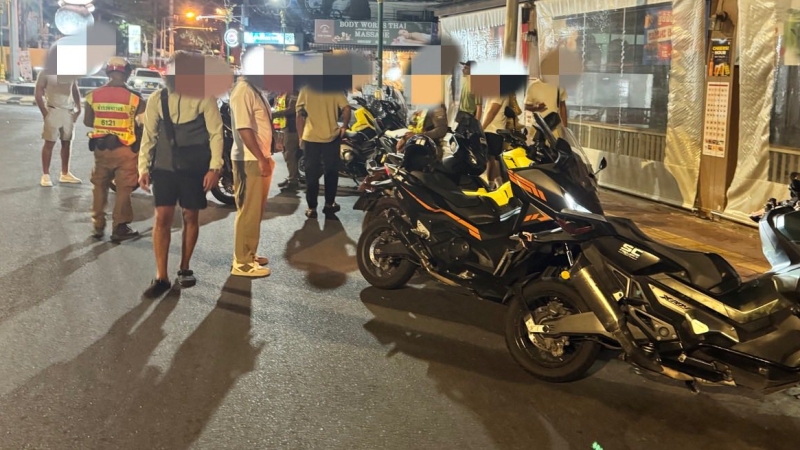
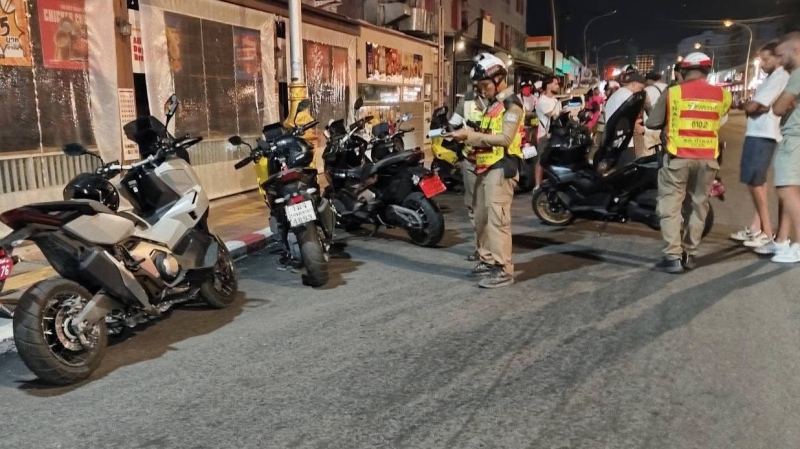
Patong Police have also taken action against dangerous driving, Pol Col Korakrit said.
Two foreign tourists, nationality not disclosed, were fined B24,000 and had their motorbike confiscated by court order for reckless driving. More recent operations saw officers seize motorbikes from groups riding at speed with loud exhausts along Patong Hill routes, he added.
Col Korakrit explained that Patong Police have also tightened measures, with enforcement now paired with intensified prevention.
“Investigative and patrol units have been deployed to inspect accommodations, restaurants and motorbike rental shops frequented by foreign tourists, while gathering information on groups considered at risk of causing trouble,” he said.
“This doesn’t mean everyone is a problem, or that every French tourist is a problem… but we [Patong Police] still keep to monitor the locations they frequent so that if incidents occur later, we can track them down,” he added.
Police have also introduced roving checkpoints targeting groups driving recklessly or causing disturbances, Col Korakrit noted.
‘CROSSING THE LINE’
Bhummikitti Ruktaengam, a long-standing figure in Phuket’s tourism sector and now Vice President for Tourism Strategy at the Tourism Council of Thailand (TCT), said that while most tourists behave appropriately, a minority continue to “cross the line”.
“Overall, I must say that most tourists didn’t cause any problems [during Songkran]; their overall behavior was generally orderly. However, there are some groups of tourists who may be boisterous or lack self-control, crossing the line, especially in cases we’ve seen on social media, such as splashing or shooting water at locals performing their duties, like van drivers, which can cause inconvenience or discomfort to others,” he said.
“This reflects that even among Thais ourselves, we try not to cross the line and not do things without the other party’s consent. Therefore, tourists should also understand and respect this principle,” he added.
Referring to the incidents that resulted in police charges, Mr Bhummikitti continued, “Of course, this type of behavior is inappropriate, and it’s not just during Songkran.
“Crossing the line occurs in many other cases, such as tourists renting motorbikes and driving them without experience or understanding traffic laws, causing accidents for themselves and others. This is something that the police need to closely monitor.
“I want to emphasise that when tourists come to our country, they need to respect our rules, just as when we travel abroad, we must abide by the laws and culture of that country,” he noted.
“Regarding the relevant agencies, it is necessary to accelerate communication and education for tourists to ensure they understand that tourism is not about doing whatever they want, but must adhere to social rules.
“The important thing is discipline, respect for the rules, and understanding local culture,” Mr Bhummikitti concluded.