


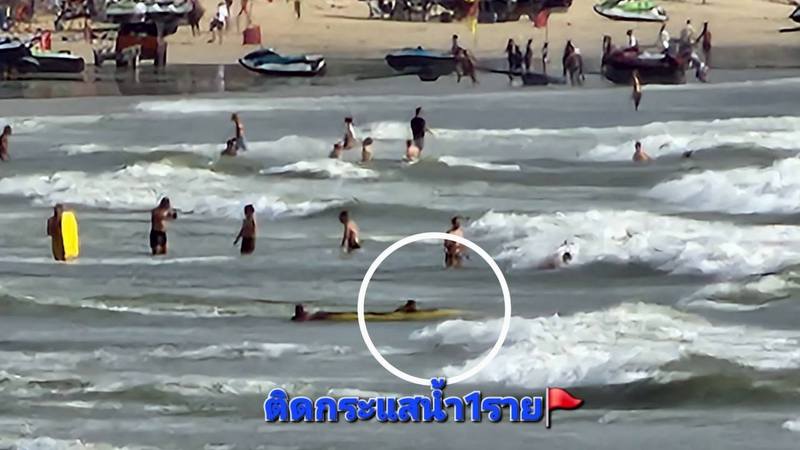
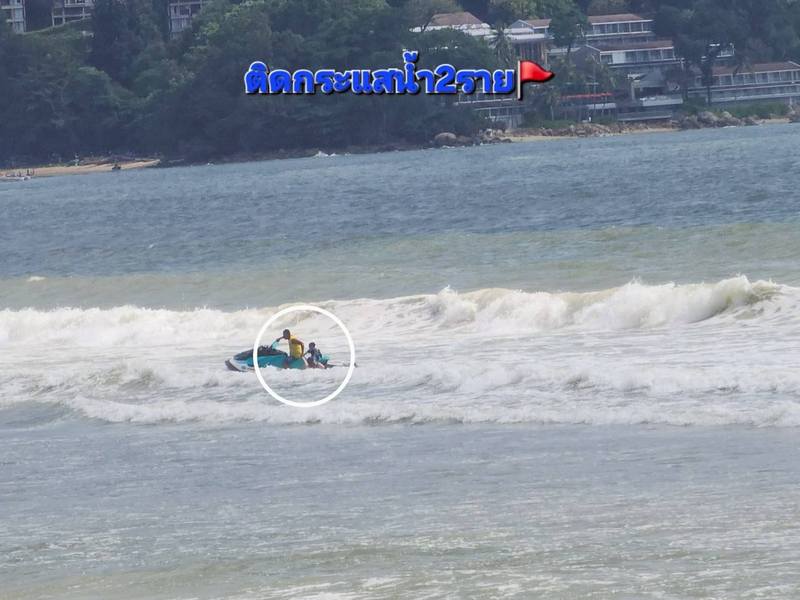
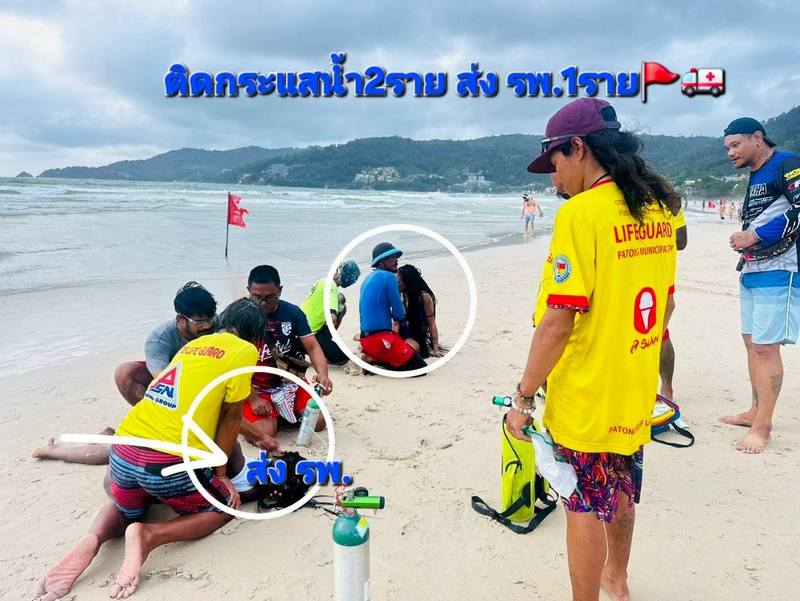
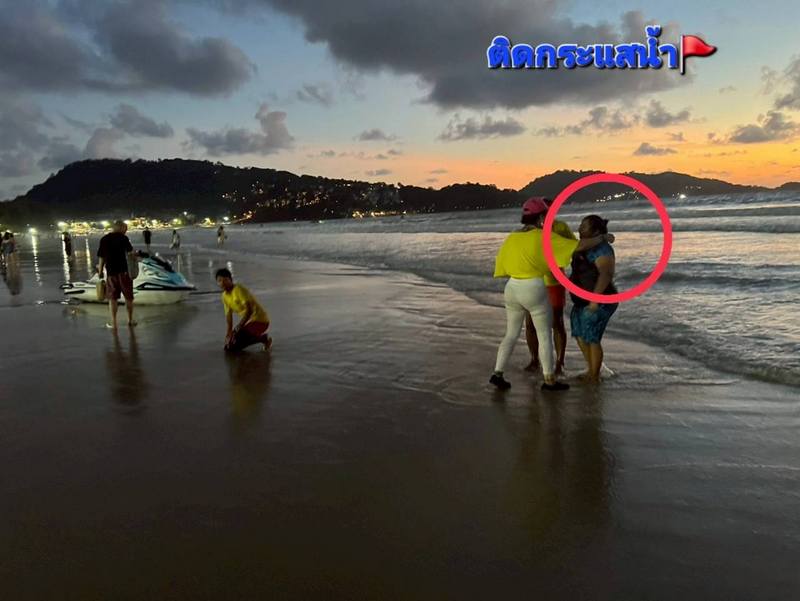

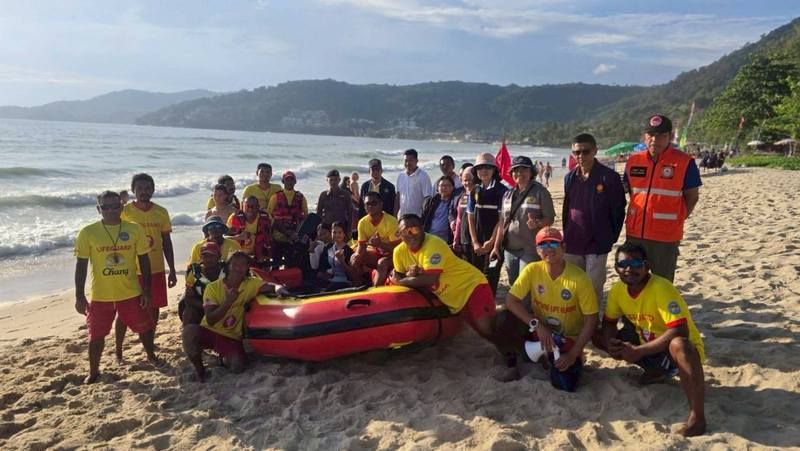
The comprehensive monthly report issued earlier this week details a wide range of incidents, showcasing the crucial role they play in keeping both tourists and locals safe.
Of the 122 people pulled from treacherous currents, two individuals were in a weakened state and required transport to the hospital.
However, the lifeguards’ efforts weren’t limited to just water rescues. They also dealt with numerous other emergencies and incidents throughout the month.
The team responded to eight cases of injuries from water sports like jet-skiing, parasailing and banana boat rides, with four of those requiring transport to Patong Hospital.
Lifeguards also provided first aid for jellyfish stings, injuries from sharp objects or shells, and multiple ailments suffered on the beach, including fainting and seizures.
Beyond the beach itself, the lifeguards’ duties sometimes took them beyond their usual area of operation. They responded to four cases off the beach, including a road accident that required an ambulance. They also assisted with disturbances, helped return lost property to tourists, and handled a theft case that was handed over to the Patong Police Station.
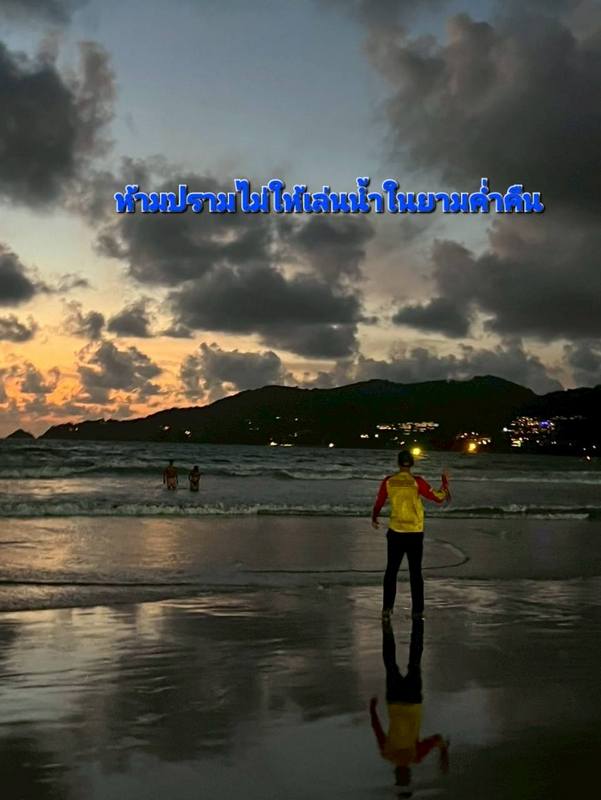
The report also highlighted the work of the “night team”. While not as busy with water rescues, they were vital in ensuring safety after dark. Their most frequent duty was advising 14 groups of tourists not to swim at night. The night team also responded to two cases of severe intoxication, with one requiring an overdose patient to be taken to the hospital.
The summary concluded with a positive note: despite the high number of incidents and rescues, there were no fatalities reported for either humans or animals during the month.