


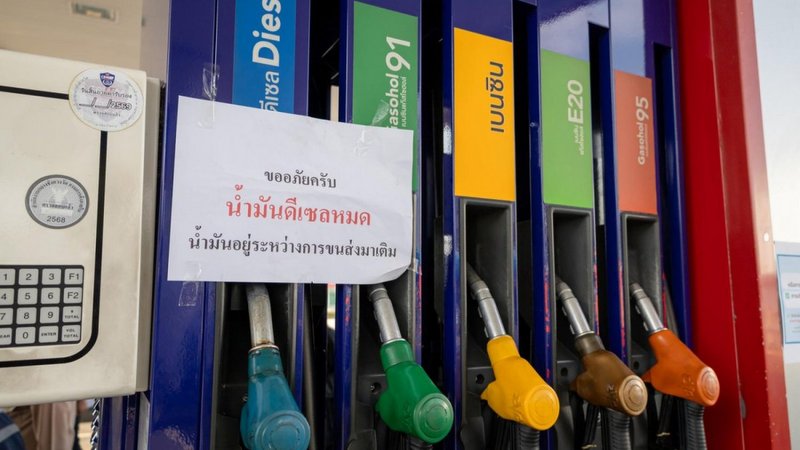
Mr Ekniti said the National Economic and Social Development Council (NESDC) reported its assessment of the war, predicting the conflict is likely to last longer than one month, exceeding earlier expectations, reports the Bangkok Post.
He was speaking after an urgent meeting of Finance Ministry executives to assess the impact of the Middle Eastern conflict on the Thai economy.
"The NESDC conducted an in-depth analysis of economic impact scenarios," Mr Ekniti said.
"Initially it assessed a case in which the war could end within one month, estimating that every $10 increase in oil prices would reduce GDP growth by around 0.2 percentage points."
However, the conflict now shows signs of becoming prolonged and is likely to push global oil prices significantly higher than previously estimated, said Mr Ekniti, which would directly affect energy costs and the economy.
He said the ministry urgently convened an internal meeting of executives to analyse the oil market and related import factors. Following the meeting, the finance permanent secretary or ministry spokesperson will provide further details and conclusions to the media, said Mr Ekniti.
Previously Danucha Pichayanan, secretary-general of the NESDC, said the agency assessed the potential impact on GDP of the war using two scenarios.
In the first scenario, the war ends within one month and the Strait of Hormuz is closed, causing oil prices to rise to $95-105 per barrel, which could reduce Thai economic growth to 1.6% from a projection of 2%, noted the NESDC.
In the second scenario, the war lasts more than one month and the strait remains closed, disrupting oil shipments and the global supply chain, with oil climbing to $115-125 per barrel. In this case, Thai GDP growth slows to 1.3% this year, according to the council.