


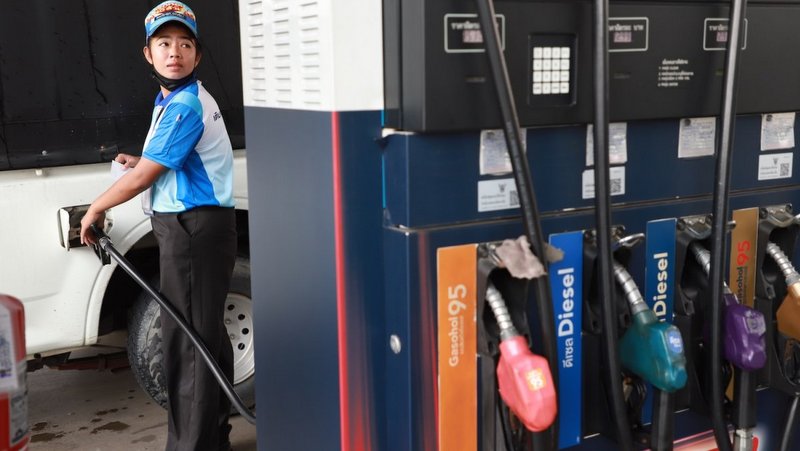
Retail diesel prices remained at B40.80 per litre yesterday (May 7), with a levy of B0.54 per litre. Without the levy, the price would be B40.26, reports the Bangkok Post.
A week earlier, on May 1, the fund spent B3.12 per litre to cap diesel prices at the same level.
Officials cautioned that lower global oil prices would not immediately translate into cheaper fuel for motorists, as the fund must continue collecting contributions to repay its heavy debt.
The fund, designed as a buffer against global price volatility, recorded a deficit of B63.5 billion on May 6 after extensive subsidies, mainly for diesel and liquefied petroleum gas (LPG).
The debt ballooned after the government spent heavily to slow a surge in domestic fuel prices triggered by the Israel-US war on Iran.
An energy official who requested anonymity said hopes for a peace agreement between the US, Israel and Iran helped to push global crude prices lower.
Brent crude futures settled at US$101.27 per barrel on Wednesday, down almost 8% to a two-week low, before rebounding slightly to $101.81 yesterday.
“We haven’t concluded whether the Oil Fuel Fund’s debt will be steadily repaid because we haven’t seen any real discussions among those responsible for high global oil prices,” the official said.
He said that even if peace talks succeed, Thai motorists may still face higher prices until the accumulated debt is cleared.
The official warned against premature celebrations, as motorists have long benefited from subsidised fuel. When global prices fall, the fund must resume collecting levies to reduce its deficit.
Subsidies remain in place for gasohol E20 (20% ethanol blend) and diesel B20 (20% palm oil methyl ester blend), as authorities continue to promote biofuels.
The government also maintained a B5 discount on the ex-refinery diesel price to ease household and business expenses during the conflict.