


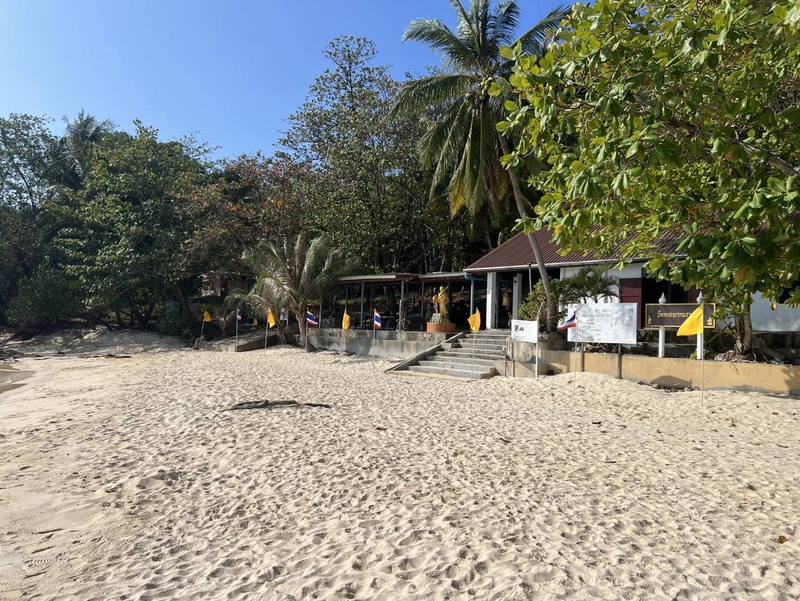

The update was issued yesterday (Mar 5) by the Incident Command Center overseeing the response to the vessel’s sinking, which continues to monitor sensitive marine areas including Koh Kaew Yai and Koh Racha Yai.
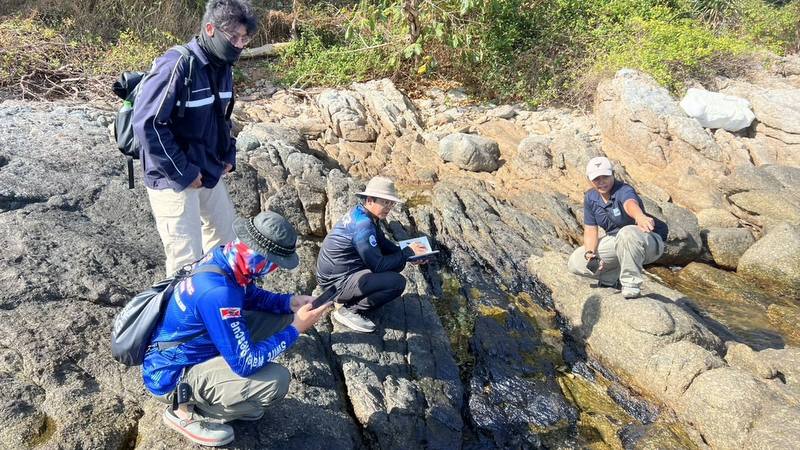
Officials reported that surveys carried out on Tuesday and Wednesday (Mar 3-4) by specialists from the International Tanker Owners Pollution Federation (ITOPF) found limited contamination, mostly in the form of thin coatings on rocks and small tar balls scattered along beaches.
“No new oil slicks have been found since the previous survey on Feb 27,” the report stated.
Authorities added that at the wreck site itself, inspectors occasionally observed thin silver or rainbow-coloured oil films on the water surface. These could not be collected but are expected to dissipate naturally.
Overall, officials said the situation is gradually improving, with oil residues continuing to decrease while remaining under close monitoring by multiple agencies.
CLEANUP CONTINUES
Earlier inspections conducted on Monday (Mar 3) found that oil residue had washed ashore in some locations but was largely confined to small deposits on beaches and rocks.
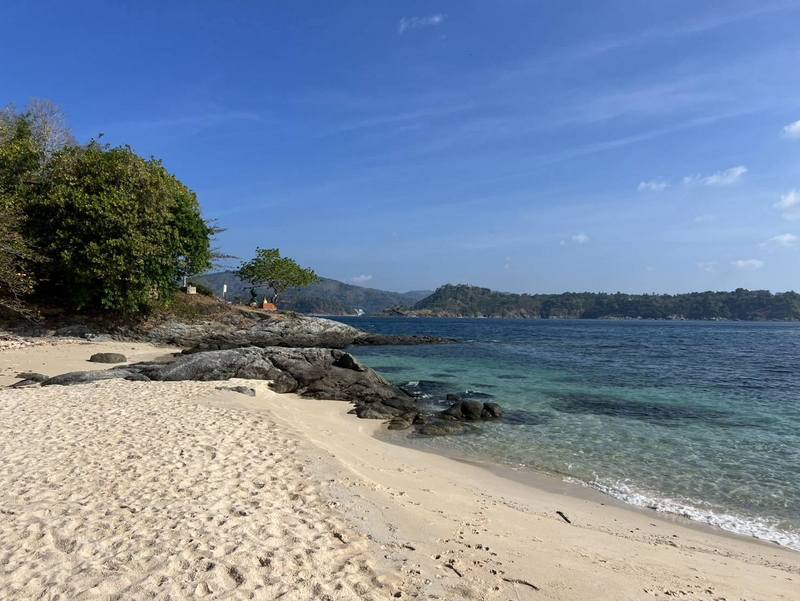
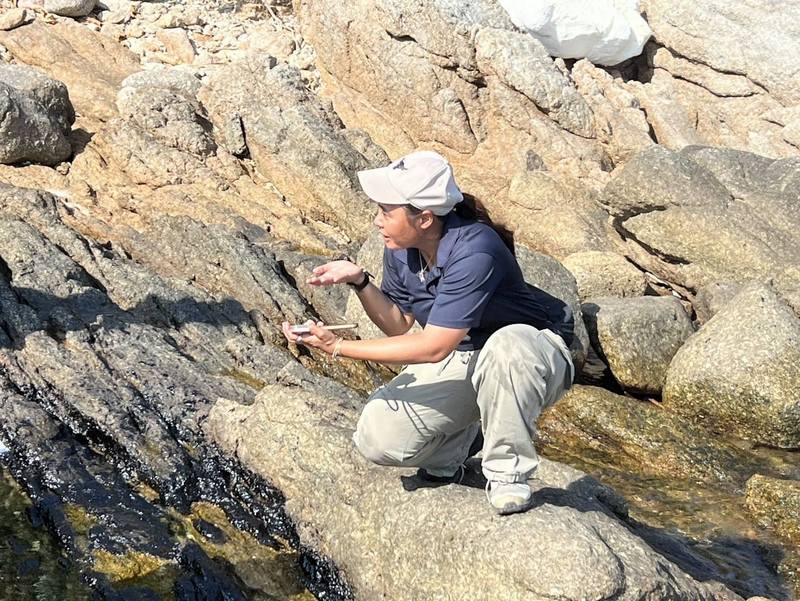
At Koh Kaew Yai, teams reported small tar balls on sandy areas, which were collected and removed for disposal. Oil residues were also found stuck to rocks, requiring manual cleaning using brushes and other equipment.
Similar conditions were reported on Koh Racha Yai, particularly at Ao Siam and Ao Patok, where small tar balls were collected from beaches while rocky areas were cleaned during low tide. Sorbent booms were also deployed to prevent residue from washing back into the sea.
Authorities said some residues remain firmly attached to rocks and may require additional manual cleaning, potentially timed with low tide conditions.
MULTI-AGENCY RESPONSE
The response effort involves multiple agencies including the Department of Marine and Coastal Resources, the Pollution Control Department, the Upper Andaman Marine and Coastal Resources Research Centre, and international specialists from ITOPF.
The cleanup strategy follows the Net Environmental Benefit Analysis (NEBA) approach, which aims to ensure that shoreline cleaning methods minimise additional environmental damage while effectively removing contamination.
Waste collected during cleanup operations is being handled under environmental regulations, with the Department of Marine and Coastal Resources coordinating shoreline cleanup while contractors hired by the vessel’s insurer arrange transport and disposal.
MONITORING BY SEA, AIR, SATELLITE
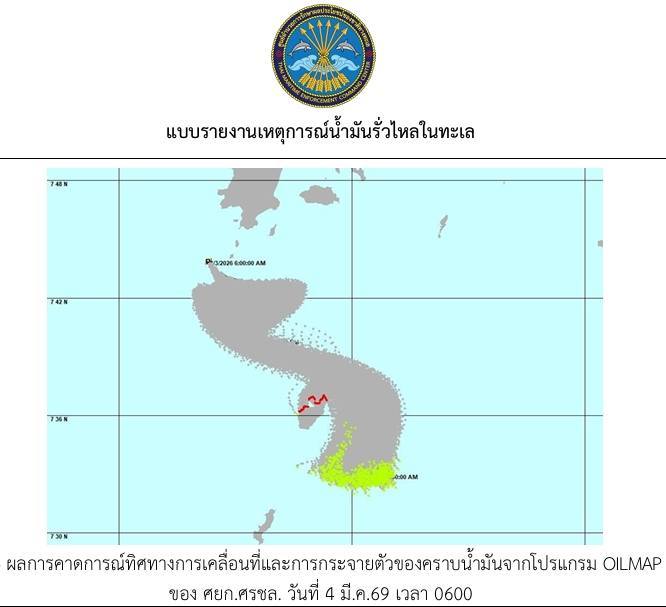
Authorities said surveillance of the spill continues using patrol boats, drones and satellite monitoring.
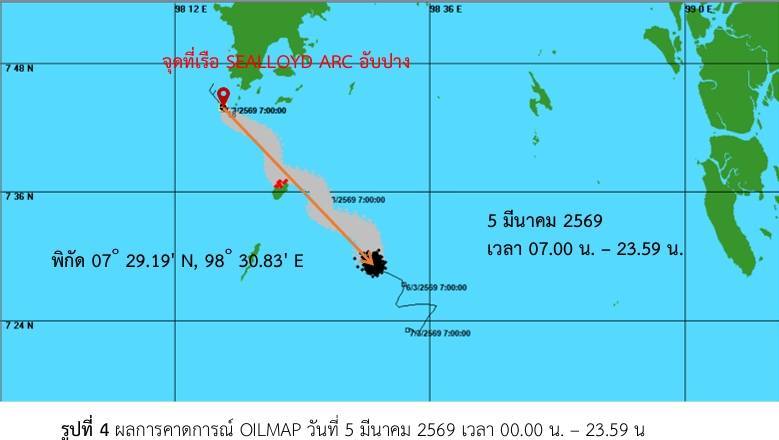
A patrol boat inspection earlier this week detected a thin, discontinuous oil film about one nautical mile from the wreck site, while satellite data and modelling are being used to predict possible movement of remaining oil.
The monitoring effort also involves the Marine Police, the Royal Thai Navy and the Geo-Informatics and Space Technology Development Agency (GISTDA).
Several naval vessels and response teams remain on standby in case further oil contamination is detected.
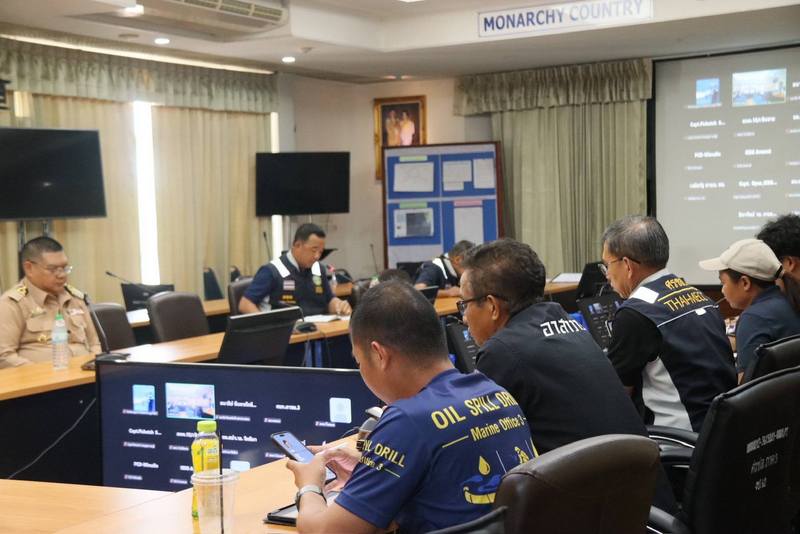
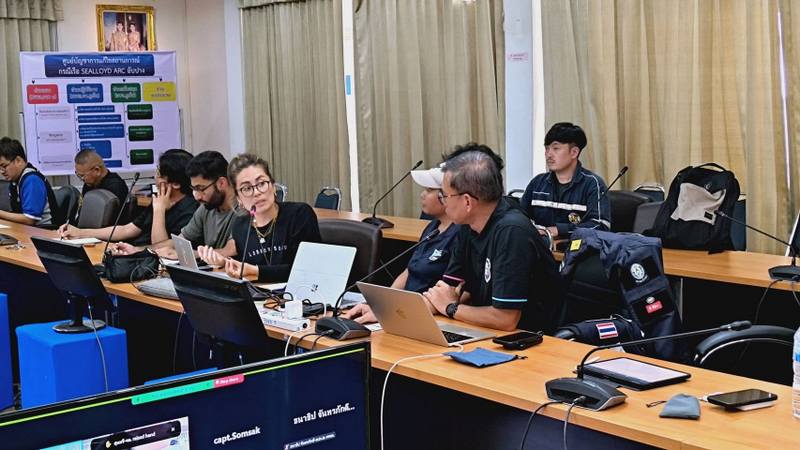
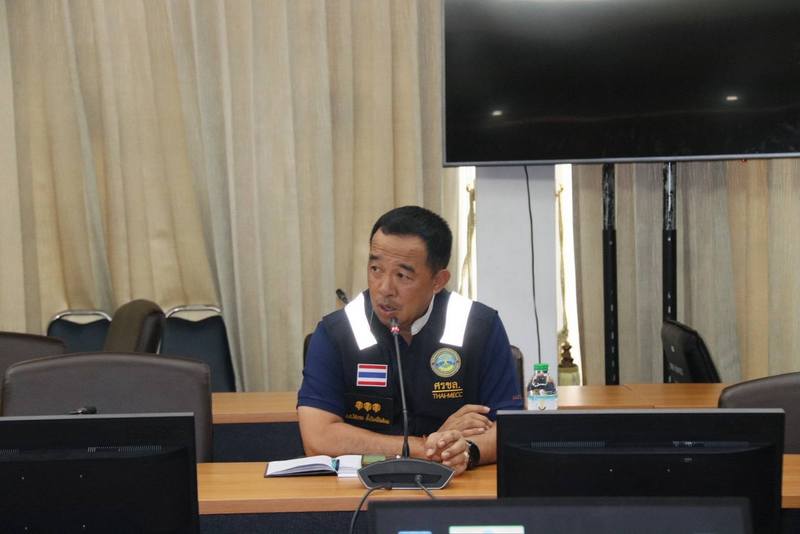
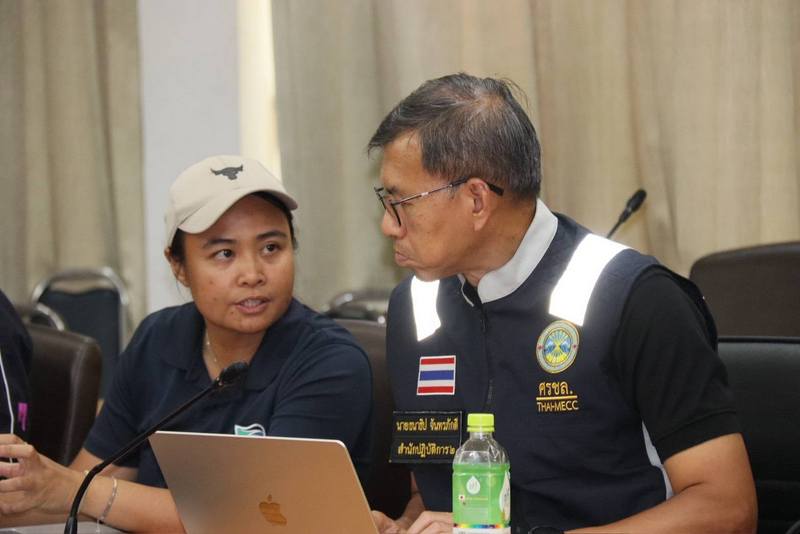
Meanwhile, Thai Maritime Enforcement Command Centre Region 3 (Thai-MECC 3) is also conducting a training exercise to improve coordination in maritime emergency response.
The exercise, held at the Pago hotel in Ratsada, began on Tuesday and concludes today (Mar 6).
The training focuses on the Incident Command System (ICS) used to manage maritime emergencies, including oil spills and other disasters at sea.
Officials said the training aims to strengthen coordination between agencies responsible for maritime safety, disaster response and environmental protection across the Andaman region.
Authorities said monitoring of the SEALLOYD ARC wreck site and surrounding islands will continue as a precaution.