



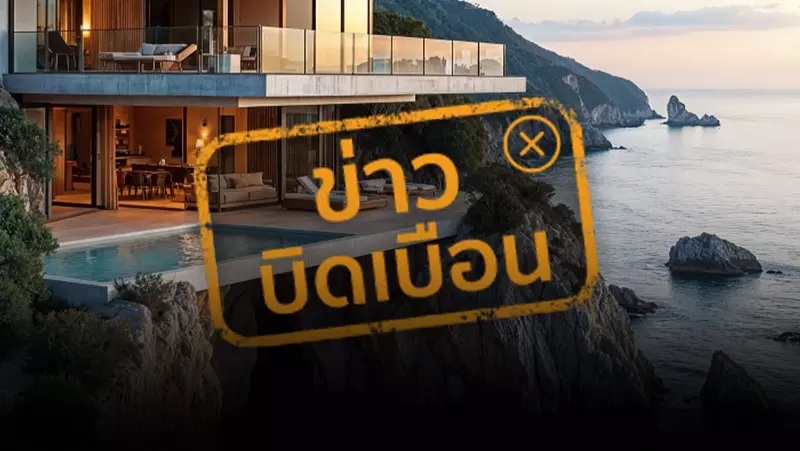
The warning, issued by the Anti-Fake News Center (AFNC) on Sunday (Apr 26), follows an investigation into a foreign real estate investor and financial content creator promoting overseas property opportunities. Officials said the content emphasised high returns and tax advantages, but risked misinforming viewers about Thai legal restrictions on foreign property ownership and taxation.
The Phuket Provincial Land Office moved to clarify the rules, stressing that foreign ownership of real estate in Thailand remains tightly regulated.
Under the Condominium Act, foreigners are permitted to own condominium units, but only up to 49% of the total floor area of all units in a condominium building. Ownership of land, however, is largely prohibited for foreign nationals, except under limited provisions outlined in Chapter 8 of the Land Code or through specific investment promotion schemes, the AFNC said in its warning.
The Land Department also noted that while foreigners may legally own buildings or structures under the Civil and Commercial Code, this does not automatically confer ownership of the land on which they stand. Claims of “freehold” house ownership must therefore clearly distinguish between ownership of the building itself and the underlying land, the warning added.
On taxation, local officials were unequivocal.
The Cherng Talay Tambon Administrative Organisation (OrBorTor) confirmed that land and building taxes are levied in accordance with the Land and Building Tax Act B.E. 2562 (2019), and apply to all property owners or possessors as of January 1 of the relevant tax year, regardless of nationality.
“There are no exemptions based on whether the owner is Thai or foreign,” the notice stated.
The clarification comes amid heightened scrutiny of foreign activity in Phuket’s property sector, following a recent controversy involving claims made online by a foreign national regarding tax-free property ownership and residency privileges.
As previously reported, Minister of Tourism and Sports Surasak Panjaroenvorakul confirmed that authorities are investigating statements by an expatriate who claimed he had purchased a B56 million property near Bang Tao Beach and could remain in Thailand while paying “0% tax” on global income under a so-called “wealthy global citizenship” arrangement.
Mr Surasak said any such claim, if proven true, would be illegal and subject to enforcement.
“Residing in a residence without paying taxes is already illegal,” he said last week. “This must be verified, including the type of visa used and supporting documentation.”
He added that visa issuance must comply with strict regulatory requirements, including verification of financial status, investment sources and supporting documents.
The case is currently being examined by the Phuket Governor and relevant agencies.
The issue has also fed into broader concerns about the impact of foreign visitors and investors, as the government reviews its tourism and immigration policies.
Authorities are considering revisions to the country’s visa framework, including a possible rollback of the 60-day visa-free entry scheme introduced to boost tourism, amid reports of inappropriate behaviour and regulatory loopholes being exploited.
Officials have stressed that while Thailand remains open to foreign investment, particularly in the property sector, all transactions and residency arrangements must comply fully with Thai law.
The Anti-Fake News Center urged the public to verify information from credible sources before making investment decisions, warning that misleading online content could expose buyers to legal and financial risks.
Authorities reiterated that foreigners can legally invest in certain types of real estate and reside in Thailand under specific conditions, but are subject to the same tax obligations as any other property owner, with no special exemptions.