


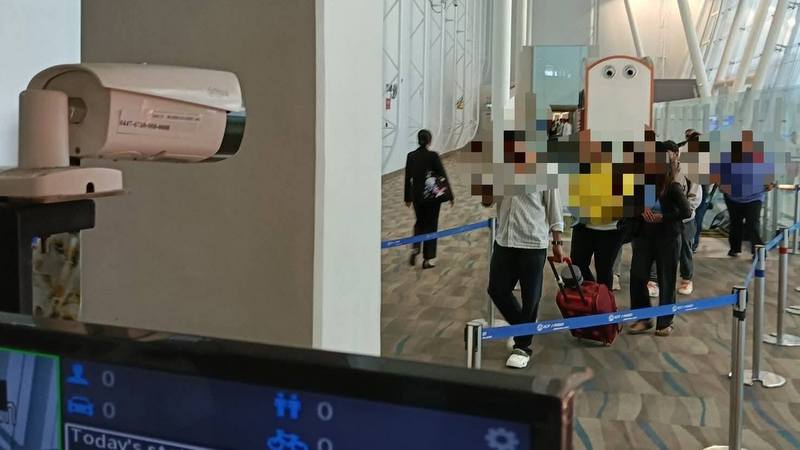


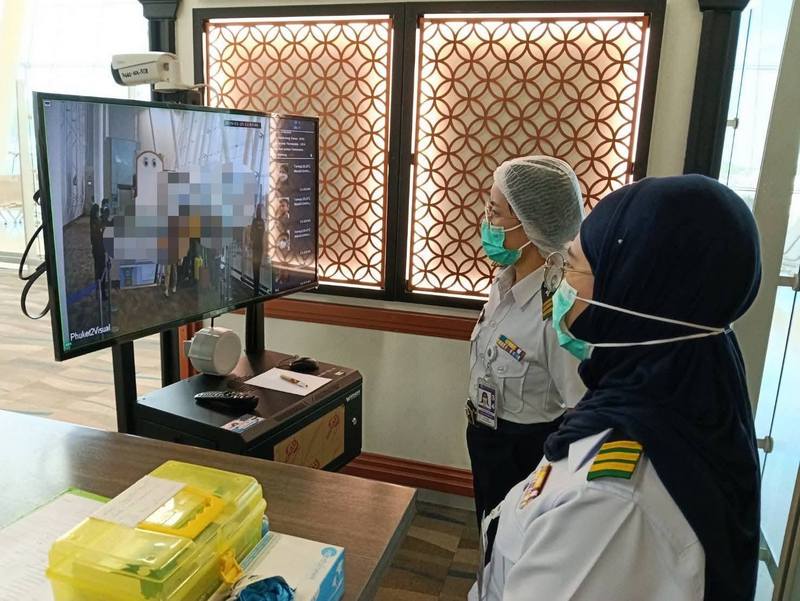
Airport officials confirmed yesterday (Jan 25) that screening measures are being reviewed and reinforced for passengers arriving from affected areas, particularly West Bengal, which remains under close international surveillance.
Phuket Airport currently has one airline operating five direct flights per week from the affected region. Authorities said the situation is being continuously monitored, with ongoing risk assessments to ensure effective disease control.
As part of the enhanced precautions, the airport has increased the frequency of cleaning in passenger terminals, particularly in common areas and high-contact surfaces, while maintaining close coordination with disease control officers stationed at the airport.
Officials stressed that Phuket Airport is ready to strictly implement any additional measures or guidelines issued by the Ministry of Public Health should disease control protocols be upgraded.
“The airport remains confident in its public health management system and is committed to ensuring safety and confidence for passengers, airport users and staff,” an airport statement said.
The move follows confirmation from the Department of Disease Control (DDC) that Thailand has recorded no cases of Nipah virus infection.
Speaking on Saturday (Jan 24), Airin Phanrit, Deputy Spokesperson for the Prime Minister’s Office, said the government has instructed all relevant agencies to closely monitor the situation in India and strengthen screening at international disease control checkpoints.
Dr Montien Kanasawasdi, Director-General of the DDC, said the Nipah virus is classified as a dangerous communicable disease under the Communicable Diseases Act B.E. 2558 and can cause severe neurological and respiratory symptoms, with a high fatality rate.
However, he noted that the virus is more difficult to transmit than COVID-19, as it requires close contact with bodily fluids. The natural reservoir of the virus is fruit bats, with possible transmission to humans through infected animals or, in some cases, person-to-person contact.
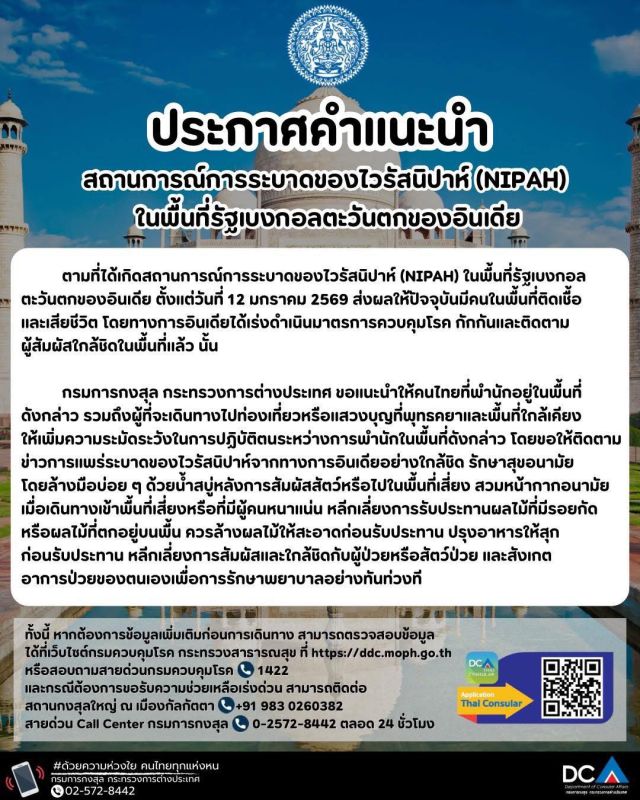
Dr Direk Khampaen, Deputy Director-General of the DDC, advised Thai citizens travelling to India, including pilgrims heading to Bodh Gaya and nearby areas, to avoid outbreak zones, practise good hygiene, and avoid contact with bats, pigs and other wild animals.
Travellers returning from India are urged to monitor their health for at least 21 days and seek medical attention immediately if they develop symptoms such as fever, cough, fatigue or neurological abnormalities, while informing doctors of their travel history.
The Department of Medical Sciences confirmed it is fully prepared to diagnose Nipah virus infection using Real-time RT-PCR testing, with results available within eight hours of receiving samples.
Meanwhile, the Ministry of Foreign Affairs, through the Department of Consular Affairs, has advised Thai nationals in West Bengal and surrounding areas to closely follow official updates and maintain strict hygiene, following reports of infections and deaths since Jan 12.
Authorities have urged the public to rely on official information and not panic. For further information, the DDC hotline can be reached at 1422.