






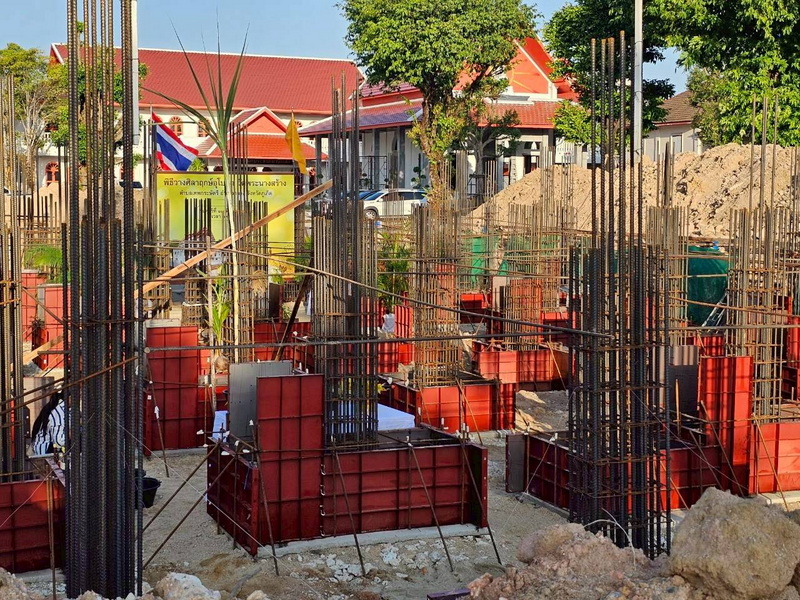

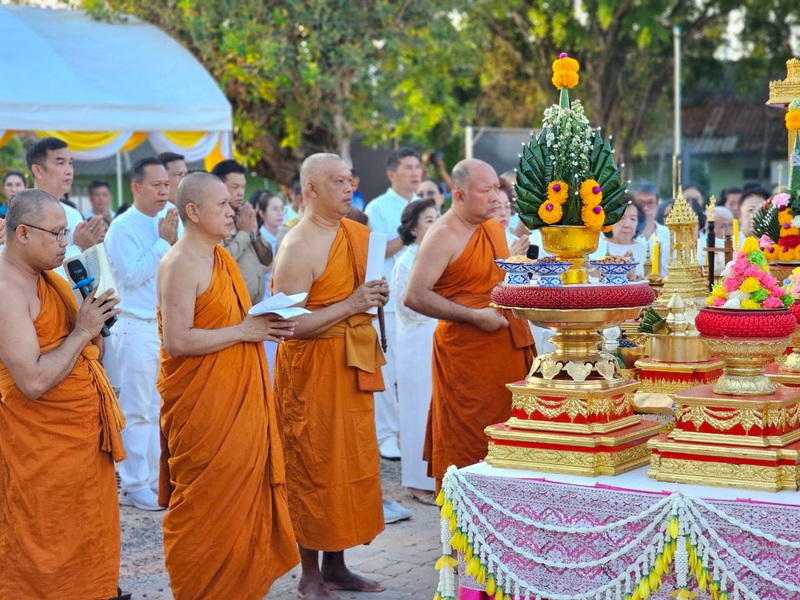
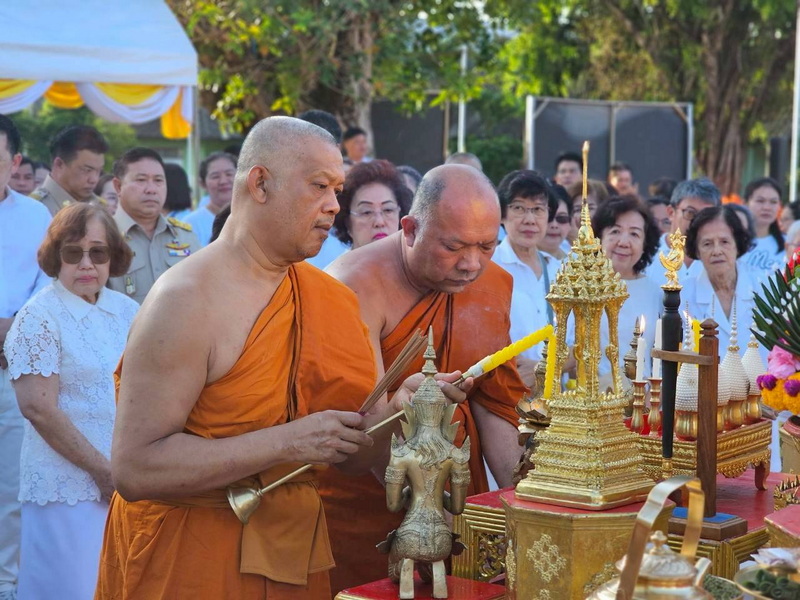



The laying of the foundation stone is regarded in Thai Buddhist tradition as a key milestone, believed to ensure stability, prosperity and auspiciousness for the building and those who use it.
The ceremony was held at the temple in Thep Krasatri, Thalang, and was conducted according to an auspicious date traditionally observed for the construction of religious buildings.
Presiding over the religious rites was Phra Tham Wachirathibodi, abbot of Wat Benchamabophit Dusitwanaram and ecclesiastical chief of Sangha Region 17. He was joined by Phra Udom Wachiramongkol (Wirat Atthathammo), abbot of Wat Mongkol Nimit.
Phuket Vice Governor Adul Chuthong led the lay participants, alongside heads of government agencies, local leaders and a large number of residents.
The ceremony featured a series of traditional Buddhist rites intended to bring good fortune to the construction. Monks chanted prayers and bestowed blessings before the main ritual, in which sacred items including the foundation stone, symbolic bricks of gold, silver and bronze, and auspicious wood were consecrated.
Participants witnessed the placing of coins, sand and ritual objects into the foundation pit, followed by the installation of the main pillar. The event concluded with offerings to monks and a water-pouring ceremony, symbolising the sharing of merit.
Wat Phra Nang Sang is one of Phuket’s oldest and most historically significant temples, believed to date back to the Ayutthaya period. The temple is closely tied to the history of Thalang and local legend, including the story of Phra Nang Lueat Khao, or the ‘White-Blooded Lady’, from whom the temple takes its name.
The site has long served as a spiritual centre for the local community and houses revered Buddha images and ancient artefacts.
The foundation-laying ceremony also signals progress in rebuilding efforts after the temple’s previous ordination hall, which stood for more than two centuries, was demolished in September last year due to structural safety concerns.
Officials had confirmed at the time that the building was at risk of collapse, with severe deterioration including cracks and water damage making restoration unviable.
Despite public concern over the loss of the historic structure and its murals, authorities approved plans for a new hall, with assurances that construction would proceed in accordance with heritage regulations and safety standards.