


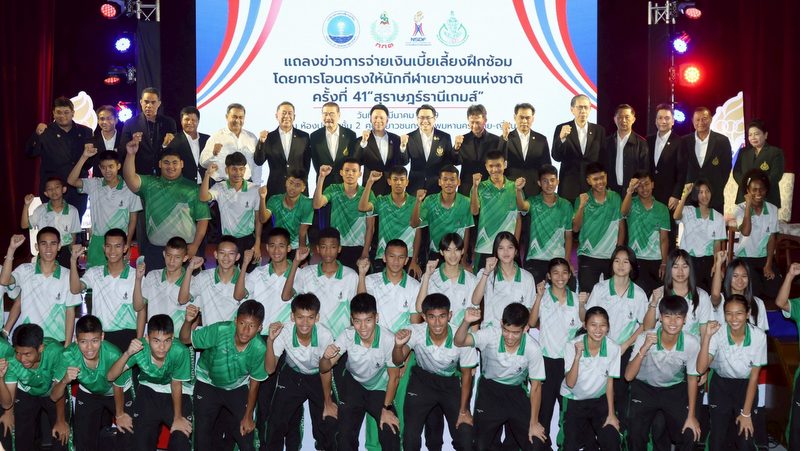


The Ministry of Tourism and Sports (MOTS), in collaboration with the Sports Authority of Thailand (SAT) and the National Sports Development Fund (NSDF), confirmed on Mar 17 that it has implemented significant changes to how athlete allowances and grants are managed.
The most notable update is the launch of a pilot program to bypass intermediate associations and transfer funds directly to athletes’ bank accounts.
Furthermore, one-time performance grants and rewards will be imparted to top-performing Thai athletes who claim medals at major international competitions such as the Olympic Games, World Championships, Asian Games and Southeast Asian Games.
The pilot program will launch at the 41st National Youth Games in Surat Thani between May 7-17, initially only for Bangkok-based athletes due to the province having the largest number of participating athletes. Assuming the pilot proves successful, however, the plan is to roll out the initiative nationwide as the country strives to develop its sporting talent to the best of its ability.
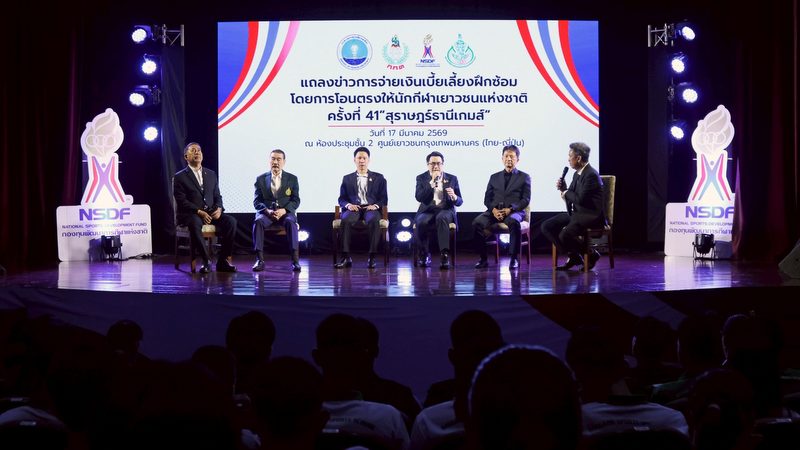
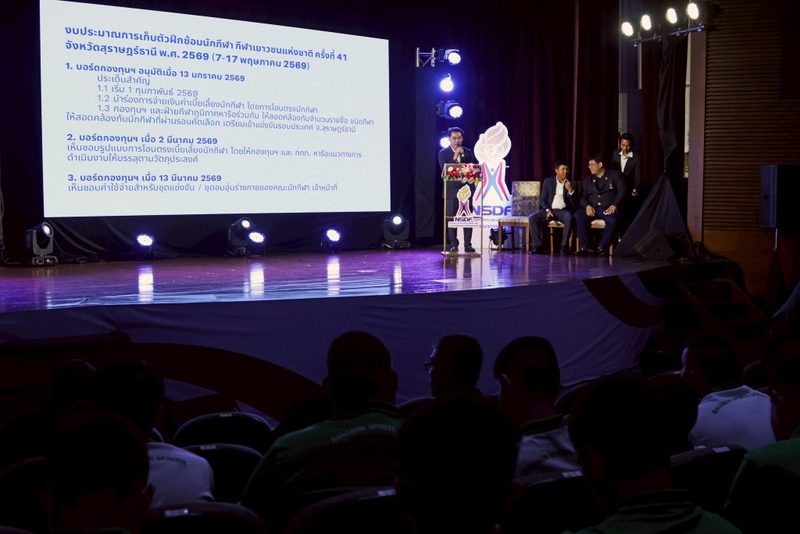
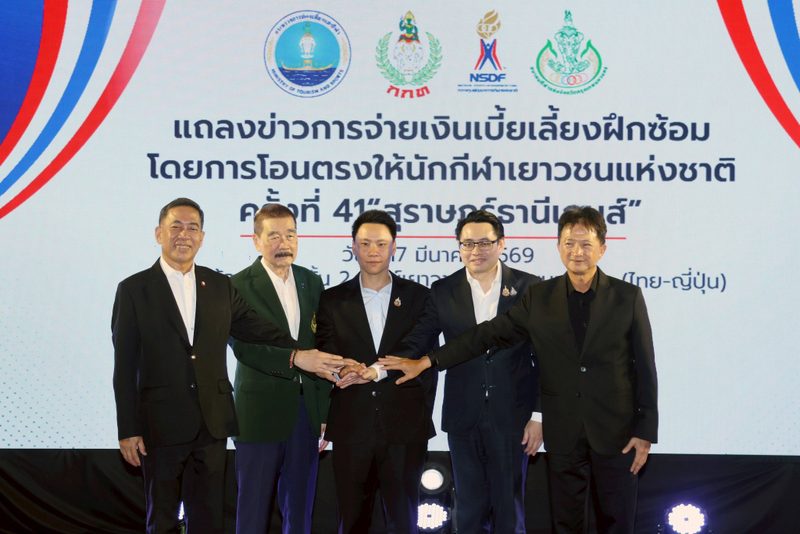
The announcement was made at an official press conference at the Bangkok Youth Center in Bangkok on Mar 17 chaired by Attakorn Sirilakthayakorn, Minister of Tourism and Sports.
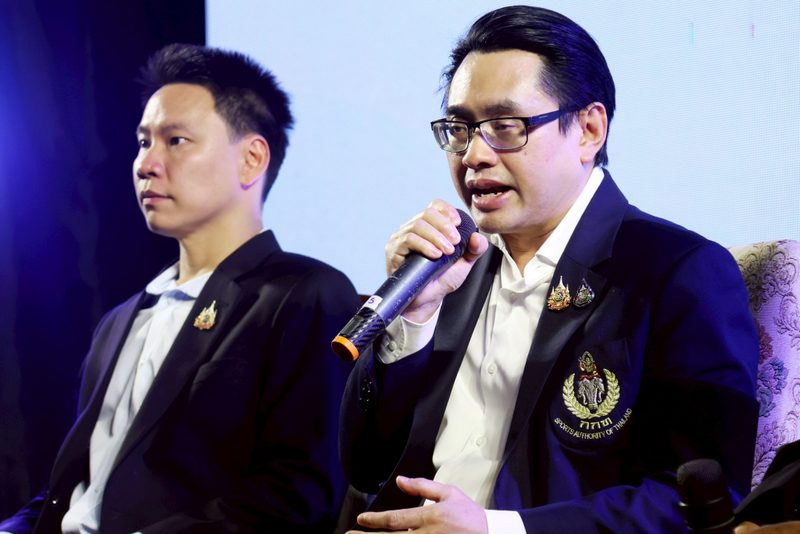
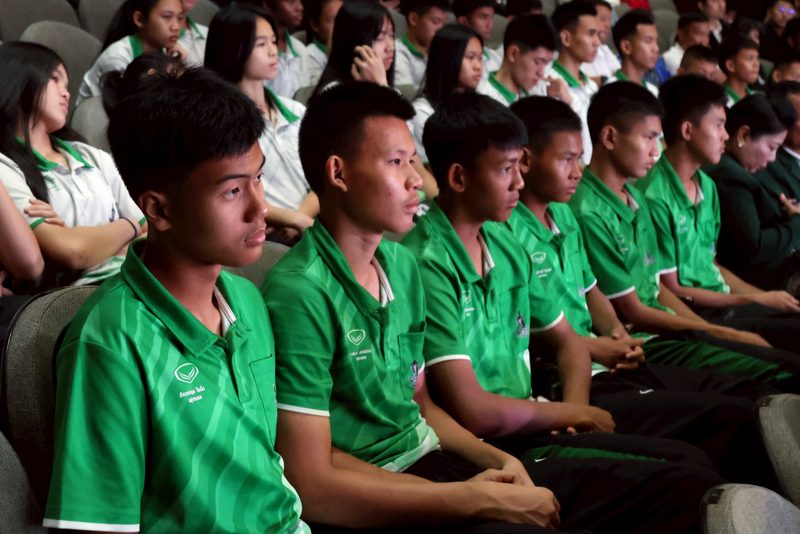
Joining Mr Attakorn was: Thanukiat Chanchum, manager of the NSDF; Kongsak Yodmani, Governor of the SAT; Surasak Kerchantuk, Deputy Governor of the SAT for Sports Promotion; Thirachai Wutthitham, President of the Bangkok Metropolitan Sports Association; senior executives from the SAT and NSDF; representatives from the Bangkok Metropolitan Sports Association, as well as a selected number of national athletes and coaches.
Mr Attakorn explained that the transition to direct allowance payments to athletes is to facilitate swift transfers, ensuring transparency, speed and accessibility, while solving frequent previous issues relating to delayed payments. Typically, such government disbursement delays would result in athletes owed months of pay and allowances in arrears and result in sports associations having to advance payments instead. The new model, developed by MOTS in partnership with Krungthai Bank, would overcome this challenge and allow a more streamlined and efficient method of payment, Mr Attakorn said. “It is critical to ensure athletes have direct and rapid access to government budgets and welfare,” he commented.
Performance awards
The Minister went on to detail how the new training and competition allowance model for national-level athletes will provide a total daily allowance of approximately B600, which is typically broken down to B300 for meals and B300 as a personal allowance.
The MOTS, the SAT, and the NSDF have also implemented measures and allocated separate budgets to cover associated costs relating to travel, kits, equipment and nutrition management to ensure smooth and efficient operations, Mr Attakorn said.
He also explained that in addition to daily allowances, the MOTS and NSDF provide one-time performance grants and international performance awards where substantial prize money is offered as an incentive and granted for medal-winning performances at top international events. Elaborating on this point, Mr Thanukiat confirmed that the NSDF board has already approved prize money totaling B6 million for weightlifting athletes and over B11mn for associations including football, jiu-jitsu and rugby competing at the 41st National Youth Games in Surat Thani.
Mr Attakorn concluded his remaks by confirming that improved scholarships have also been approved which will provide financial support for outstanding national athletes to pursue their education.
However, the new measures received prompt criticism from several major sports associations, including the Olympic Committee of Thailand, who expressed concerns. The direct payment for daily meal provisions, for example, proves problematic as specially prepared meals for top level athletes typically cost more than the B300 allocation, which could hinder collective nutrition management.
Olympic Committee advisor Intarat Yodbangtoey, honorary president of the Thailand Weightlifting Association, also questioned the fund’s budget management, citing an imbalance of distribution between sports associations which often results in a challenge to access funding for athlete preparation and participation at international competitions.