


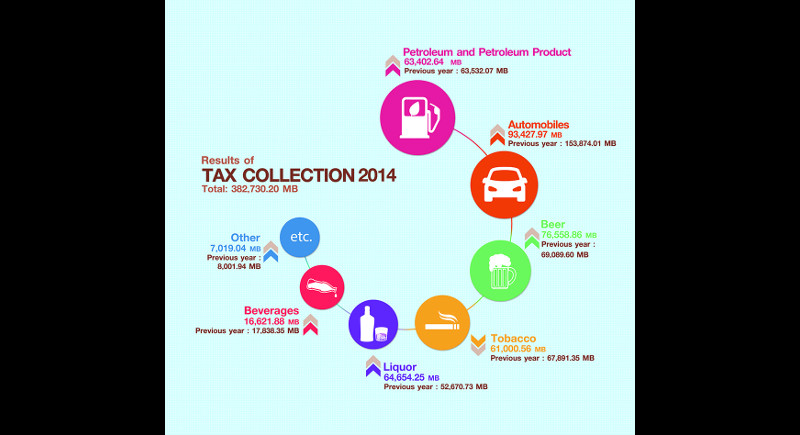
Under the new scheme, to be brought into effect on August 1, the tax ceiling on beer, wine and liquor will be 30% of retail prices, or B3,000 per litre of pure alcohol.
The tax rates will be levied at a rate calculated in accordance with 1,000 millilitres of pure alcohol contained per product.
Under the current alcohol tax regime, to be replaced, beer and wine is taxed between B300 and B2,000 per litre of pure alcohol. Under the new regime, the ceiling for the next 20 years has been set at B3,000 per litre of pure alcohol.
Similarly, spirits is currently taxed at B400 per litre of pure alcohol, but the next tax structure will see that rise to B1,000 per litre of pure alcohol over the next two decades.
Jongkolnee Buathong, Director of the Phuket office of the Excise Department, explained the new structure was long overdue.
“Previously, there were seven separate statues in use – before this latest draft – and they were brought into effect in 1950, which is too old,” Ms Jongkolnee told Khao Phuket. (See story here.)
“Most importantly, this is not about new tax rates, we are changing the tax structure entirely. This is more about society, and the most important factor in this is people’s health. The higher the impact the alcohol (contained in a single product unit) can have on a person’s health, the higher the tax,” she added.
The key aspect is that the tax will be levied on retail prices, not producer prices – which will be a boon to state coffers, Ms Jongkolnee admitted.
“The Excise Department has explained that the alcohol tax increase is because they need to balance the tax rates with inflation over the next 20 years,” Ms Jongkolnee said.
Somchai Poonsawat Director-General of the Excise Department explained to the press last week that the ceiling rates to be applied over the next two decades have been misunderstood as to be applied in full immediately, causing alarm throughout the alcoholic beverage industry.
“The effective rate tax will not be as high as people have claimed. The new tax structure will increase tax revenues overall, but actual taxes on specific products may even decrease,” he said.
“We don’t want to put more pressure on vendors. Instead, we want to put pressure on consumers (to consider the health effects of the products they are buying) in line with government policy,” Mr Somchai added.
“The idea of the new excise taxes is to be fair and provable – and to remove discretion from officers in which tax rates to apply The vendors cannot increase the price of alcohol products by claiming that the alcohol tax has increased,” he said.
“We must understand that the excise tax is a tax on luxury products,” Ms Jongkolnee said.
“Above all I want people to realise that alcohol is not good for health and a waste of money. The Excise Department is taking steps to control the consumption of alcohol. The department is working with the Thai Health Promotion Foundation to help generate income from taxes to help patients,” she added.