


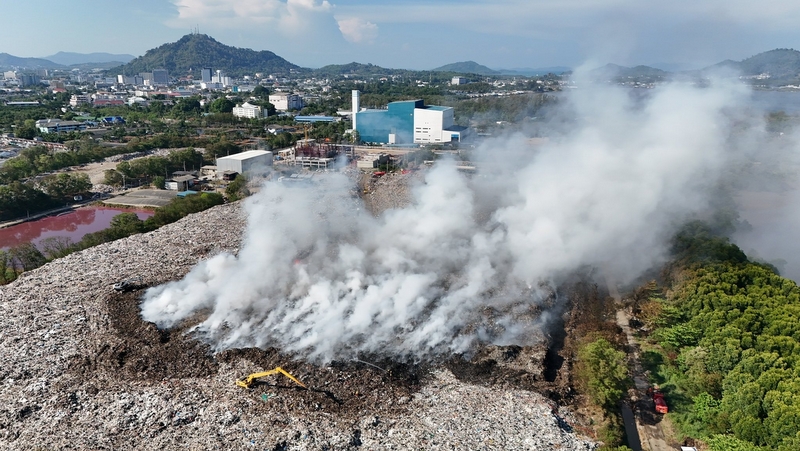
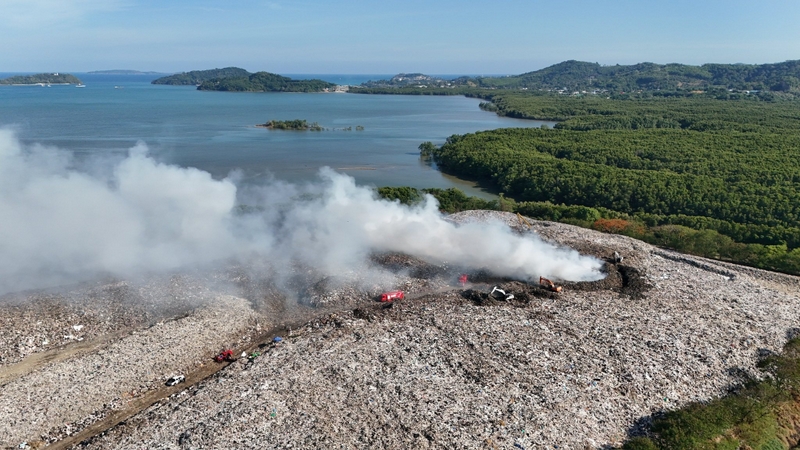
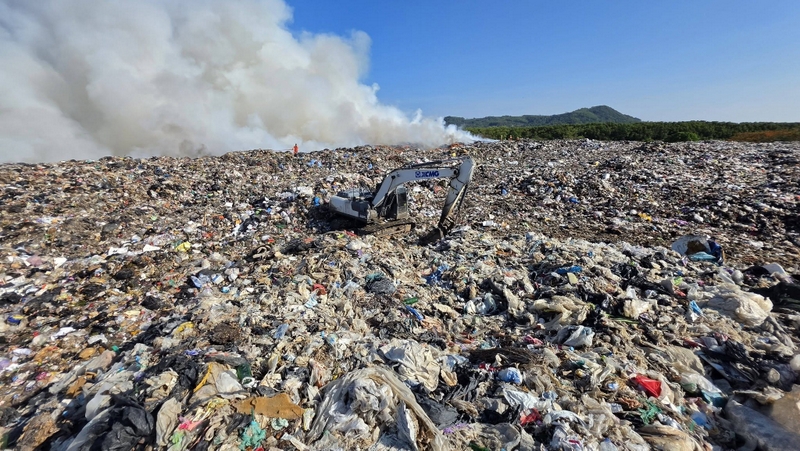
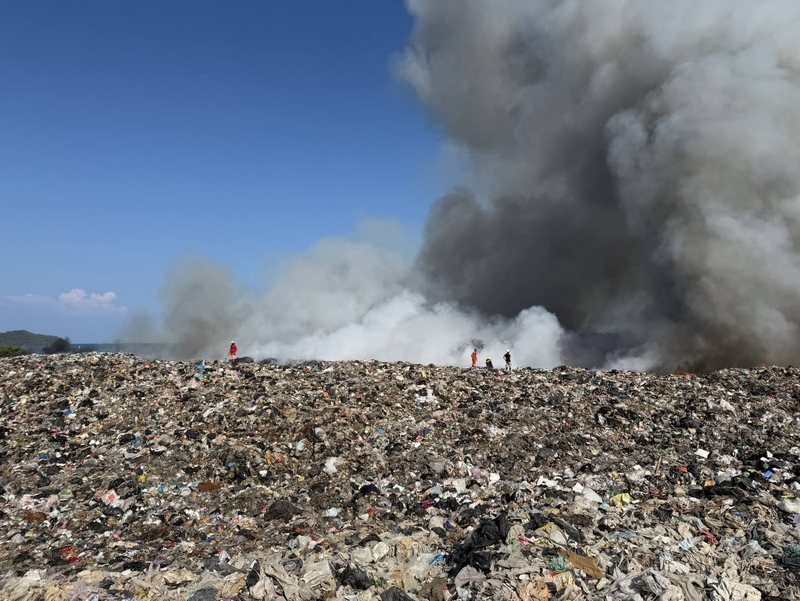
Although the fire was finally brought under control, officials warn the danger is not over ‒ and the conditions that caused it remain firmly in place.
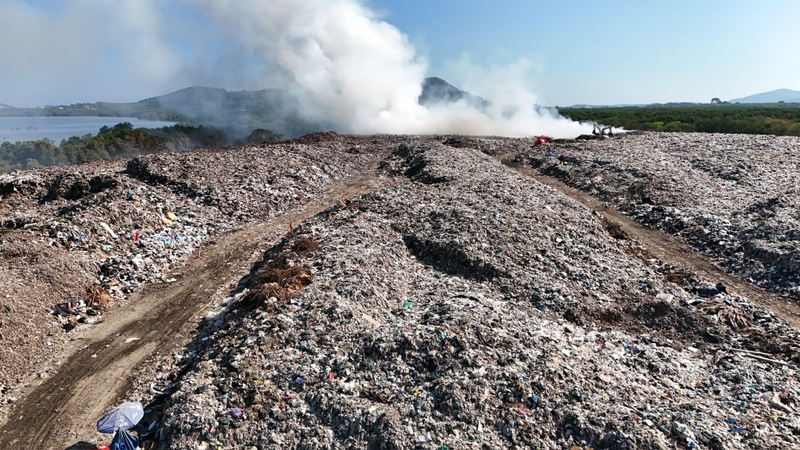
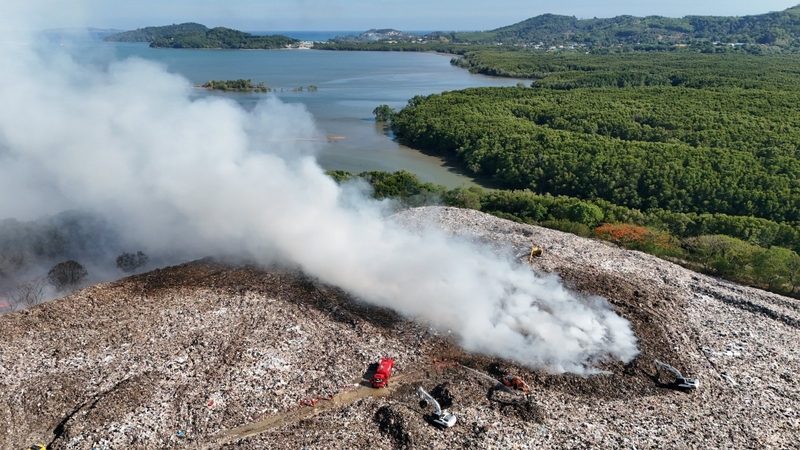
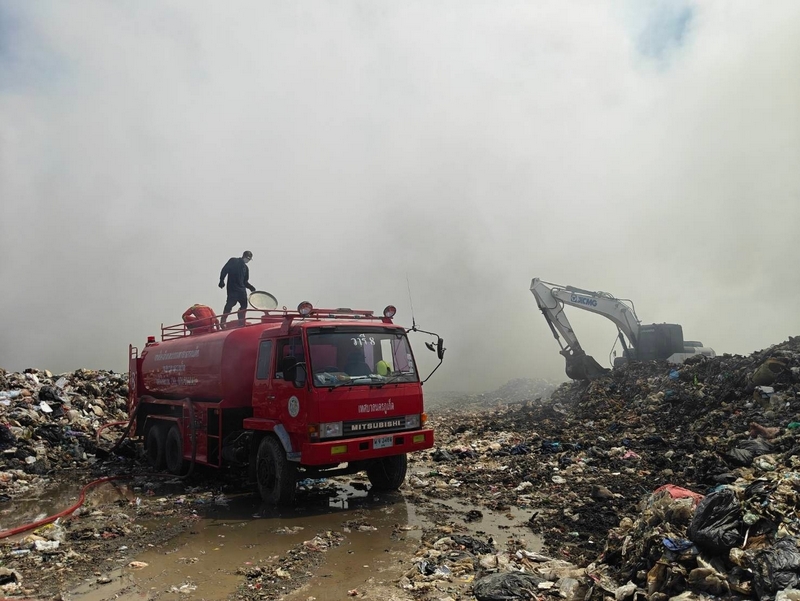
The fire broke out on Apr 11 at landfill plots 4 and 5 at the Phuket Provincial Integrated Waste Disposal Centre, fuelled by high heat, accumulated waste and methane gas trapped beneath the surface.
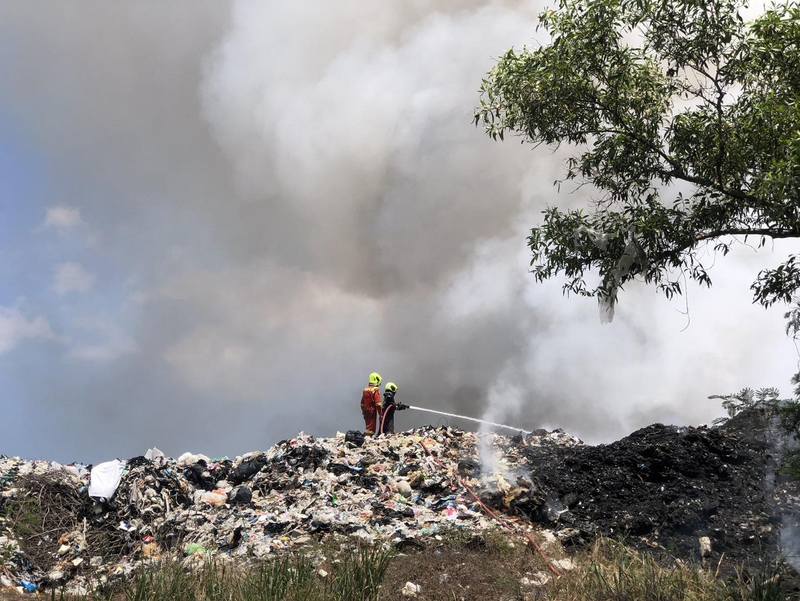
It burned for more than 34 hours before being brought under control in the early hours of Apr 13, prompting Phuket Governor Nirat Pongsitthaworn to declare the site a disaster relief zone as the situation escalated.
Phuket Town Mayor Suppachoke Laongphet classified the incident as a Level 2 disaster ‒ serious, volatile and at risk of escalation due to underground heat and gas buildup.
“This was not a minor incident,” Mr Suppachoke said. “It had the potential to become much more severe.”
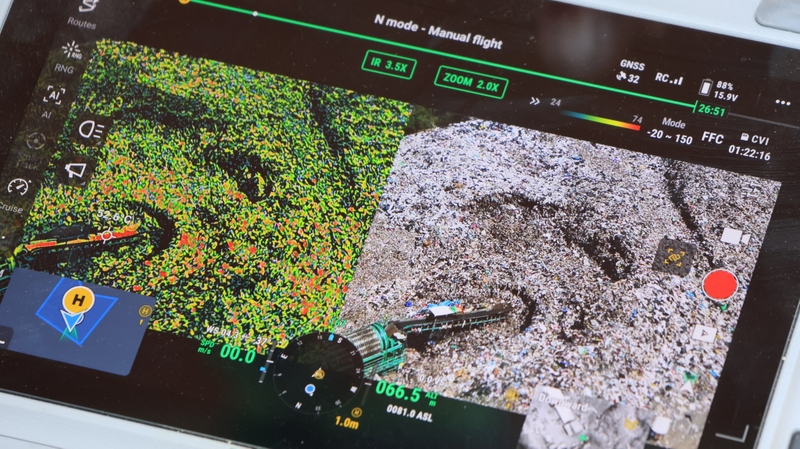
As of last Friday (Apr 17), the fight had shifted beneath the surface. At 8:30am, Mr Suppachoke led a multi-agency inspection of landfill sites 4 and 5, where aerial drone scans conducted by the Royal Thai Navy Region 3 confirmed that hotspots are decreasing ‒ but not eliminated.
Thermal imaging revealed fewer heat signatures buried within the waste, with colour-coded scans showing reduced red zones (heat) and increased moisture levels following sustained cooling efforts.
Officials from the Disaster Prevention and Mitigation Centre Region 18 branch, the Phuket Provincial Disaster Prevention and Mitigation Office (DDPM Phuket) and Phuket City Municipality continued to pump water into the landfill core through a long-distance system stretching approximately three kilometres from a wastewater treatment plant.
The operation was aimed at suppressing deep-seated heat ‒ the key driver of re-ignition in landfill fires.
Despite the improvement, extreme temperatures within the landfill ‒ reaching up to 48°C ‒ continued to pose a serious risk. “We are maintaining 24-hour surveillance and continuously reducing heat beneath the waste,” Mr Suppachoke said at the time.
“The fire is believed to have been caused by a combination of heat accumulation and methane gas buildup within the landfill ‒ conditions driven by years of overcapacity and continuous waste dumping,” Mr Suppachoke said.
“Landfill fires are notoriously difficult to extinguish because they burn under the surface, feeding on compressed waste and combustible materials such as batteries, chemicals and gas lighters,” he added.
“Even after the main blaze was brought under control, at least 11 underground hotspots were detected, some continuing to emit smoke days later,” he noted.
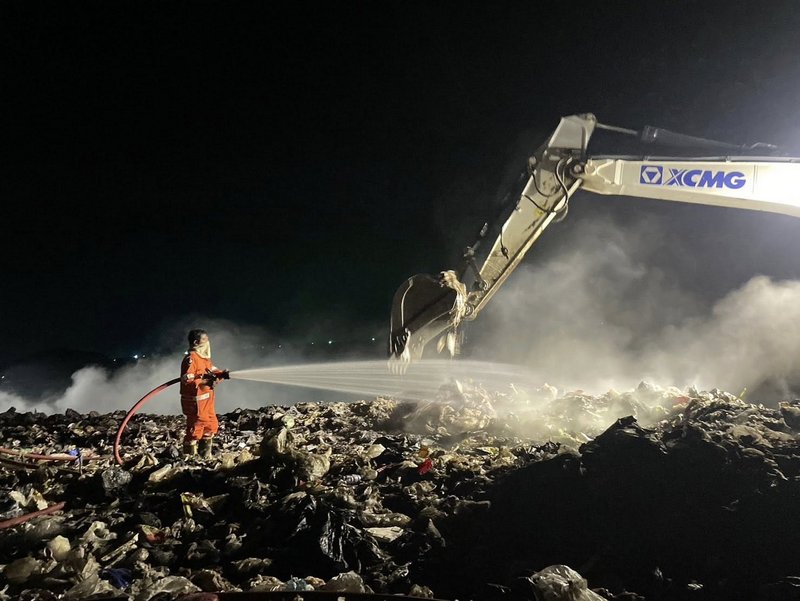
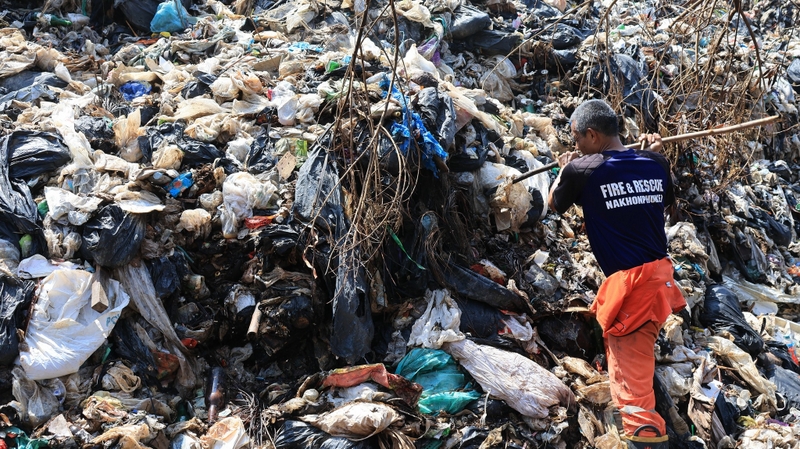
Officials have since deployed heavy machinery to dig through waste layers, create access routes and allow water to penetrate deep into the landfill.
Six-inch hoses carried water directly into the centre of the affected area, while temporary crossings were constructed to improve access for firefighting teams.
Drone-mounted thermal imaging played a critical role in identifying hidden heat sources. “These aerial images allow us to pinpoint where heat is still building up,” Mr Suppachoke said. “If we cannot reach those points, the fire can return.”
Mr Suppachoke credited a multi-agency response for preventing the situation from worsening. “Without the cooperation of all agencies, we would not have been able to control and extinguish the fire,” he said. “Firefighters, municipal teams and military support ‒ including the Royal Thai Navy Region 3 ‒ remained on site days later, continuing to cool the landfill and monitor for flare-ups,” he added.
However, key operational details ‒ including the number of firefighting units deployed and the volume of water used ‒ were not disclosed by Mr Suppachoke, as monitoring operations remained ongoing.
EVACUATION
At the height of the incident, thick black smoke spread across Saphan Hin and surrounding communities, affecting at least 82 households and more than 200 residents. Some residents in high-risk areas were temporarily relocated, particularly by Wichit Municipality, as conditions worsened.
“The main impact was smoke,” Mr Suppachoke said. “It affected people’s daily lives, but we were able to control the situation.”
He confirmed that shifting wind direction helped push smoke out to sea, allowing residents to return home.
No serious injuries or confirmed respiratory illnesses were officially reported, though emergency teams were deployed to monitor vulnerable residents. Face masks, drinking water, eye wash and medical supplies were distributed, while ambulances and medical teams remained on standby.
People’s Party MP Somchart Techathavorncharoen said the impact was broader than initially reported. “This affected 200 households in the Saphan Hin community and nearby areas,” he said.
“The smoke disrupted daily life and created health concerns, especially among vulnerable residents.”
He also called for improved emergency preparedness, including temporary shelters and faster deployment of support services.
OVERCAPACITY
At the core of the incident is a landfill operating far beyond its intended limits. Mr Suppachoke confirmed the Saphan Hin site was designed to hold 700,000 to 800,000 tonnes of waste, but now contains nearly 1.3 million tonnes.
“That site is already far beyond its intended capacity,” he said.
Daily waste intake continues to worsen the situation, with approximately 1,200 to 1,300 tonnes entering the site each day. This far exceeds Phuket’s current incineration capacity of about 700 tonnes per day, leaving hundreds of tonnes to accumulate daily, Mr Suppachoke noted.
“The landfill is full,” Mr Suppachoke said. “We now have to stack waste higher.”
The result is increased pressure, heat buildup and methane generation ‒ the exact conditions that led to the fire.
DELAYED
A second incinerator project is now underway at the Saphan Hin waste centre, but Mr Suppachoke admits it will not ease the immediate crisis.
He confirmed the B65 million project is being developed through private sector investment and operated by PJT Technology Co Ltd.
“Construction is currently about 30% complete,” he said. “The new facility is expected to process around 500 tonnes of waste per day, with capacity potentially increasing to 600 tonnes with effective waste sorting.
“Completion is projected for next year, with full operational capacity expected by mid-2027,” he added.
“This is a long-term solution,” Mr Suppachoke said. “It will not solve the short-term problem.”
The site was selected adjacent to the existing landfill to fast-track approvals and utilise existing infrastructure, he added.
Once operational, total incineration capacity on the island is expected to reach approximately 1,200 tonnes per day ‒ roughly matching current daily waste generation, but leaving no room for future growth.
Plans for additional landfill sites, including a proposed location in Thepkrasattri near Bang Khanun Forest Reserve, remain under environmental study with no approval granted.
A potential third incinerator has also only reached the survey stage, with no confirmed budget, timeline or construction start, Mr Suppachoke noted, but declined to give further details.
Mr Suppachoke cited environmental regulations, land-use constraints, environmental impact assessments and public hearings as key factors delaying progress.
“That process would take far too long to address the immediate problem,” Mr Suppachoke said.
URGENT CHANGE
Following the incident, Phuket Governor Nirat Pongsitthaworn called for a fundamental overhaul of waste management on the island.
“We should not be planning only how to put out fires ‒ we must prevent them from happening in the first place,” he said.
He warned that concentrating all waste at a single site is no longer viable. “In the future, Phuket should no longer bring all waste to one place at Saphan Hin,” he said.
He also stressed the need for clear timelines and accountability in addressing the problem. “This kind of risk must not happen again,” he said.
At the national level, Mr Somchart said he will submit an emergency motion in parliament seeking budget support, regulatory reform and improved disaster prevention systems.
ENDS
Despite visible improvement, officials stress the risk remains. Buried heat, extreme weather and accumulated waste continue to create conditions for re-ignition. Crews remain on site around the clock, with continuous cooling, thermal monitoring and patrols in place.
“We cannot let our guard down,” Mr Suppachoke said.