


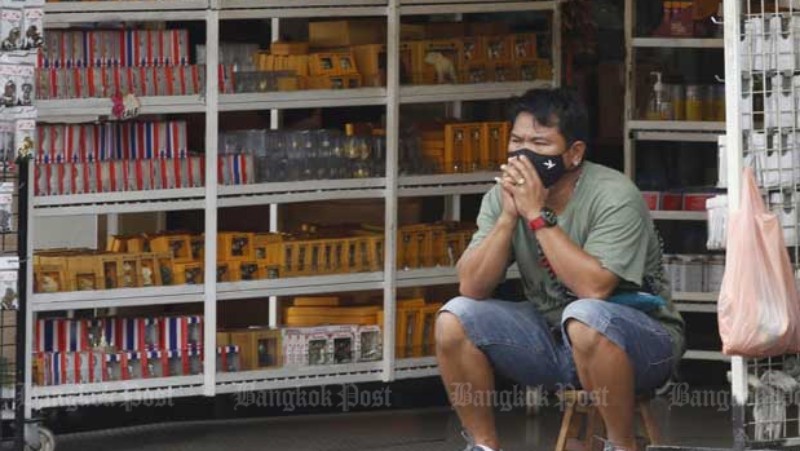
Prime Minister Prayut Chan-o-cha has instructed all economic agencies concerned, including the Finance Ministry and the National Economic and Social Development Council (NESDC), to speed up assessing the impact of the COVID-19 restrictions on all sectors, which is required before details of these relief packages can be mapped out, said Traisuree Taisaranakul, deputy government spokeswoman, on Sunday (May 2), , reports the Bangkok Post.
The details of the COVID-19 relief packages will be submitted to the Centre for Economic Situation Administration (CCSA) for consideration, she said.
Pubs, bars and other types of night entertainment venues across the country were among the first group of businesses to be impacted by the government’s COVID-19 restrictions, put in place to deal with the latest wave of COVID-19 infections, she said.
The six provinces now considered COVID-19 red zones ‒ including Bangkok ‒ in particular have been heavily affected as the government had to tighten COVID-19 control measures.
A fresh assessment of the economic impact of these provinces is now required because the previous assessment was conducted before stricter COVID-19 control measures were imposed, she said.
Past relief packages aimed at shouldering living costs, such as discounts on electricity, water and cooking gas bills for instance, proved effective in helping ease the economic impact of the outbreak on consumers, she said.
The new round of COVID-19 relief packages will be decided on carefully to ensure everyone affected is covered, she said.
When the first wave of COVID-19 began early last year, the government took out a B1 trillion emergency loan to help ease the impact of the pandemic.
More than B700 billion has already been spent to fund several COVID-19 relief and economic stimulation projects.
The first was Rao Mai Thing Kan (No One Left Behind), intended for the about 16 million self-employed people who were each given a total of B15,000 over three months. A second group of about 10mn farmers was later given a similar financial assistance package.
In total, B390bn were spent on funding these two projects, benefiting about 26mn people altogether.
After that, some 6.78mn infants, seniors and disabled people were each provided with B1,000 a month for three months, while 1.16mn people holding the state welfare card were also given extra financial assistance on top of their monthly living allowances.
Another B300bn was spent on funding these cash handout programmes, covering about 30mn people.
Late last year, a co-payment scheme so-called Khon La Krung (Half by Half) that cost B30bn the government was rolled out. It reached about 10mn people, who were offered a 50% co-payment for buying consumer products of up to B3,000 per person.
A further B20bn was spent to provide an additional B500 per month for three months to 14mn holders of the state welfare card. The co-payment scheme’s second phase then followed, covering 15mn people, up from 10mn previously.
Roughly B73bn was spent on these projects, which were all designed to spur spending.
When the second wave of COVID-19 hit early this year, the government implemented another financial aid scheme called Rao Chana (We Win), which provided B7,000 in subsidies to 31mn pandemic-stricken citizens. In addition, 14mn holders of the state welfare card received up to B2,800 each.
The government then set aside B37.1bn to provide aid to employees covered by Section 33 of the Social Security Act and state enterprise employees under the Rao Rak Kan (We Love Each Other) scheme.