


The ministry plans to conduct borrowing on a continuous monthly basis, aligning with the project’s actual spending, he said on Tuesday (May 26), reports the Bangkok Post.
The borrowing will be carried out gradually over one year, as the emergency loan decree is valid for one year from the date of publication in the Royal Gazette, said Mr Lavaron, adding current interest rates are relatively low at no more than 2%.
The Cabinet approved the scheme last week together with additional support measures for vulnerable groups, with a combined budget of B176 billion.
The programme is designed to ease living costs from the global energy shock.
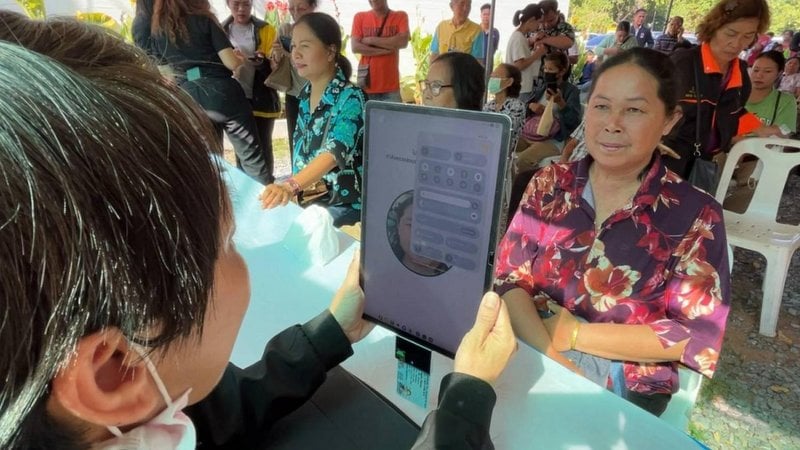
Registration is open on the Paotang app from May 25-29, with benefits available from June 1 to Sept 30 at participating retailers nationwide.
The scheme is expected to help reduce living costs for more than 43 million Thais, according to the government.
The programme provides assistance to three main groups. The first group consists of 13.2mn state welfare cardholders who receive an additional B700 per month on top of the existing B300 allowance, increasing total monthly support to B1,000 for four months.
The measure is expected to cost B56bn.
The second group targets roughly 30mn salaried workers and individuals. With a budget allocation of B120bn, the government subsidises 60% of spending on food, beverages, goods and approved services, while participants pay the remaining 40%.
State support is capped at B200 per person per day, and no more than B1,000 per month, over a four-month period. Any unused balance cannot be carried forward to the following month.
The third component of the programme focuses on supporting small retailers and local businesses struggling with rising operating costs and slowing consumer demand.
Regarding the 60/40 scheme, Mr Lavaron said eligibility is capped at 30mn people, which should be sufficient for all Thais 18 and older who are not state welfare cardholders. This estimate is based on the previous co-payment scheme, which initially capped eligibility at 20mn people, but eventually recorded registrations exceeding the quota by 6mn.
Rather than a stimulus measure, the government views the programme as helping to ease the cost-of-living burden for people, he said.
Eligibility was set at 18 and older because this is generally the age when people begin working and take on financial responsibility, said Mr Lavaron.
Participants are required to spend the government subsidy of B1,000 per month within that month.
Jindarat Viriyathavikul, director-general of the Public Debt Management Office (PDMO), said for the first lot, the office will borrow B35bn for the co-payment scheme.
Under the PDMO’s borrowing plan, the funds will initially be issued as four-year promissory notes (PNs), after which they will gradually be rolled over into government bonds.
The interest rate on the PNs, based on the Thai Overnight Repurchase Rate plus a spread, is roughly 1.2%, which is considered relatively low.