


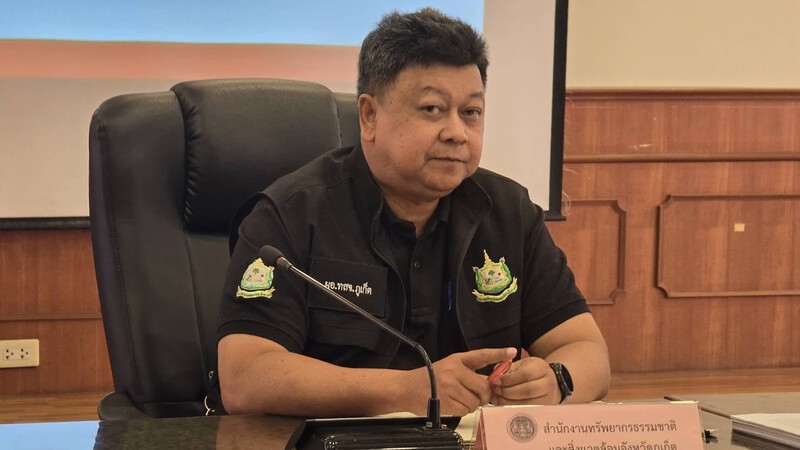
MNRE Phuket Director Natthakrit Phonphet, who is also Chief of MNRE Phuket’s EIA committee, confirmed that his office has appealed the latest decision, arguing that the project clearly violated its approved environmental impact assessment plan and relevant building laws.
“The Supreme Administrative Court has already issued a clear order. We cannot accept a new ruling that conflicts with the highest court,” Mr Natthakrit said. “The consideration must follow the Supreme Court judgment in the original case.”
“The recent ruling says the municipality was not negligent, but that contradicts the Supreme Court’s order. This case has already passed two courts before; the outcome was clear,” Mr Natthakrit added.
The appeal follows years of legal struggle surrounding the controversial coastal development, which Thailand’s Supreme Administrative Court ruled in September 2023 had been built unlawfully.
That final judgment upheld earlier findings that Rawai Municipality failed in its duty to act against structures that breached height and spacing limits and encroached dangerously close to the shoreline in violation of Phuket’s coastal protection rules.
Expert inspections cited in earlier proceedings confirmed that some buildings at the Eva Beach development were constructed just 2.9-4.6 metres from the high-tide line, despite regulations requiring a minimum 50-metre setback. The Supreme Administrative Court found that permits had been improperly issued and ordered the unlawful structures to be demolished.
However, enforcement of the demolition order has repeatedly stalled as successive buyers of units at the project file new petitions seeking further consideration by the Administrative Court. Officials have previously described these filings as attempts to “buy time through legal procedure”, extending what has already become one of Phuket’s longest-running development disputes.
In the latest developments, the Nakhon Sri Thammarat Administrative Court issued a ruling which, in effect, softened findings of negligence against local officials, creating uncertainty over how the Supreme Administrative Court’s earlier demolition order should now be enforced.
MNRE Phuket has now moved to challenge that ruling, insisting that lower courts cannot contradict the Supreme Court’s final judgment.
Mr Natthakrit stressed that MNRE Phuket’s appeal seeks to bring the case back into alignment with the Supreme Court’s decision. If successful, the responsibility to carry out the demolition would be formally returned to the current Rawai Mayor, who would then be obligated to execute the order.
“This is not a new case. It is a matter of ensuring the existing Supreme Court ruling is respected and enforced,” he said.
Meanwhile, current owners of units within the project have petitioned the court as Third-Party Participants, arguing they were not involved in the original proceedings and only became aware of the demolition risk after purchasing or renting properties. Officials opposing these claims maintain that the demolition order applies to the unlawful structures themselves regardless of changes in ownership.
While the latest ruling has added another legal step to an already complex dispute, MNRE Phuket insists it remains confident in its position and committed to seeing the Supreme Administrative Court’s order upheld.
The outcome of the appeal will determine whether demolition can finally proceed or whether the Eva Beach saga will continue to move through Thailand’s administrative courts.
For now, the unlawful structures remain standing, as Phuket authorities brace for yet another round of legal hearings in a battle that has already stretched on for more than a decade.