


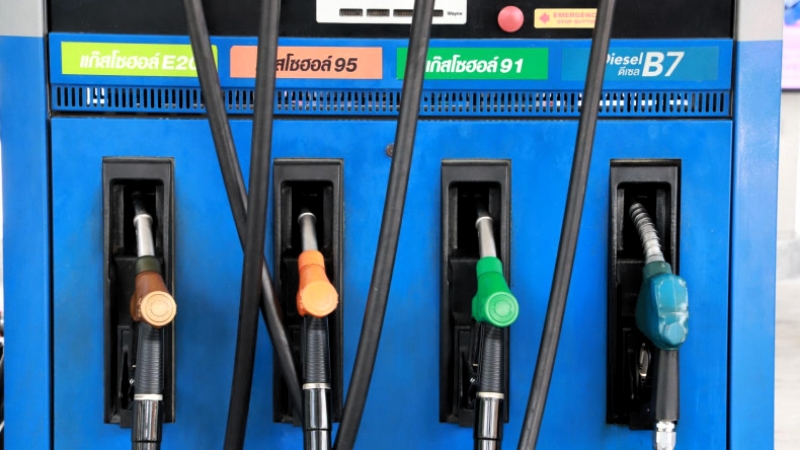
The Cabinet on Tuesday (Jan 16) approved in principle the ministry’s proposal to cut the excise tax for diesel fuel by B1 per litre for three months, effective from Jan 20 to April 19, reports the Bangkok Post.
The Excise Department estimates the measure would cost the government B2 billion per month in state revenue, or B6bn in total.
Mr Julapun said in the past the government gradually reduced the excise tax on diesel from B5 per litre to B2.5, then B1 per litre at present.
In the medium to long term, tax reduction measures alone cannot stabilise fuel prices, but the diesel subsidy under the Oil Fuel Fund has played a key role in controlling the price, he said.
Domestic fuel prices will still fluctuate based on global oil prices, said Mr Julapun.
However, the diesel tax cut will keep the price from rising too high. He said he believes global oil prices have already reached their peak for this cycle.
Regarding progress on the digital wallet project, the Digital Wallet Committee meeting scheduled for Tuesday was postponed as the committee awaits comments on the loan bill from the National Anti-Corruption Committee (NACC), said Mr Julapun.
The committee wants to incorporate the opinions from both the Council of State and the NACC into the meeting.
The government’s digital handout of roughly B500bn could still begin by the May time frame through a loan bill, and the scheme will not be reduced or financed by a fiscal budget, he said.
The time frame means the government must flex its majority in the House of Representatives to force the bill through during its first session in April, said Mr Julapun.
However, if the bill is not passed in this session, the government has the option of requesting opening an extraordinary session to consider a draft bill, he said.
Mr Julapun denied rumours that the digital wallet scheme would be financed by a fiscal budget, or the amount would be reduced to B300bn.
He insisted the economy was in crisis and urgently required stimulus to restart it.
Opinions regarding the cause of the economic crisis vary, said Mr Julapun, covering high inflation, an economic slowdown or structural problems.