


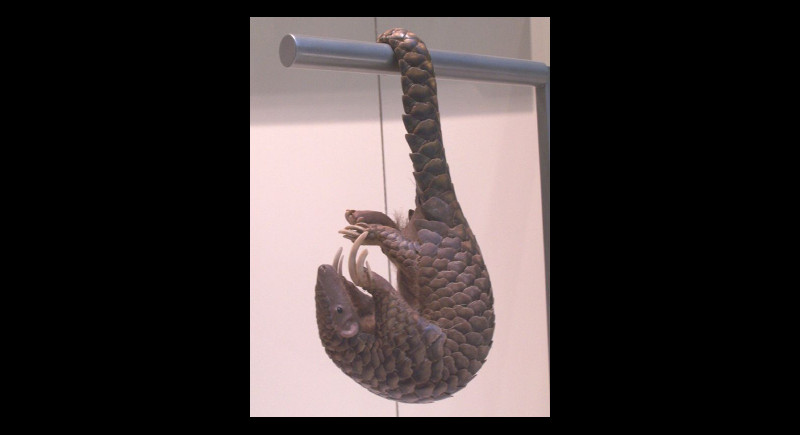
Their scales are made of keratin, the same material found in our hair and fingernails and it is very hard even for a big animal like a lion or tiger to bite. The overlapping scales of the pangolins vary in colour from light shade to yellowish brown through to olive to dark brown.
The pangolin’s name comes from the Malay word “peng-guling” which roughly means “something that rolls” which refers to the ability to roll up into a ball when they are faced with danger. In Thailand however, pangolins are known as Thua Nim meaning “something soft” which refers to its skin under the hard scales.
These days, they are hard to come by, you wouldn’t find pangolins in Phuket Zoo for example because they are listed as endangered species, and due to their diet it is difficult to keep them alive in captivity. It is known that the pangolins can live for up to 20 years in captivity, but how long they can live in the wild is still a mystery.
To spot a pangolin, one would need to be out at night or dig a hole in the daytime to find it. The pangolins have been spotted in the rubber plantations throughout Southern Thailand including here in Phuket.
In Thailand, the pangolins are notoriously hunted and smuggled across borders to feed a soaring demand for meats and scales in places like China and Vietnam. Some Thai men strongly believe eating pangolin meat improves their sexual performance.
For more information, and to make a difference, visit savepangolins.org