


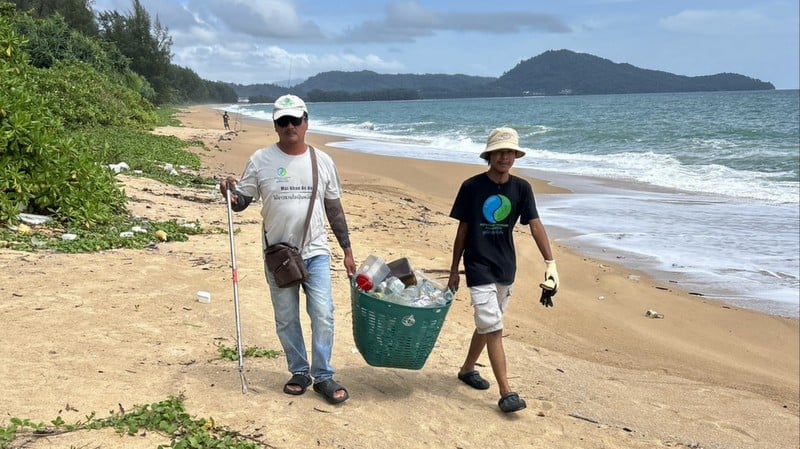
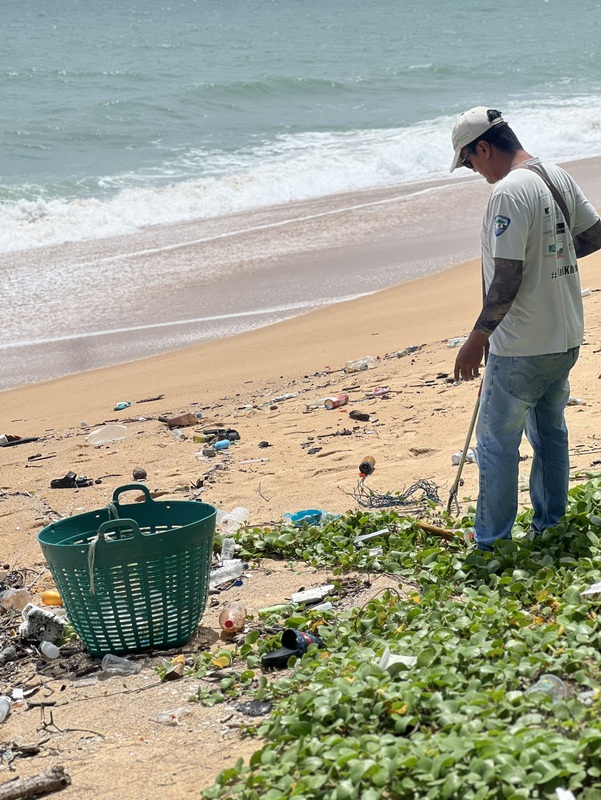
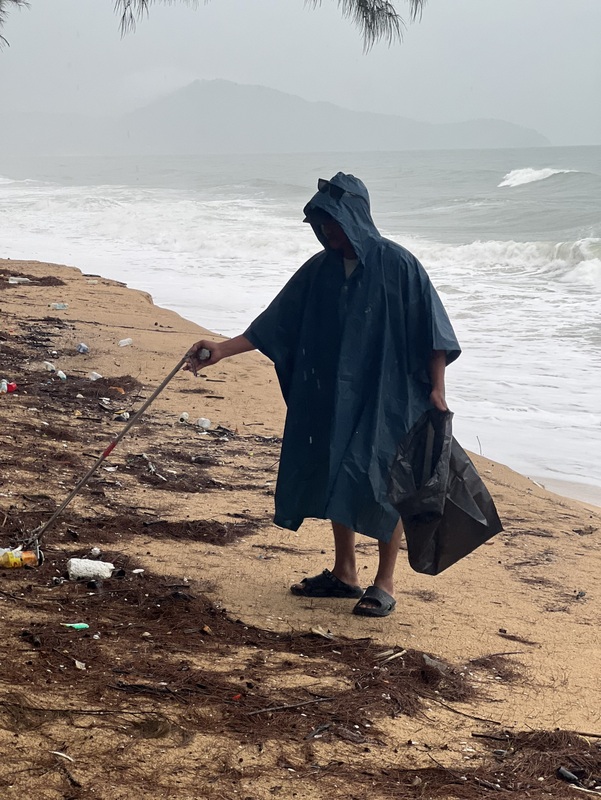
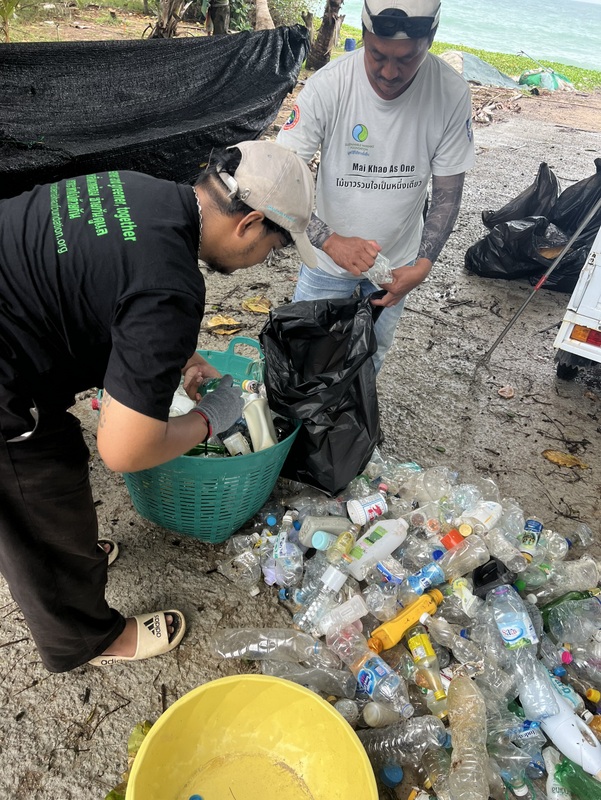
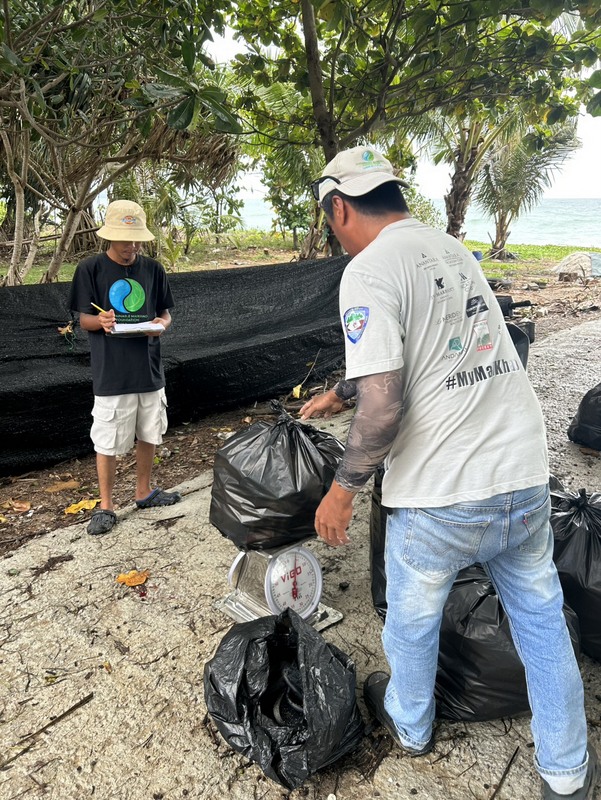
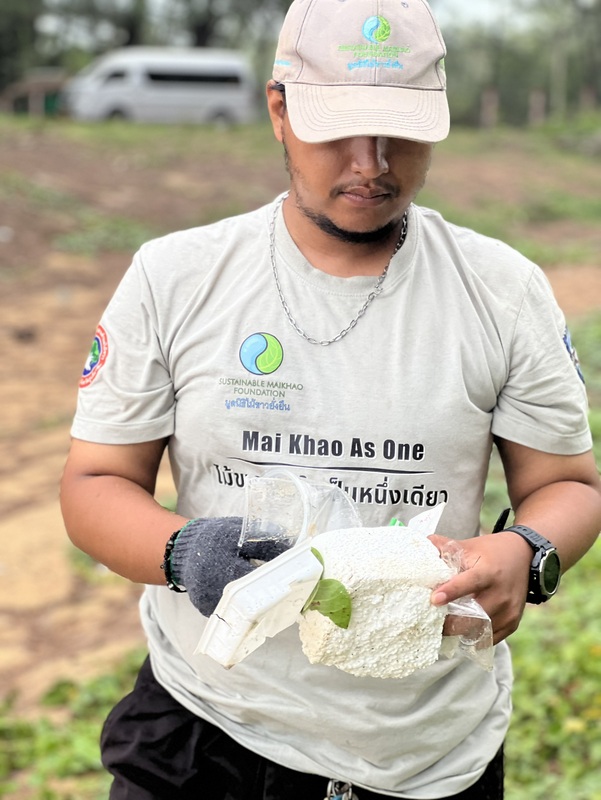
But like many coastlines around the world, Mai Khao also receives an unwanted delivery from the sea. Ocean currents – particularly during the monsoon season – carry in plastic bottles, fishing gear and other marine debris that washes ashore along the island’s northwest coast.
For years, local volunteers and businesses have organised seasonal cleanups to address the problem. Now a new initiative aims to transform those efforts into something larger, more coordinated, and year-round.
On May 2, 2026, the Sustainable Maikhao Foundation (SMF) officially launched the “Mai Khao As One Alliance,” a collaborative network designed to protect and restore the coastal ecosystem of Mai Khao.
The initiative brings together government agencies, private businesses, and community organisations under a single framework focused on sustainability. The objective is not simply to clean the beach, but to create a long-term system for managing coastal waste while strengthening environmental awareness across the community.
“We are extremely grateful that so many people care so deeply about saving our oceans,” said Michelle Mouillé, who launched SMF six years ago. “And grateful for the many people who see the benefits of coming together collaboratively to make an impact.”
From Seasonal Cleanup to Year-Round Action
This new initiative builds on the success of the Mai Khao Monsoon Beach Clean-Up program, which previously focused on the months when marine debris accumulates most heavily.
The expanded cleanup effort is run by a dedicated three-person field team and supported by 11 leading hotels in the Mai Khao area. This dedicated team works across six designated zones that cover approximately four kilometers of coastline. Operating six days a week in two shifts, the teams systematically collect and sort debris washed ashore by the tides.
The goals extend beyond simple cleanup. Organisers are also working to reduce environmental harm to marine life, promote eco-tourism, and improve waste management through recycling and proper disposal practices.
Successful pilot year
The foundation already has evidence that the model works. During the pilot phase in 2025, the project maintained continuous cleanup operations throughout the monsoon season from July through November. More than 16 partner organisations participated in the effort, alongside businesses, local schools and volunteers.
By the end of the program, the results were substantial. The five-month effort removed 10.35 tonnes of debris – roughly the equivalent of a convoy of ten trucks loaded to the brim with trash hauled off the sand. About a third of this debris was recycled and the rest destined for landfill. More than 1,000 participants joined the initiative, helping to raise awareness about marine pollution and the importance of protecting coastal ecosystems.
Since SMF’s inception six years ago, volunteers have cumulatively removed more than 40 tonnes of marine debris from Phuket area coastlines – enough rubbish to create what organisers describe as a moving wall of trash stretching kilometers along the shore.
The numbers tell an encouraging story, but organizers say the real achievement lies in the partnerships that formed along the way.
“For Phuket, I see this as an incredible example of how a community can take a crisis and move forward step by step, using the uniqueness of each stakeholder’s resources,” Michelle said.
Building a broader alliance
The newly launched Mai Khao As One Alliance aims to expand that collaborative model even further. The initiative will work to grow its network of partners across additional sectors while strengthening the efficiency of coastal waste management. Organisers are also exploring the use of new technologies and data tracking systems that can help monitor debris patterns and improve cleanup strategies.
Another priority is increasing community participation, ensuring that residents, businesses and visitors all play a role in protecting the coastline.
Environmental education – particularly among young people – will be a key element. Schools and youth groups will be encouraged to join cleanup activities and conservation programs, helping build long-term awareness about the impact of marine pollution.
The founding hotel partners in this Alliance include: Anantara Mai Khao Phuket Villas; Anantara Vacation Club Mai Khao Phuket; JW Marriott Phuket Resort & Spa; Le Méridien Phuket Mai Khao Beach Resort; Maikhao Dream Villa Resort & Spa; Maikhao Hotel Managed by Centara; Marriott’s Phuket Beach Club; Meliá Phuket Mai Khao; Radisson Blu Resort Phuket Mai Khao Beach; Renaissance Phuket Resort & Spa; and Sala Phuket Mai Khao Beach Resort.
Ultimately, the alliance reflects a broader shift in thinking: that protecting Phuket’s environment requires collective action.
“It’s an example of how we can solve big problems if we work together in a compassionate and collaborative way,” Michelle said.
The benefits will reach far beyond a cleaner stretch of sand. A healthier coastline supports marine ecosystems, strengthens Phuket’s tourism appeal, and reinforces the connection between the island’s communities and the natural environment that sustains them.
And for those early-morning walkers on Mai Khao Beach, it means something simple but meaningful: a shoreline that looks like nature intended.
To get involved, contact https://sustainablemaikhaofoundation.org/.