


Thaneth Tantipiriyakij, President of the Phuket Tourist Association, said most of Phuket’s internal problems stem from long-standing failures in adequate infrastructure.
Phuket International Airport, the island’s main tourism portal, continues to face major limitations, he noted.
“The airport operates with only one runway, restricting take-offs and landings to around 20 flights per hour, despite handling approximately 18 million passengers annually ‒ far exceeding its designed capacity of 12 million,” he said.
“Beyond the airport, land transport remains a structural failure. Chronic traffic congestion and the lack of effective public transport were cited as major problems, resulting in taxi fares comparable to global cities while pushing residents and tourists to rely heavily on private vehicles and car rentals,” he added.
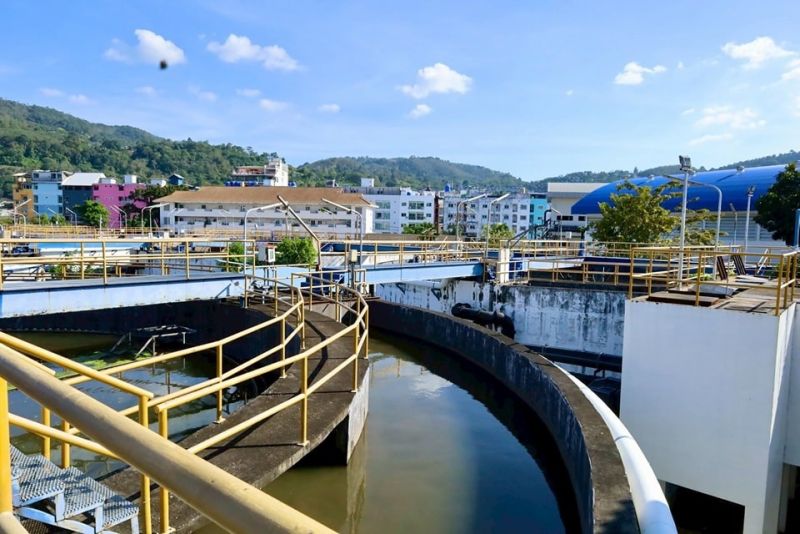
Mr Thaneth said Phuket’s carrying capacity is being stretched across multiple areas, particularly waste and wastewater management, which remains insufficient to support current tourism levels.
He also warned that the clean water supply is increasingly unbalanced with demand, especially as consumption continues to rise.
“Rapid construction has placed further strain on infrastructure. Nearly 20,000 new residential units were built last year, along with more than 5,400 unlicensed accommodation units, compared with only about 900-1,000 licensed hotels,” he noted.
“This growth has significantly increased pressure on utilities, transport networks and public services,” he added.
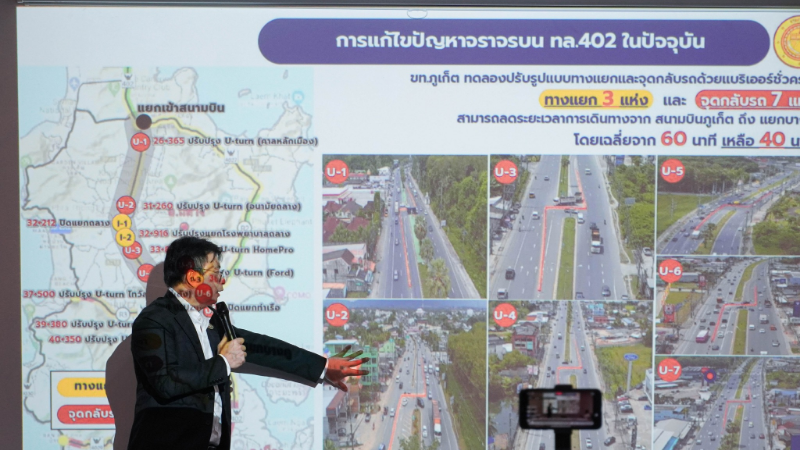
Mr Thaneth said traffic congestion is now the most urgent issue, calling for stronger road management, restrictions on roadside parking, trials to close selected traffic-light intersections, the creation of additional U-turn points, expanded interconnecting roads and faster implementation of delayed infrastructure projects.
“Local life must be good before anything else,” Mr Thaneth said, warning that their research shows Phuket residents are becoming less welcoming as infrastructure fails to keep pace with growth ‒ a trend that could ultimately harm tourism if people on the island are unhappy.
“If we can improve conditions to ensure local satisfaction, that is what sustainable development truly means,” he said.
WASTE
Phuket Governor Nirat Pongsittithaworn said solid waste management has become one of the island’s most urgent challenges.
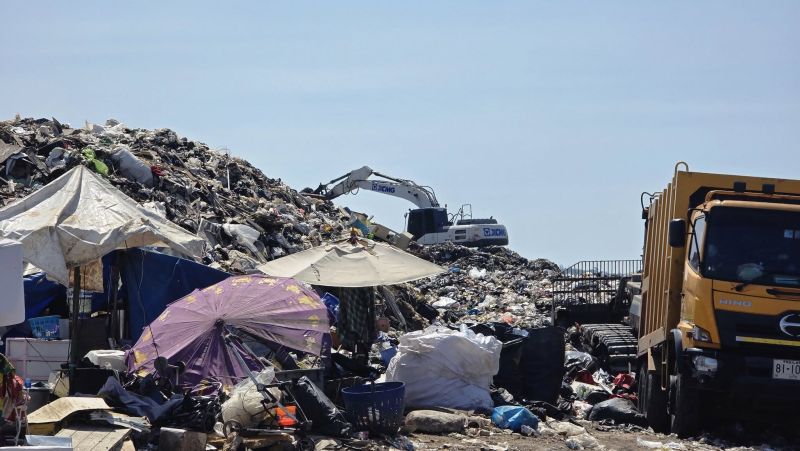
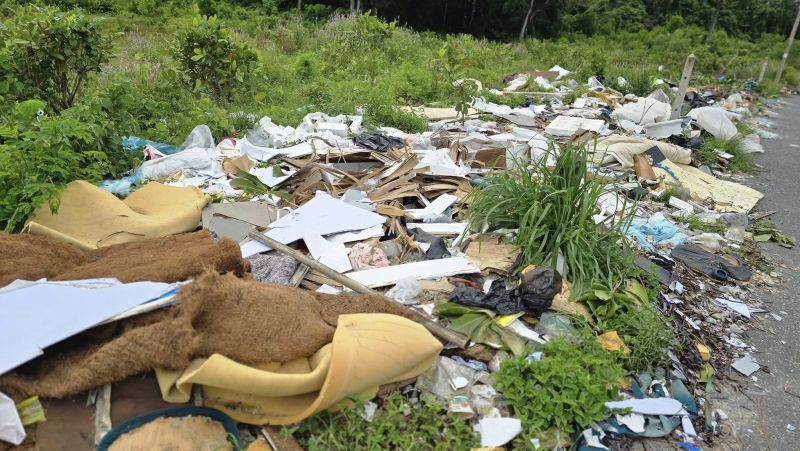
“Phuket currently generates around 1,200 tonnes of waste per day, while the incinerator can process no more than 500 tonnes. The remaining waste is sent to landfill, which already holds about 1.25 million tonnes and could reach 2mn tonnes within three years if no action is taken,” he added.
As an immediate step, the governor has instructed all municipalities and tambon administrative organisations (OrBorTor) to manage organic ‘wet’ waste locally instead of transporting it to the landfill at Saphan Hin.
“Organic waste accounts for around 60% of total daily refuse,” Governor Nirat said. “Managing it at source would significantly reduce landfill pressure and cut up to 360 garbage truck trips per day, which would also help ease traffic congestion.”
He also called for stronger cooperation from businesses ‒ particularly hotels, restaurants and schools ‒ to take responsibility for managing their own waste.
“My job is to push what is already clear forward ‒ quickly,” he emphasised to push all urgent issues that need to be fixed to try to make it happen as quickly as possible for people on the island.
“I will ensure Phuket remains livable for its people and welcoming to the world,” the governor added. “That is the only way forward ‒ a true win-win.”
SECURITY
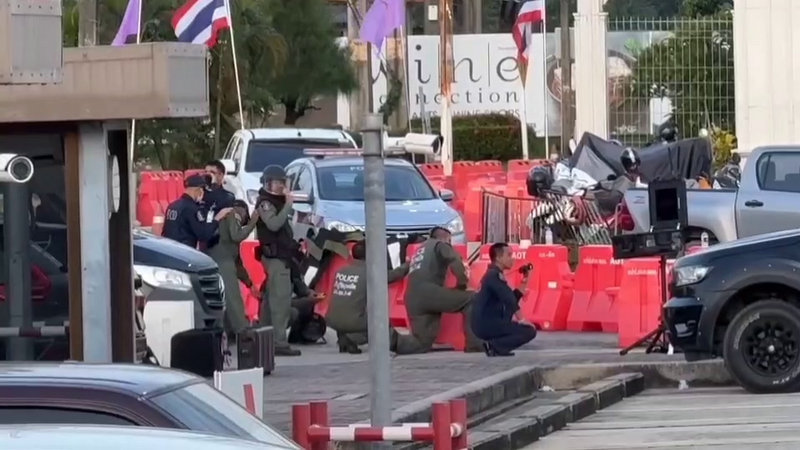
Kongsak Khoopongsakorn, President of the Phuket Chamber of Commerce, said personal safety remains the most serious threat to the island, citing last year’s bombing scare across the Andaman region, including Phuket, Phang Nga and Krabi.
“The most alarming security issue was the incident last year when ill-intentioned groups created a bombing situation in the Andaman provinces,” Mr Kongsak said, warning that such threats directly undermine tourism confidence and livelihoods.
He said Phuket faces increasing challenges due to its diverse population and limited personnel, contributing to petty crime and allowing some foreigners to enter illegally to work or operate scams.
Mr Kongsak acknowledged that preventing premeditated attacks is extremely difficult, particularly when perpetrators evade intelligence screening, but said police response capability remains strong.
“Police are confident they can control serious incidents within 15 to 20 minutes and apprehend the perpetrators,” he said, noting that authorities resolved last year’s incident swiftly.
However, he highlighted serious equipment shortages, especially the lack of K-9 bomb-sniffing units during the incident.
“At that time, Phuket did not have K-9 units, which are essential for search operations,” he said.
He said coordination is now underway with the Border Patrol Police and Phuket Provincial Police to deploy five to six K-9 units permanently in Phuket.
Mr Kongsak also stressed the importance of stricter screening at the Tha Chatchai checkpoint, calling it a critical control point for preventing crime and security threats from entering the island
On public health, he said Phuket should be upgraded with a comprehensive disease prevention unit, as the island receives visitors from hundreds of nationalities.
“As an island province, we are exposed to diseases from around the world,” he said, adding that previous attempts to establish such a unit faced resistance.
Mr Kongsak also raised concerns about Phuket’s budget shortfall, saying government funding does not reflect the island’s true population.
He said encouraging residents and workers to officially register their addresses could increase Phuket’s population count by 20–30% by 2026, generating an additional B2–3 billion in funding. This could support projects such as expanding entry gates at Tha Chatchai or installing AI systems to monitor vehicles and individuals entering the province.
“Security, infrastructure and capacity are the foundations of tourism and daily life,” he said.
“If we fail to address these issues seriously, the impact will be felt across the entire province.”
TOURISTS
Chalermpong Saengdee of the People’s Party, who is running for re-election as a Phuket MP, said residents have long felt like second-class citizens due to what he described as the government’s careless approach to tourism policy.
“For many years, Phuket people have felt like second-class citizens because of the government’s haphazard tourism management,” he said.
He criticised the visa-free policy, saying it allowed groups of foreigners with bad intentions to settle in Phuket and behave aggressively toward locals.
“The free visa policy opened the door for people who act as if they are above the law,” Mr Chalermpong said.
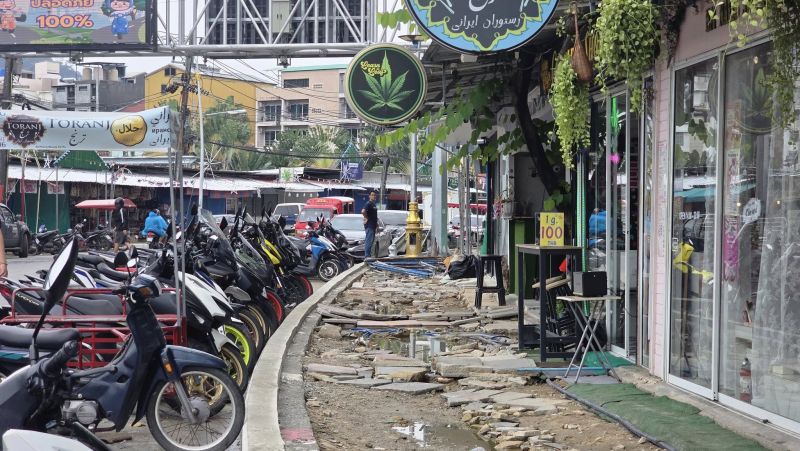
He also targeted the unregulated cannabis policy, citing the lack of zoning or enforcement.
“Without clear regulation, cannabis has made Phuket ‒ once a premium global destination ‒ appear unsafe in the eyes of the international community,” he said.
He warned that such policies attract irresponsible visitors who create problems and form influential networks on the island.
Mr Chalermpong said he repeatedly raised concerns about foreign criminal influence in parliament while serving in the opposition, but stressed that only structural change can bring lasting solutions.
“A sustainable solution requires policy-level mechanisms that truly allow the state to enforce the law,” he said.
PATONG
Patong Mayor Lalita Maneesri said waste management is the most serious challenge facing the municipality, driven by a large transient population and constant tourist inflows.
“The most serious problem right now is waste,” Mayor Lalita said. “Patong generates enormous volumes because of tourism and a population that is difficult to control.”
She said waste volume fluctuates sharply by season, from about 120 tonnes per day in low season to more than 200 tonnes in high season.
To address this, the municipality plans to move from one-year waste contracts to three-year agreements, allowing capable contractors to invest properly in waste management.
Organic waste remains a key concern due to the high concentration of hotels and restaurants. “We have purchased machines to process organic waste into fertiliser,” she said.
Mayor Lalita also raised concerns about visa-free tourists, saying reduced spending power and behavioural issues have become more visible.
“There are problems with reckless motorbike riding, alcohol abuse, intoxication and fighting,” she said.
She called for policies that attract higher-quality tourists, “Patong is the top destination in Phuket,” she said. “We want tourists with good manners.”
On cannabis, she urged zoning and licensing controls, particularly near schools and hospitals.
Traffic congestion ‒ especially on Patong Hill ‒ remains a daily problem. “During the high season, the road is congested all day,” Mayor Lalita said.
She noted that long-term solutions include the Patong Tunnel project, expected to enter the bidding phase soon, and the Chalong-Patong route, scheduled to begin construction next year. Short-term measures include pedestrian controls, taxi regulation and the proposed ‘Patong Hill Safe’ CCTV project.
“These are urgent issues that must be resolved to keep Patong safe, orderly and liveable,” Mayor Lalita said.