


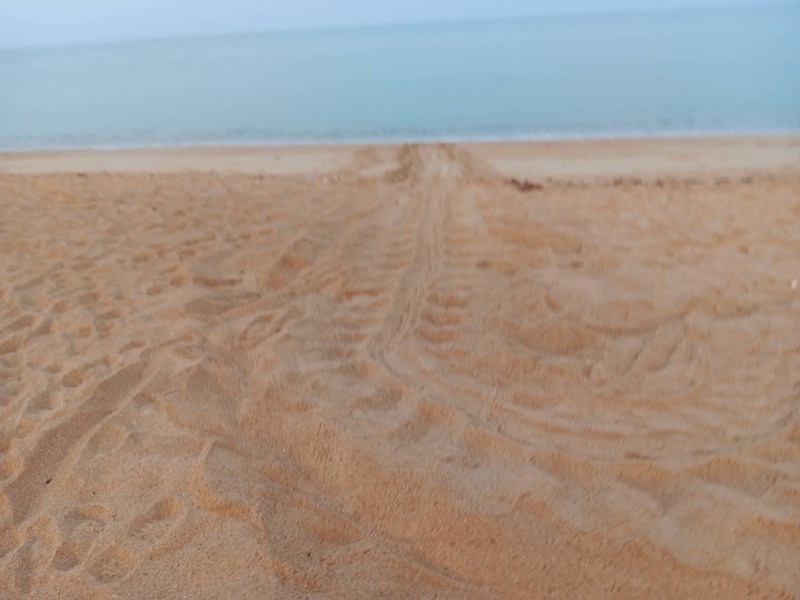
Turtle tracks in the sand at the site were reported to officials at 6:50am, reported the Department of National Parks, Wildlife and Plant Conservation (DNP).
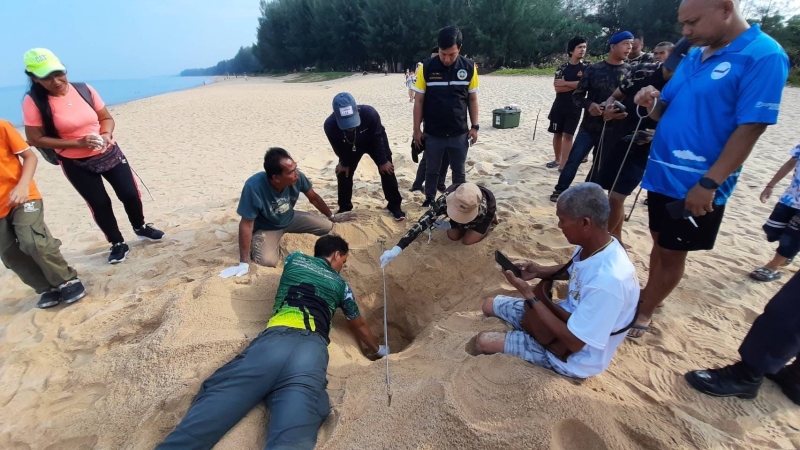
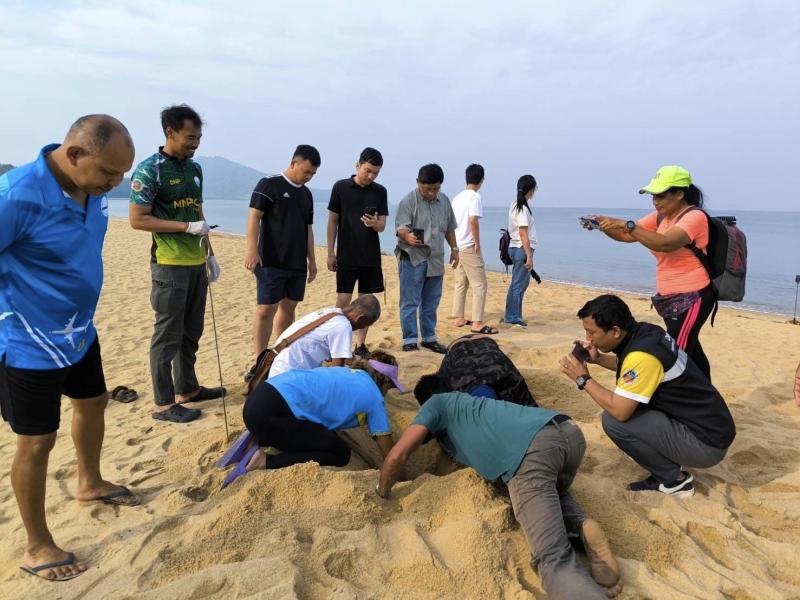
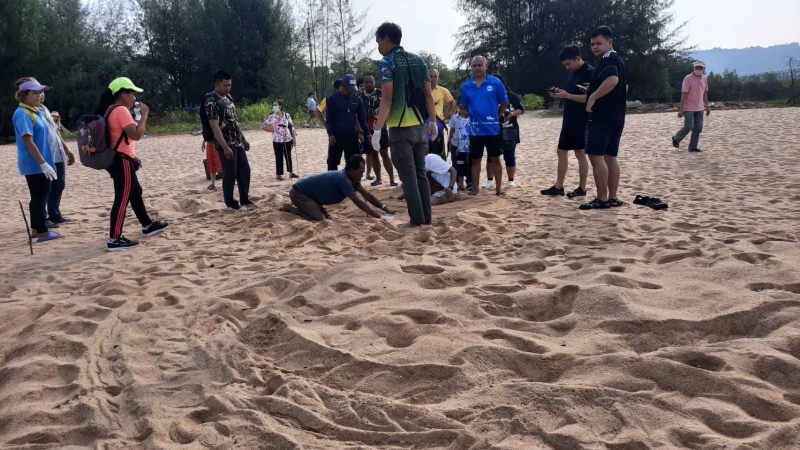
Officers from the 2nd Marine National Park Operations Center, under Sirinat National Park, and from the Khao Lampi-Hat Thai Mueang National Park arrived to investigate.
The tracks indicated that the turtle shell was 110cm and the turtle had a flipper span of 190cm.
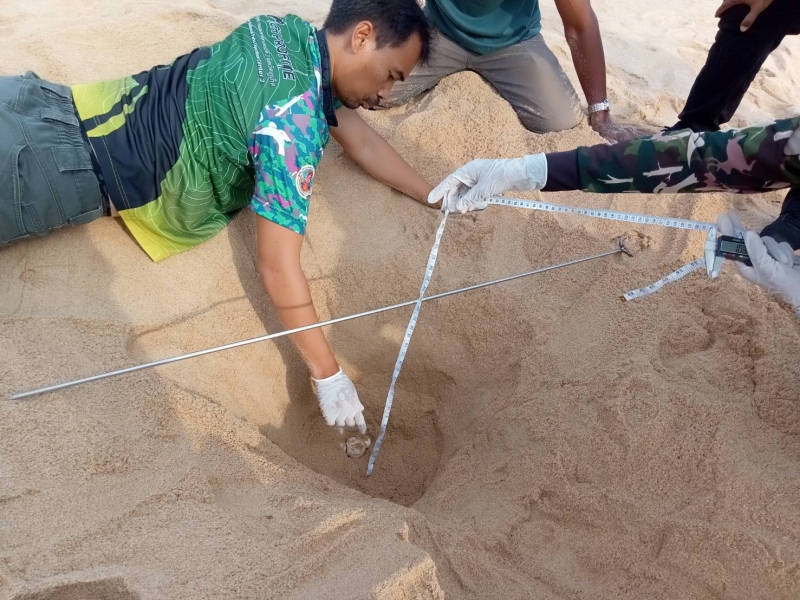
The nest was found buried 60cm deep into the sand, with a nesting hole 45cm wide, officials reported.
The nest was located nearly 25 metres from the high tide mark, leading the officers to believe it was not at risk of flooding. Hence the officers decided to not relocate the eggs to a safer site.
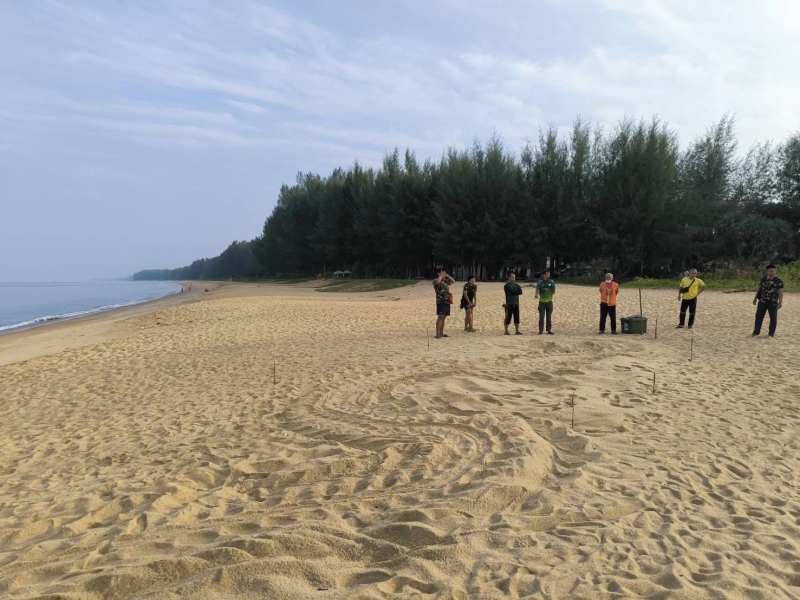
The area was marked off protection and officers have been assigned to watch over the nest to ensure it remains undisturbed.
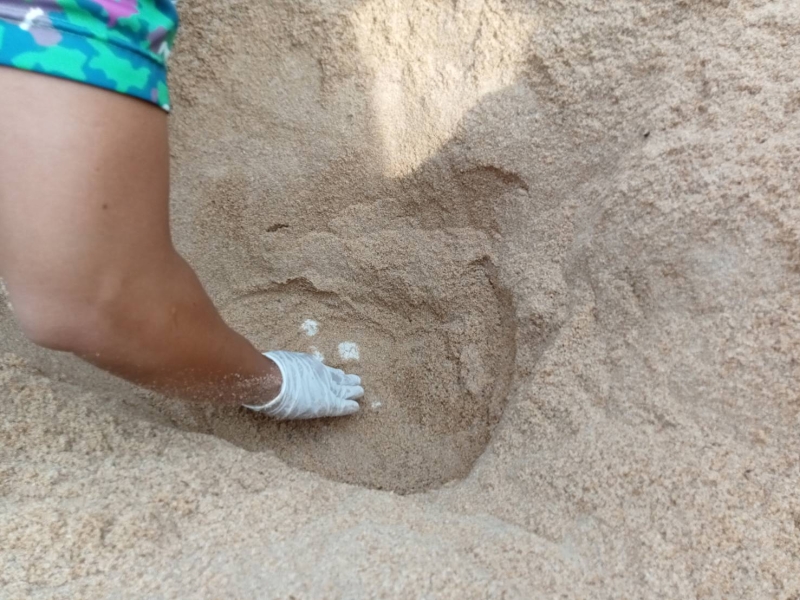
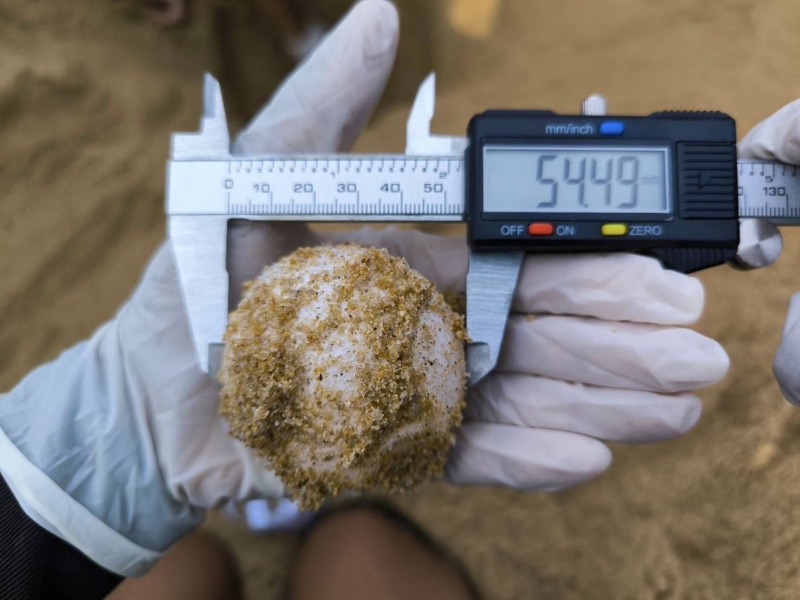
The DNP did not confirm how many eggs were in the nest, but did report that the eggs were 5.45cm long, on average.
Baby leatherback turtles are expected to hatch from the eggs in about 55-60 days, some time around May 5-10.
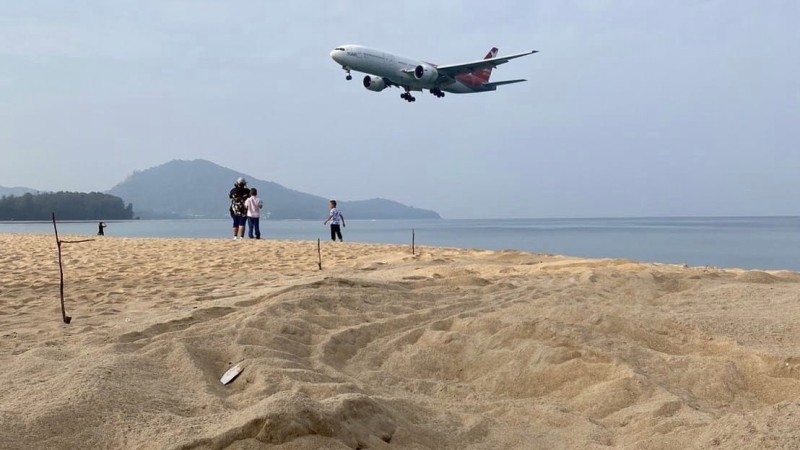
Respected marine biologist Dr Thon Thamrongnawasawat joked on Facebook that the turtles might want to see the planes flying overhead, too.
“Do you think you are the only ones who want to see an airplane? I want to see it!” he joked.
More seriously, Dr Thon noted that a leatherback turtle laying eggs on the beach was a good indication for the area.
“It’s truly an amazing picture. A big airport with some of the world’s rarest turtles laying eggs in front of the runway. Use it for good promotion,” he said.