


But in Luang Prabang, a charming city in the east of the country, hundreds of visitors are eagerly saying yes to the unique opportunity to experience being a rice farmer for the day – even if it includes getting covered in mud and being dragged around by a beast of burden named Susan.
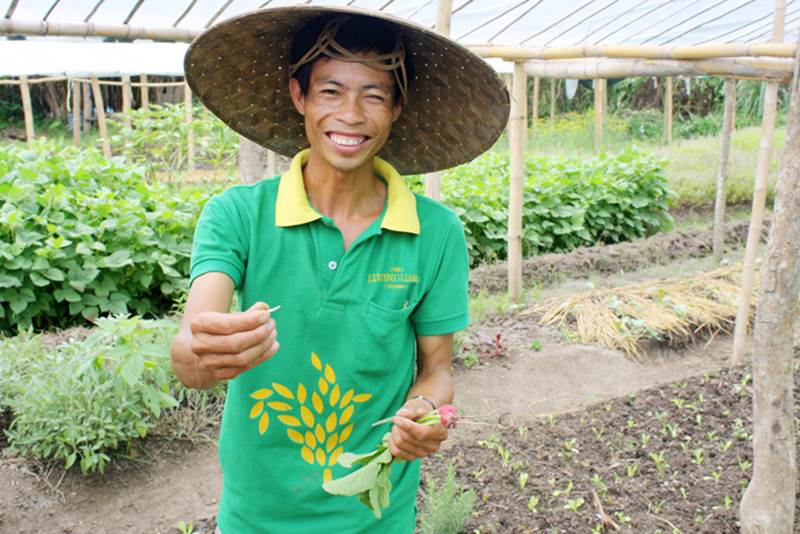
Laut Lee, a native of Luang Prabang, is the mastermind behind the rice farming experience project, called Living Land.
A rice farmer all his life, Laut became manager of the eight-hectare rice farm seven years ago, and set up an organic garden on the site to sell produce to local hotels and restaurants.
Things were ticking along nicely when he received a phone call one day from a hotel, whose American guests had asked if they could visit the farm to see where their organic salad came from.
His reaction? Total shock that someone would want to visit his farm.
“I thought it was impossible, because it was so muddy and dirty – everywhere here is mud, clay and soil. But they insisted that they really wanted to see it,” Laut explains.
“So they came and said, ‘Wow, this is wonderful. Why don’t you set up a place where people can come and visit?’ The idea grew from there.”
These days, Living Land is rated the top attraction on Trip Advisor for tourists staying in the quiet Unesco-listed town of Luang Prabang, and after 10 minutes in the company of the enthusiastic Laut it’s easy to see why.
The rice farm actually belongs to seven local families who lease the land. Laut’s the manager, and since he introduced the programme for tourists a couple of years ago, nearly 2,000 visitors have passed through.
It’s easy to forget that the farm is a real working farm, and the tours are merely a sideline. The main purpose of the farm is to make profit from rice, and there are 14 employees hired to help with this.
Laut is a one man band on the tourism side of things – in the morning he runs the tours or works in the office doing bookings, and in the afternoon he’s back out on the farm doing the practical harvesting.
Laut starts every tour with a short introduction to the history of the farm, and explains the importance of sticky rice to the people of Laos. The 14 practical steps to planting sticky rice are explained, and then the fun really begins as tourists get to do it for themselves.
While normally the start-to-end process takes all year, one area of Laut’s farm has been set up in various different stages, so visitors can experience all different parts of the harvesting in one day.
The fun (and it really was) began with ploughing the field in preparation for rice planting. One by one, we took turns at wading through a muddy paddock, gripping onto a wooden plough for dear life as Susan the buffalo dragged us around.
It’s much harder than it looks, and it was not long before some of us were falling into the mud, alongside squeals of laughter – it must have been quite the sight for the real farmers.
The next step was planting the rice, where we were all given small rice seedlings to carefully plant in the freshly, although rather haphazardly, ploughed field. Once that was complete we fast forwarded to the harvesting stage, which happens in the next paddock over.
After only a few minutes of carrying huge sacks of rice we realised just how physically tiring rice farming is, and we spared a thought for the Lao locals, many of whom do this every day for years on end.
For Laut, its incredibly rewarding seeing such fun had on the farm, though he never intended on a career as a rice farmer.
He attended university in Luang Prabang where he studied to be a teacher. Years of working in restaurants and hotels had left him with excellent English skills, but he was eventually lured into the industry that supports thousands of his countrymen.
“Lao people believe rice is our life – it’s our staple food. We live on sticky rice, that’s the main thing on our dining table. The farmers eat sticky rice because it makes them strong and able to work hard.”
Laut explains that around 80 per cent of the 6 million people in Laos are still involved in rice farming. On average, every Lao person eats around 20kg of sticky rice a month. One hectare of planted rice produces around 2.5-3 tonnes of rice.
Farmers get up at sunrise and work until lunchtime, and usually have a long lunch break to escape the hottest part of the day, Laut says.
“It doesn’t bring much money. Working in the fields is very hard, and rice is cheap. You cannot make money from only selling rice, so farmers will have other jobs, like doing crafts, fishing, collecting food, berries and bamboo shoots from the jungle, or selling vegetables.”
Speaking of vegetables, there’s also an organic garden on the farm, which was created by staff member Mr Vixay. We were given a tour of the extensive garden, after we had learned how to make rice flour (a slow and time consuming process), rice wine, and also tried our hand at sugarcane juice.
It was with great satisfaction that after a busy morning harvesting our rice, we sat down to a huge meal of Laos’ prized national dish with far more appreciation for the exhausting process than we had before.
“As a teacher I would earn a bit more money, but not a lot more,” Laut says.
“My parents were rice farmers, and growing up I would always help them on the farm. I’m so happy to continue their job. Even if I’m teaching or doing some other business, I’m still eating a lot of sticky rice. I’m very proud of what I’m doing here.”
For more information, visit livinglandlao.com
WHERE TO STAY:
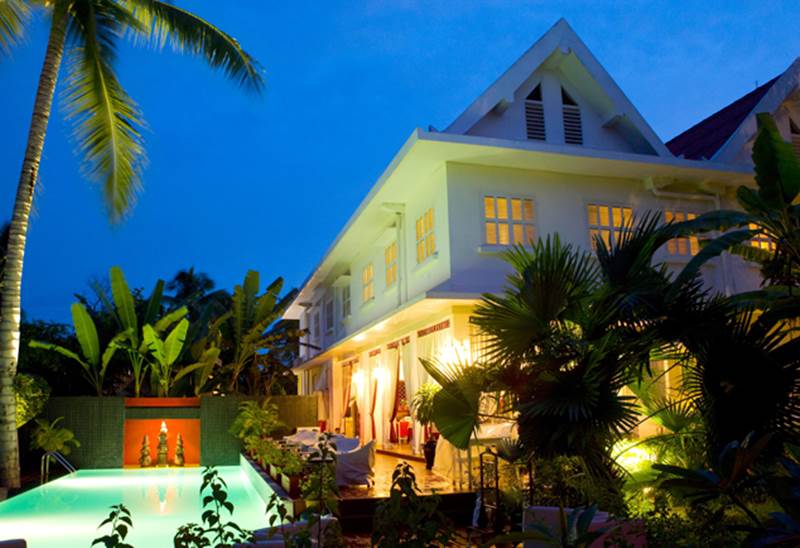
Maison Souvannaphoum, the former residence of Prince Souvanna Phouma, offers a historic platform from which to explore the picturesque charms of Luang Prabang, the royal capital of Laos for six centuries and today a Unesco World Heritage Site.
The hotel provides guided excursions on foot or bicycle to bring guests to local places of interest, including the fascinating morning market and farms on the riverbanks which frame the peninsula, along with Lao cooking classes and traditional dinners.
Maison Souvannaphoum is located opposite the Provincial Office and Governor’s residence in the heart of town near Nampou Square (or town fountain), and features a sprawling garden and courtyard with a swimming pool.
The recently refurbished hotel offers five rooms in the Residence Wing, which are Prince Souvanna Phouma’s original suites, and another 20 rooms in the Garden Wing. New facilities including a petanque court and garden seating area enable guests to truly relax and rejuvenate within the lush grounds of the hotel.
The exotic ingredients of traditional Lao cuisine are demystified by a cooking class which involves an early morning visit to the town’s outdoor market proceeded by guided instruction and preparation of dishes back at the resort.
Following a leisurely stroll through the market’s narrow alleyways and prior to returning to the hotel, guests can relax at one of the many outdoor cafes lining the banks of the Mekong River for a glass of aromatic Lao coffee as the early morning mist gives way to sunny skies. The cooking class is priced at Kip 200,000 ++ (B800) per person.
Complimentary daily tours on foot or bicycle through the town’s tree-lined streets lined with traditional Lao and French colonial architecture often mean witnessing a game of petanque or monks strolling in bright orange robes.
For reservations, please email reservations-maison@angsana.com or visit angsana.com for online bookings.