


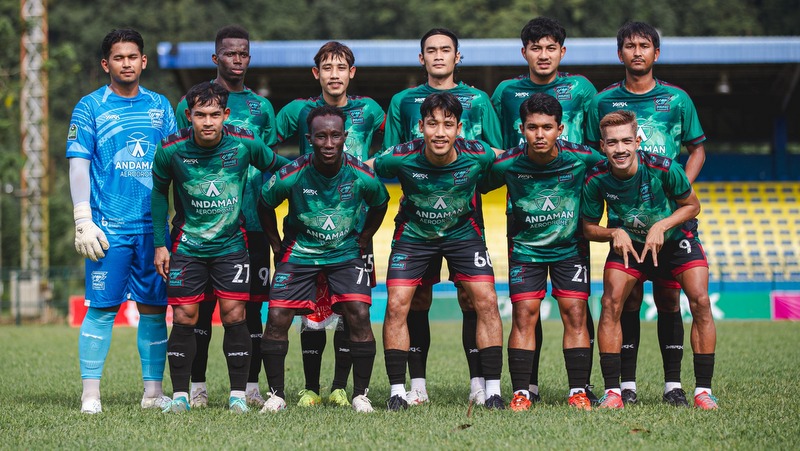
Samui United host Phuket Andaman FC (PAFC) in the BYD Dolphin League 3 (T3) South Region at 3:30pm on Sunday (Nov 2). Adopting a playful take on the famous ‘Classico’ match in Spain’s La Liga between heavyweights Barcelona and Real Madrid, the encounter has been dubbed locally as the ‘Koh-lassico.’ This clash of island neighbours represents a microcosm of Thai football’s persistent struggle with governance, finance and sustainability.
On one side, Samui United, steered by Thai international Mika Chunuonsee, represents a blueprint for integrated, asset-backed stability. On the other, PAFC is attempting to recover from a spectacular governance collapse – an upheaval of its former external leadership – which has exposed the dangers of high-risk, personality-driven and woefully underfunded investment in the lower leagues.
More than three points
On the surface, the fixture is perfectly balanced. Both Samui United and PAFC enter the weekend on 10 points after six games, holding identical records of three wins, one draw and two losses. This equality, however, masks two diverging trajectories.
PAFC, despite deep organisational trauma, has found recent form, posting a run of three wins from their last five matches. Samui United, by contrast, has demonstrated more inconsistency, mixing wins with two recent losses. With PT Satun FC just one point ahead in third place, the winner of this derby will not only gain a crucial competitive advantage but also seize the psychological mandate as the dominant island force.
Yet, the true narrative is off the pitch, in the boardroom and in the ferry terminals. This game is a contest between two antithetical models of T3 management.
The Mika Chunuonsee blueprint
Samui United, nicknamed ‘The Island Boys’, has established a model that structurally protects the club from the financial volatility endemic to the third tier. Their club structure, founded in 2024 as the professional senior team of the long-standing Samui United Academy, is built upon rock-solid, non-footballing commercial assets.
The core of this stability is the Maraleina Sports Resort, a sprawling 130,000 square-metre complex that functions as the club’s integrated home. This model of embedded infrastructure provides unparalleled fiscal resilience by significantly reducing the crippling fixed costs that often bankrupt standalone T3 clubs.
The stark reality of this gulf in resources was laid bare in the Chang FA Cup 2025/26 qualifying round on Sept 24 when Samui United achieved a massive 20-0 victory against amateur side Nakhonpathom City. The result was tragically aided by the visitors’ financial plight; the Nakhonpathom players, unable to afford the travel and accommodation for the long journey, reportedly went hungry and were forced to stay in a local temple. The episode, where the established T3 side thrashed an opponent crippled by poverty and distance, serves as a brutal illustration of Samui’s self-financed advantage. Vice-Chairman Mika Chunuonsee later provided financial aid to the visitors, a gesture of sporting goodwill that followed a scoreline of absolute, structural dominance.
The technical legitimacy of the project is secured by Chunuonsee’s involvement, lending credibility and attracting talent who seek security and high-level training. The long-term vision is further secured through the ‘Pro-Maker’ academy, a youth focus designed to generate homegrown talent rather than relying on expensive, speculative external transfers.
The Phuket crisis and the simple virtue of payment
PAFC, prior to the recent crisis, was an ambitious project based on a grand, speculative vision. Under the ‘leadership’ of former co-owner and President Russ Horsley, the club was marketed as embracing a modern approach, but in reality, it was woefully underfunded and hinged on a high-risk, ‘pay-to-play’ academy model designed to generate income from foreign students.
The subsequent “catastrophe” – the chaotic ‘Higher Sports Era’ – was an abrupt collapse of governance and a failure to meet basic financial obligations, plunging the club into a vacuum of trust and stability.
However, the recovery has been swift and deeply rooted. The original local ownership has returned, immediately restoring stability and, crucially, a simple professional standard: paying the players on time. This commitment to financial rectitude has gone a long way, quickly restoring pride. The core squad, featuring many of the same players, has rallied around the return of their original coach, Coach Go (Jarupong Sangpong). The current form is less about tactical genius and more about the psychological boost that comes from a club administration that treats its staff with respect and provides basic security – a powerful reminder in the Thai lower leagues that good governance begins with solvent, trustworthy leadership.
The tyranny of distance and the ‘Island Tax’
Samui United does not merely benefit from sound internal governance; it also exploits a passive, yet potent, competitive advantage derived from its geography: the “Island Tax”" For every mainland T3 rival, and even for Phuket, a trip to Koh Samui necessitates complicated, expensive, multi-modal travel, translating directly into physical and fiscal fatigue.
For mainland teams, reaching Koh Samui requires road travel followed by a ferry crossing. Standard ferry tickets alone cost up to B1,150 per person, compounded by additional specialised fees for transporting team buses or vans across the water. This logistical complexity introduces significant time delays and physical stress.
For this specific derby, PAFC faces its own steep hurdle. The fastest route – a 55-minute direct flight – costs around B3,000-8,000 for a one-way ticket. Alternatively, the bus-and-ferry combined route from Phuket Town can cost between B550-1,500 per passenger. For T3 clubs operating on razor-thin margins, this recurring “Island Tax” can increase the total variable operational cost for an away game by an estimated 160% compared to a mainland fixture. Samui United is therefore passively financed by the immense economic burden placed on every visiting opponent, turning its remote location into a genuine logistical fortress.
The model for recovery
The Island Derby is therefore a pivotal moment that should serve as a wake-up call for Thai lower league football. The collapse of the speculative, personality-driven Phuket project proves the fragility of relying on volatile external investment.
While PAFC has restored its internal dignity and performance through its reliable, returning local leadership, the club must still absorb the structural lessons of the Samui model.
First, the club needs to institutionalise stability by moving away from reliance on shared, leased facilities like Surakul Stadium and investing in or integrating with permanent, dedicated infrastructure that mirrors the comprehensive training and housing campus of the Maraleina Sports Resort. This provides a guarantee of long-term commitment and mitigates overhead costs.
Second, the club must commit financial resources to a funded, formalised youth pathway – a Pro-Maker programme for the Andaman region – to create sustainable homegrown talent, rather than relying on high-risk, expensive external acquisitions.
The winner on Sunday will take the points, but the true victor in the long-term struggle for viable Thai football governance is already clear. Samui United has built a resilient model; for PAFC, the return to basic solvency under local hands is a powerful first step, but adopting Samui’s structural blueprint remains the necessary course of action to secure their long-term existence.
Simon Causton is the co-host of ‘The Football Siam Podcast’ and writer of the ‘Football Siam’ blog which covers all things Thai football.