


“A Phuket-like hideaway, but still unspoiled,” writes Shivani Vora. Maybe unspoiled, but definitely not undiscovered.
Krabi, with its spectacular clusters of islands, receives about 2 million visitors each year.
Koh Klang is one of the few areas in Krabi where floral Batik sarongs still remain more prevalent than candy-coloured bikinis and Speedos.
Translated as “Middle Island” in Thai, Koh Klang is located a short 10-minute boat ride from Krabi town. There are no cars – only motorbikes with sidecars, and bicycles.
The population in the four villages is about 5,000, most of which are Muslims who rely on fishing and rice farming.
Thankfully, the small quiet fishing village doesn’t boast a white strip of sand and blue sea that glistens in the sun, but the absence of which has probably prevented Koh Klang from succumbing to commercialisation like other parts of Krabi.
We arrived around noon and found the locals to be all smiles and quite welcoming. The island is idyllic, almost as if it’s been unaffected by time, apart from the odd satellite dish connected to some of the sides of the stilt houses. Age-old traditions have been successfully preserved, with sustainable living as the focus.
What is safeguarded here is the local way of life and is now part and parcel and a strong selling point of its sustainable tourism.
The call to prayer sounds regularly across the island from each of the village mosques, the community is tight-knit and everyone knows everyone else.
As we rode around in the sidecar of a motorbike taxi (known as a Skylab), the driver constantly exchanged greetings with passers-by. The pride the locals have seems to be maintaining “the local way of life” and is not mere jargon on a tourism webpage.
Koh Klang is a combination of mangroves and rice fields. Besides shallow-water fishing, the main economy is rice farming. The locals grow regular rice as well as sang yot rice, which is not usually found outside of Phatthalung province.
Half of the rice yield is for local consumption while the rest is sold on. Vast expanses of rice paddies stretch across the horizon, while coconut trees spot the background.
The women working in the fields greet us wholeheartedly; their faces painted with turmeric, acting as protection against the sun.
Koh Klang is also the birthplace of the ruea hua tong (tall-bow boat). These boats have become iconic of the beaches and islands in the south of Thailand – acting as the backdrop in virtually every photograph and postcard. The head of the boat was designed to stand against the current while also acting as a marker for direction.
Since the early 2000s, a local group has been making models of the distinctive boats, endorsed by the governor of Krabi as a souvenir representing the province.
The group is headed by a local boat builder, and his skills and those of his team have been passed down from generation to generation.
We ended the day at the Katik Textiles Group – an enterprise run by a group of about 30 ladies, specialising in Batik painting.
Fronted with a shop area, while the studio sits in the back, next to a tin shed. The studio smells of wax, as if birthday candles have just been blown out. Inside, Prajim Lekdum, a Batik-clad grandmother with a tiny physique, demonstrates the local patae (Batik) technique.
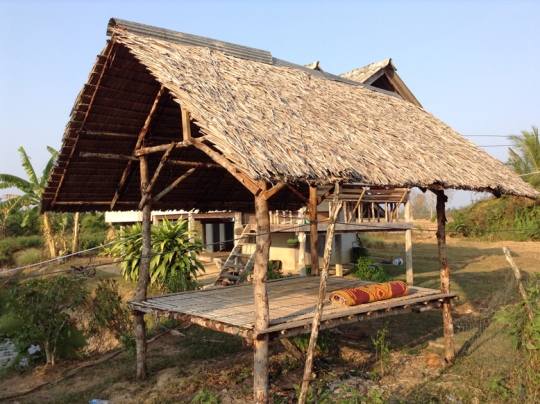
At both of these places, we were given the chance to participate and dabble, maybe a little clumsily, in the local activities. The islanders have also set up homestays to accommodate visitors who wish to spend more than a day exploring the land.
The afternoon was tranquil and leisurely and a world away from the chaos of mass tourism.