


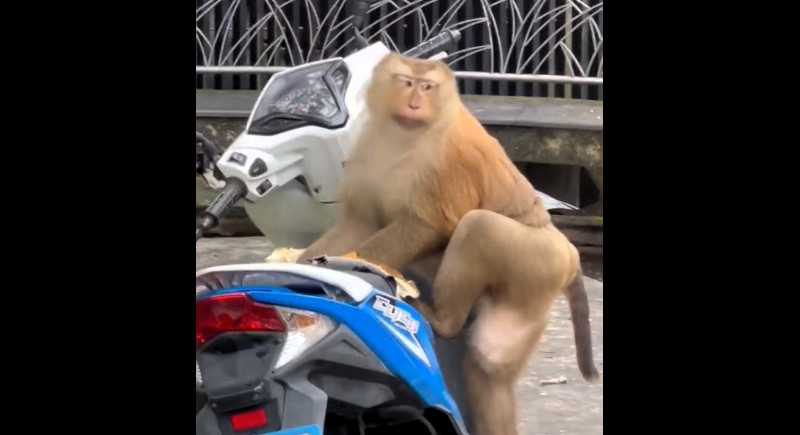
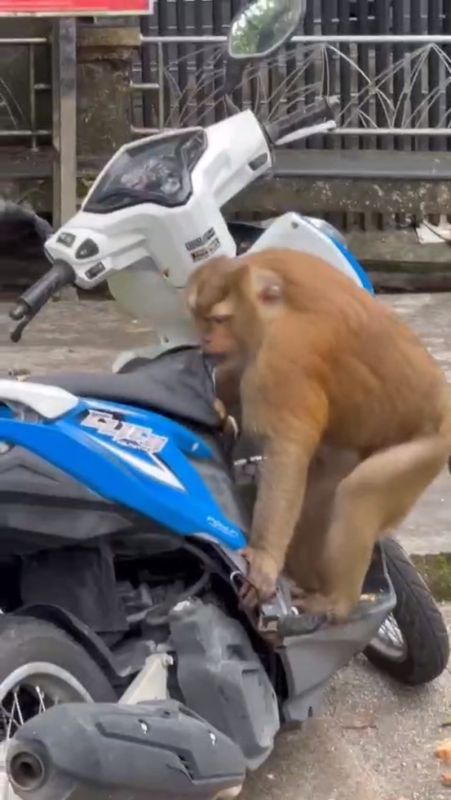
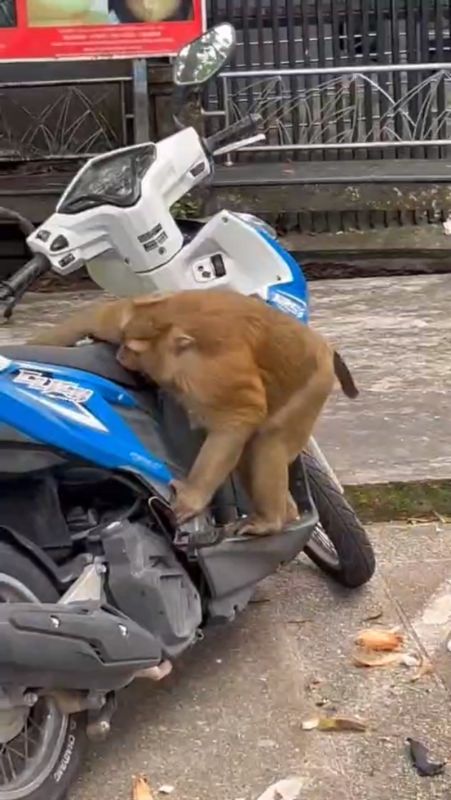
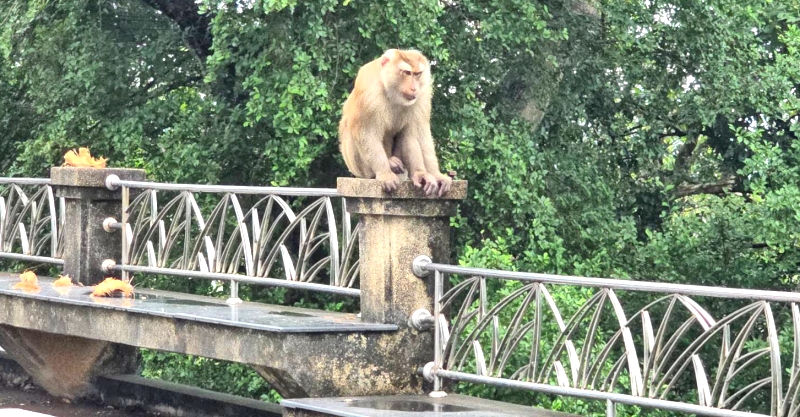
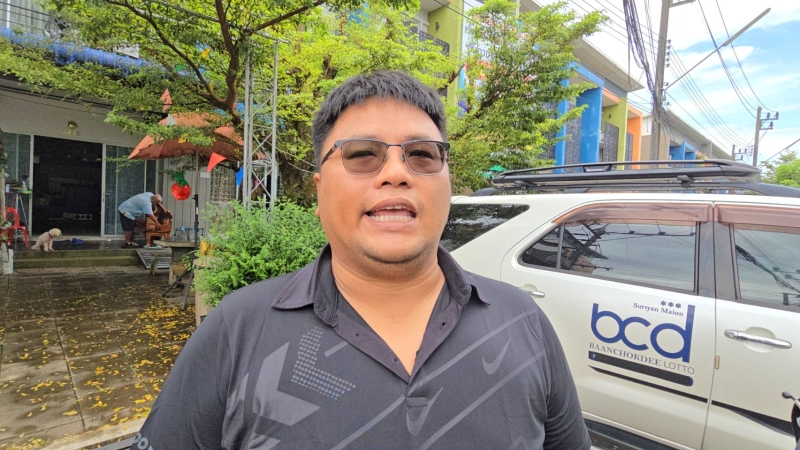
The assistant village headman, Suriyan Mai-on, posted a video of the incident online on Saturday (Sept 8), sparking many comments by netizens urging people to be careful when near the popular monkeys.
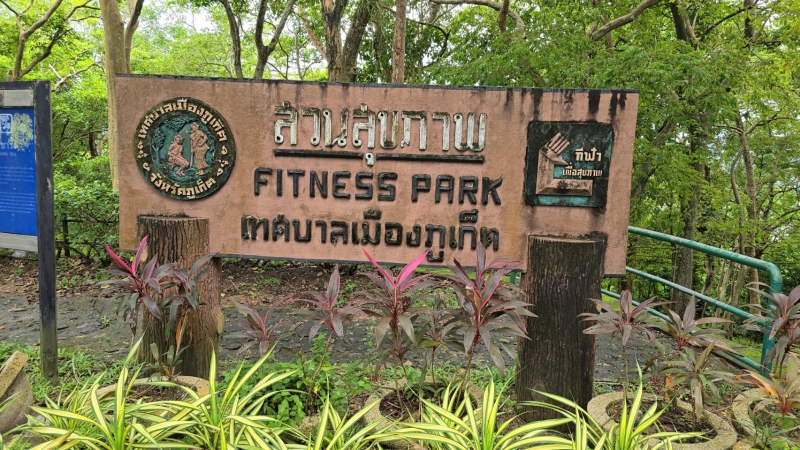
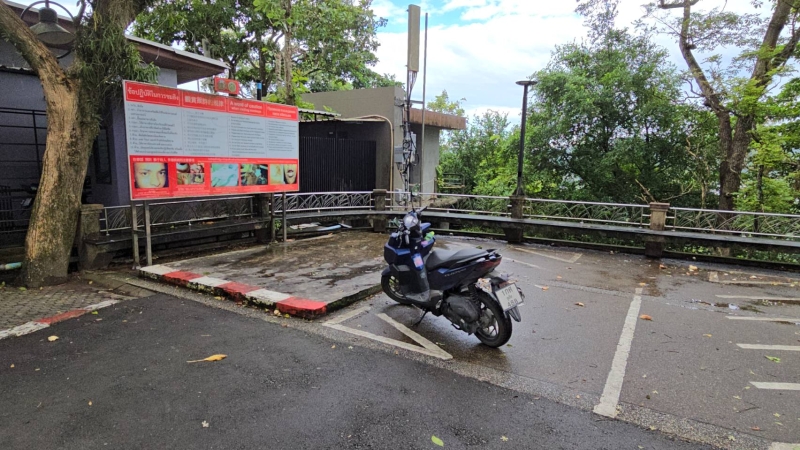
The park has designated parking areas for cars and motorcycles, but one side near a restaurant is more prone to monkey activity. While no monkeys were to be seen when he parked his motorbike near the fitness area, and there were very few visitors at the time due to the rain, Mr Suriyan explained.
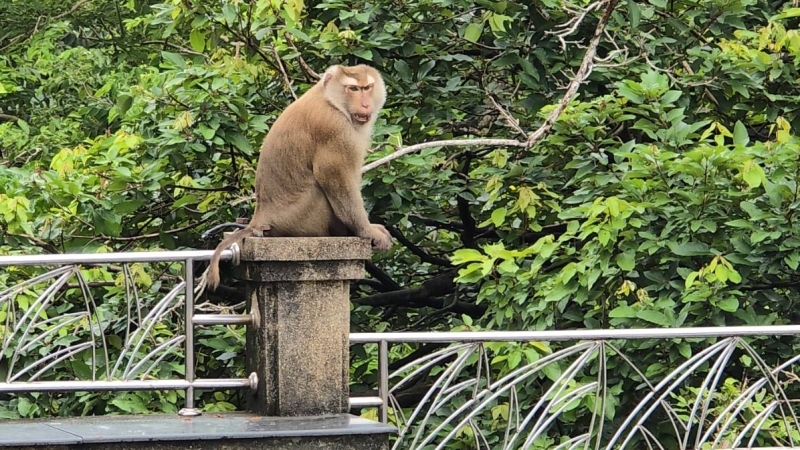
Soon after he parked his motorbike, a large monkey arrived and began ripping the motorbike seat cover off with his teeth, then pulled out the stuffing underneath with his hands.
Mr Suriyan urged people to stay away from any monkeys that appear aggressive, and not to get in their way even when a monkey might be pulling your motorbike apart.
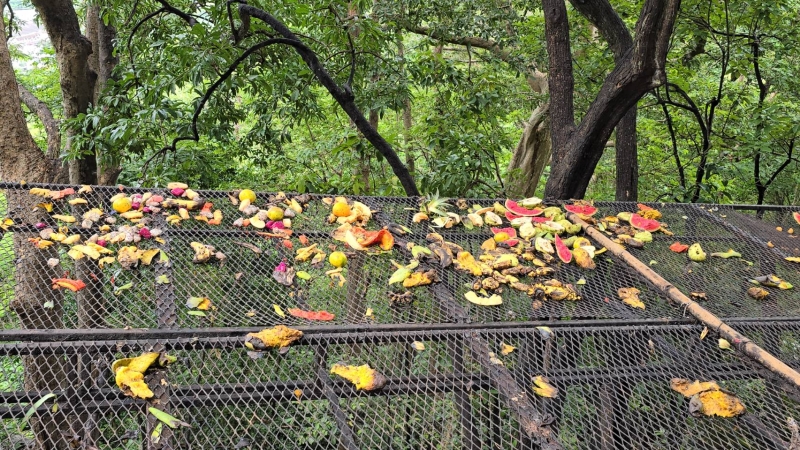
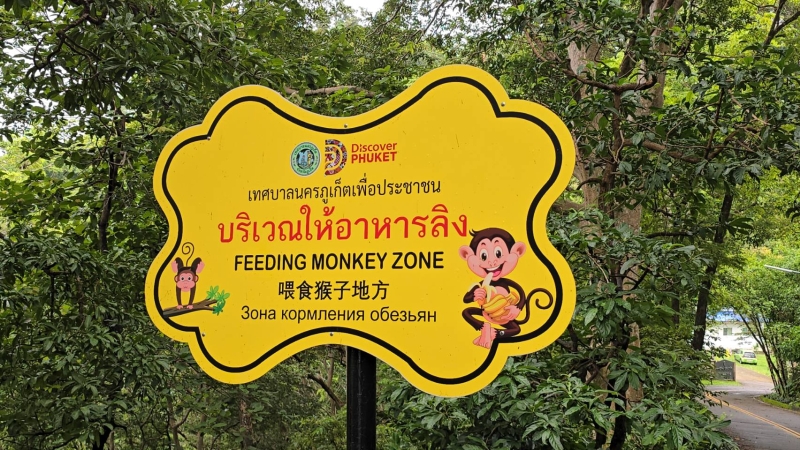
Mr Suriyan noted there are many signs prominently displayed warning against feeding the monkeys.
He urged visitors to park away from the monkeys to avoid damage to their motorbikes, especially families with small children, as the monkeys may approach in search of food.
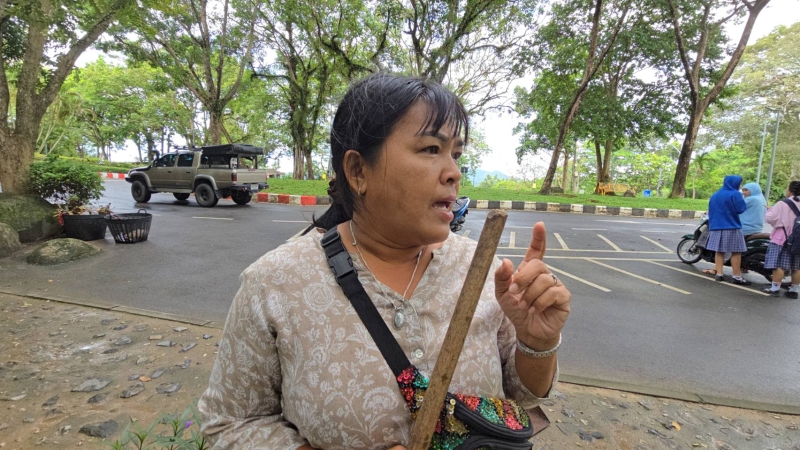
Suchada Wachirabirak, 52, who has worked collecting garbage at Khao Rang Viewpoint for 24 years, said the monkeys have been a mischievous presence in the area for years.
It is even part of their appeal for tourists to come and see them, she noted.
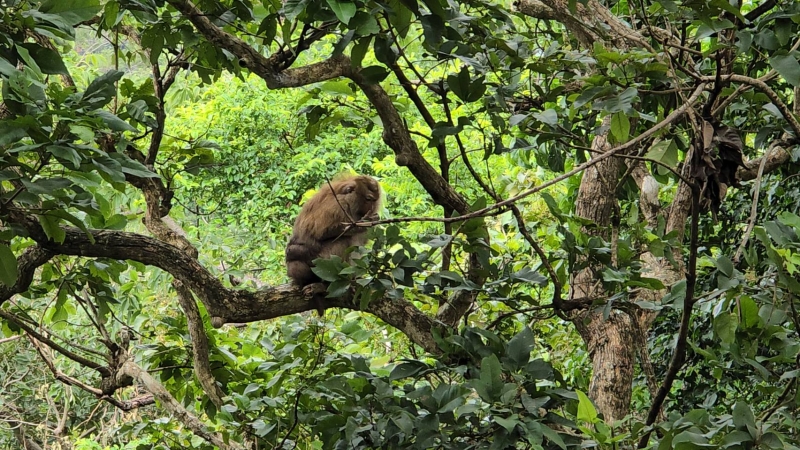
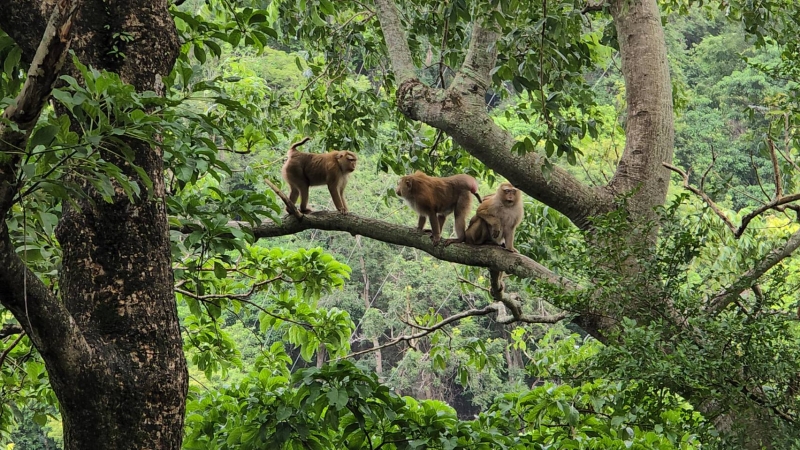
Ms Suchada estimates there are around 80 monkeys, which often scavenge for food and damage cars.
Although the local authorities have taken steps to manage the monkey population, including neutering efforts, the animals still pose a problem for unsuspecting visitors, Ms Suchada said.