


And the one that most powerfully shook – and formed – the psyche of Phuket was undoubtedly the the year-long conflict of 1785-1786, known as the Nine Armies' Wars, and so dubbed because the Burmese invaded in nine armies (nine being a magical number in Burmese numerology). This war was was fought between the Konbaung dynasty of Burma and the Chakri dynasty of Siam, which of course we now call Thailand.
King Bodawpaya of Burma was hell-bent on expanding his territory by invading his neighbour to the east. But the outcome was a defensive victory for Siam, and one of the turning points of the war took place on our island.
Duly one of the most important events in the history of Phuket took place in 1785, when the Burmese invaded Siam. But they encountered unexpectedly strong resistance, which is what the Two Heroines Memorial is all about. More on that landmark later.
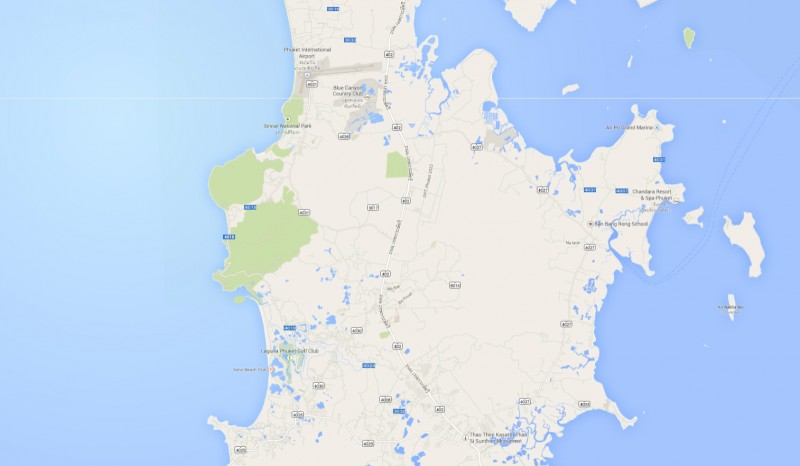
In the north of Siam, the Burmese attacked overland, but here in the south they arrived by sea. The main Burmese military fleet landed at Nai Yang Beach, close to the present-day International Airport.
Another contingent of invaders entered the island by means of paddling their vessels of war inland up a "klong" (waterway) to Thalang. Even today – 229 years after the event – this Klong is still referred to by many locals as "Burmese Soldier Klong".
The invasion force did enjoy a total element of surprise however. Francis Light, a British East India Company captain passing by the island, notified the Phuket local government that he had seen Burmese forces at sea assembling for an attack.
For a number of reasons too complex to detail here, the Phuket of 1785 was in a militarily weakened state. But the defenders had an unexpected trump card.
Than Phu Ying Chan, the wife of the recently deceased governor, and her sister Mook, assembled what local forces they could muster. And after a ferocious defensive led by the sisters, the Burmese were forced to retreat on March 13, 1785. Naturally the two surprise saviours of Phuket became local heroines, receiving the royal titles Thao Thep Kasattri and Thao Si Sunthon from a grateful King Rama I. And indeed their story is held in the same kind of reverence that the British hold for the story of Joan of Arc.
Heroines Monument on Thepkasattri Road at the Thalang’s Tha Ruea intersection (about 12 kilometres north of Phuket Town) is home to a statute of the two courageous sisters, and has long been one of Phuket’s most famous landmarks.
Had the Burmese invaders avoided the strategically risky move of trying to take Phuket in 1785, the inspirational story of Phuket’s most native-daughters would never have come about. But in their valiant fight against the Burmese, the sisters proved something that we know to be very true – or dispute at our peril – Thai women are not to be messed with. And when their blood is up, they are impossible to defeat.
Little did those hapless Burmese soldiers know what they were in for when paddled up that klong and stormed Nai Yang Beach. And nor did they learn their lesson; Burma unsuccessfully tried to invade two more times before the dawn of the twentieth century. That century turned out to be a particularly stormy century for Europe and other parts of the world, but, as it turned out, it was a relatively tranquil one for this region – at least by the blood-drenched standard of centuries gone by.