


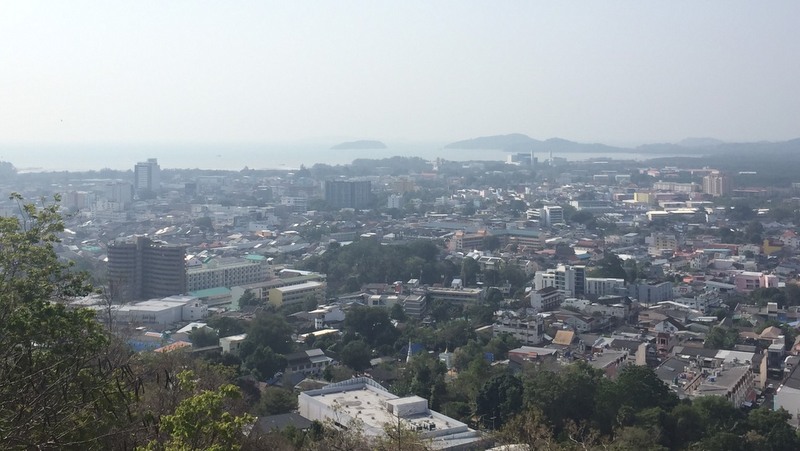
Parimet Jareonnoppakhun, an environmental expert at the Regional Environment Office 15 (REO 15), based in Phuket, said that the haze “is still at a healthy level”.
“The pollution is still considered as not problematic,” she said.
“The dust haze readings in Phuket today have not reached a harmful level according to the standard measures of the Air4Thai [Thai government air pollution reporting system], which is still ‘Green’,” Ms Parimet added.
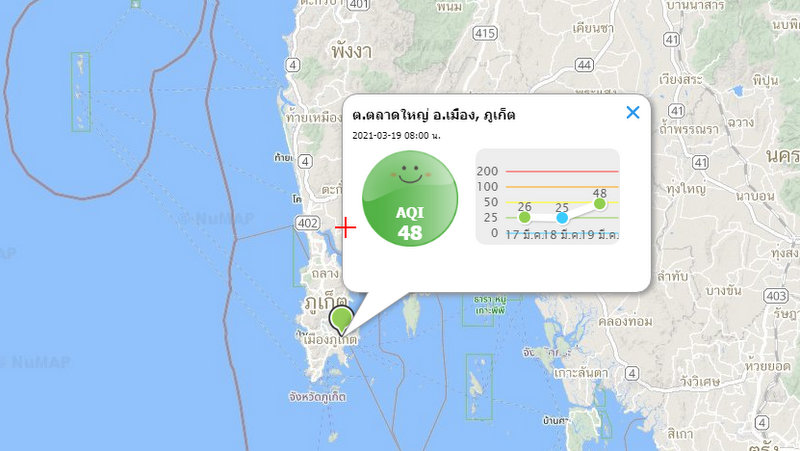
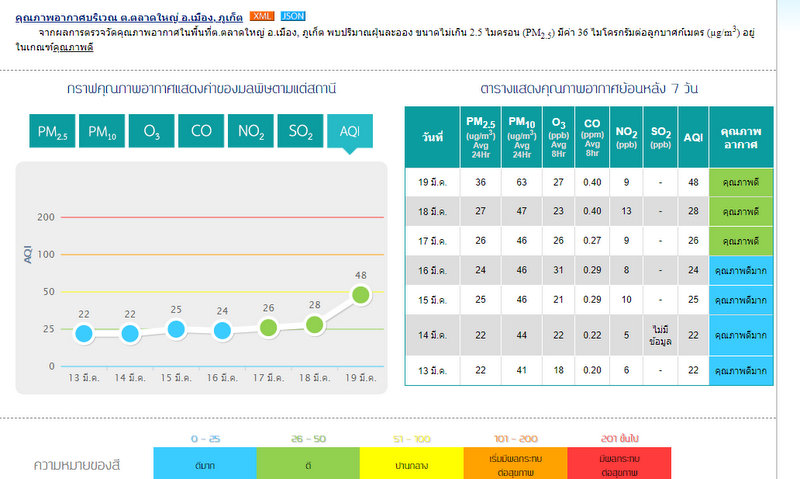
Air4Thai this morning reported that Phuket’s AQI (air quality index) measured a ‘Green’ 48, marking “Good air quality. Able to do outdoor activities and travel as usual.”
However, as of 11am, Air4Thai reported a “24-hour average” for Mar 19 with a PM2.5 reading of 36 and PM10 reading of 53.
“The readings by other air pollution monitoring systems might include the humidity pressure in the air, which the readings may show higher numbers than the real haze and report that it is harmful to people’s health,” Ms Parimet said.
“There may be a weather inversion of air as well. The main factors causing more pollution are air pressure, humidity and the flow of the wind for the haze we are facing now,” she added.
However, the Phuket office of the Thai Meteorological Department (TMD) today announced that the current weather conditions will have an impact on air quality for all provinces in the southwestern region from Mar 19-25.
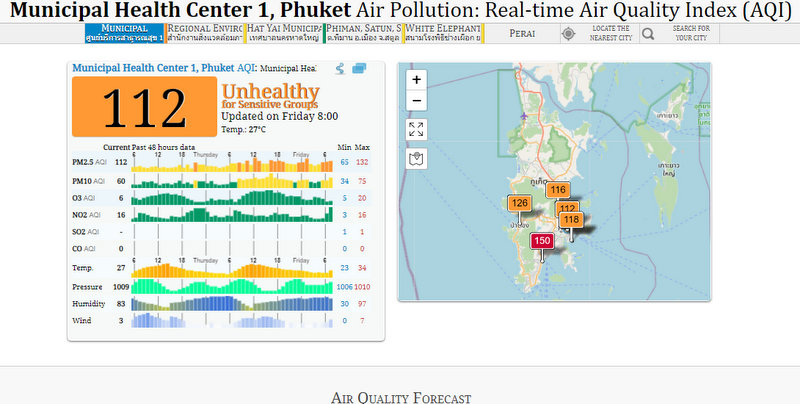
Meanwhile, the the worldwide air pollution monitoring portal aqicn.org reports consistent “Unhealthy for Sensitive Groups’ readings across Phuket today, with AQI readings of 112 for Phuket Town, 116 for Chalong and Rassada, and 118 for Patong.
The classification comes with the warning, “Members of sensitive groups may experience health effects. The general public is not likely to be affected. Ative children and adults, and people with respiratory disease, such as asthma, should limit prolonged outdoor exertion.”
Of note, aqicn.org uses raw data from Thailand’s Pollution Control Department to provide its readings.