


In a previous Happy Habitat column a few months back (see here), I had boasted about my electric bill being only B38 for the month – and that’s at an inflated “sticks rate” of B14 per kilowatt-hour!
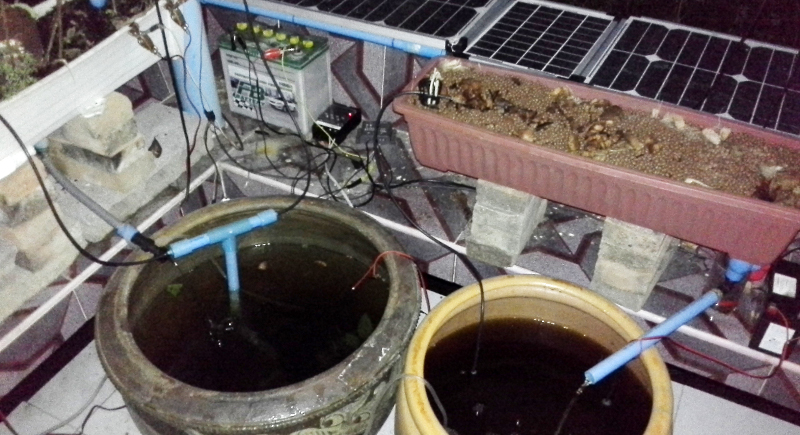
Capable of supplying most of my domestic energy needs from solar power, I was sure I could reduce my bill even more, and possibly eliminate it altogether.
But last month, the soi-master rained on my parade insisting that I had to pay a minimum of B200 for “transformer maintenance” every month, even if I opted out of using the dirty and expensive grid energy.
I tried to explain, initially to his shirtless 10-year-old moped-riding son, that I didn’t need a transformer or utility bill for that matter, but he rebutted in haste that if I didn’t pay, he’d “cut the line” at once.
Resisting the strong urge to stand my ground on principle, in the end, I coughed up the B200 so as to maintain the peace... for now. Should I ever need it, the grid can be my back-up, but for now I’ll be content to continue with solar-topped batteries for my dependable mains.
Conversion time
For those who’ve been following this column and my various projects, you’ll have picked up by now that central to my sustainability strategy has been concerted efforts to convert and consolidate most of my energy needs to come from 12 volt direct current (DC) circuits, as opposed to the usual 220 volt alternating current (AC) grid dependent circuits.
Why DC over AC?
In general, DC circuits tend to be a lot more energy efficient (consume less electricity) than their AC counterparts; and besides, all of Phuket’s AC energy is derived from the burning of either coal, oil or garbage, which I would rather not support if I can help it.
Read this story about how coal dependency in Phuket and Krabi is compromising the region's eco integrity.
With today’s lifestyles, it should not really prove a difficult task to transition from high wattage AC to low wattage DC, at least for the most important living functions – communications, lighting, air and water circulation as I can confirm over the past year of trials.
Sure, some modern AC home appliances may be relatively energy efficient, which can easily be determined through careful label scrutiny. But to power such appliances on solar power, you still have to convert the DC sunlight-sourced energy into “home-ready” AC electricity, using an inverter.
This DC to AC inversion process entails additional energy losses of between 10–20 per cent, meaning you’d have to size your production and storage to supply 10–20pc more energy to compensate for the loss.
Hence, the easiest way to minimize if not eliminate such loss is to use DC devices without an inverter.
Increasingly in Phuket and Thailand, there are readily available 12VDC pumps, fans and lights if you know where to look. Much of this comes from the Chinese manufacturing and export boom.
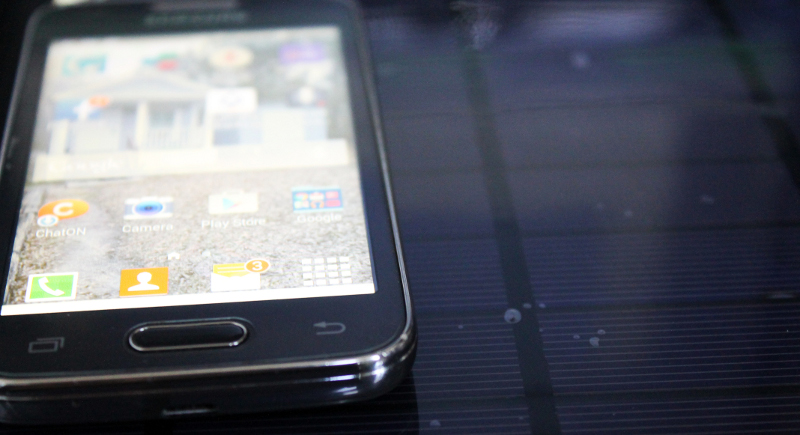
As for multimedia, most of our mobile and compact communications devices are DC circuits already – even though we’ve come to depend on the supplied AC adapters to charge the devices at home using AC outlets.
Other considerations
Note that even when working with only DC, you still have to regulate the energy by stepping the voltage up or down to the recommended operation requirements.
For example, tablets and smartphones that can charge via USB ports need to be stepped down to 5VDC (from either 12 or 24 VDC solar system), while notebooks and all-in-one PCs that require ranges of 16–19VDC to operate, would also need to be regulated up or down, accordingly.
In some cases, particularly when dealing with proprietary chargers with unorthodox power specs, you may have no choice but to use an inverter to power the factory-supplied AC adapter charger.
Moreover, many domestic appliances – for cooking, cleaning and cooling – aren’t readily available in DC format (unless you order online and have them shipped from abroad).
And, with many DC fridges, air coolers, appliances and other devices, the required start-up amperage (electrical current) may be too high to draw directly through a fused charge regulator.
For example, my laptop needs 80–120W of power to start up, and a continuous 8–10 amps (A) at 12VDC (96 to 120W) to operate without needing to draw from its own battery.
However, my charge regulator only allows for a maximum draw of 3 to 5 A (36-60W) from my battery. Anything more than this needs a direct, unfused supply line direct from the battery.
Luckily, as technology continues to advance, so does energy efficiency, and like-wise, our options for living comfortably off-grid. In a near future column, we’ll talk more about batteries and cooling down in this hot and dry weather.
Watch this space.