


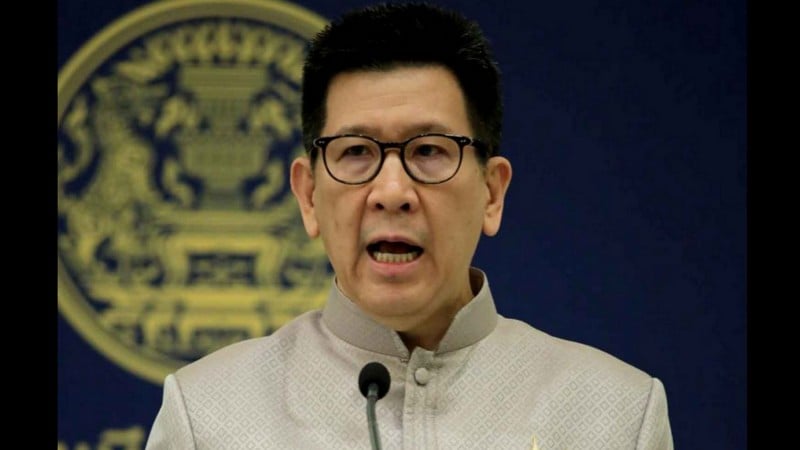
The scheme builds on the success of the BOI Fast Pass programme, which has proven capable of stimulating investment without requiring additional budget spending, said Mr Ekniti, who also serves as a deputy prime minister.
He said streamlining government approval and licensing procedures through closer coordination among state agencies can help promote investment, as reflected in higher levels of foreign direct investment (FDI) in Thailand, reports the Bangkok Post.
Mr Ekniti said fast-track policies directly strengthen investor confidence, noting that Thailand’s ranking in international investment competitiveness compiled by the International Institute for Management Development (IMD) improved from 30th to 24th place.
The Board of Investment (BOI) says Thailand Fast Pass is designed to speed up approvals and permits for large projects in targeted industries, reducing processing times by 20-50%.
Prime Minister Anutin Charnvirakul will preside over the launch on Tuesday at Government House.
Mr Ekniti, who chairs the BOI, recently held a meeting to review progress in accelerating investment through the Thailand Fast Pass system, focusing on key concerns raised by investors, including access to electricity, clean energy and investment sites.
At a BOI board meeting on May 6, nine additional projects worth a combined B52.1 billion were approved under the Thailand Fast Pass programme, bringing the total number to 25 projects with combined investment valued at B223.2bn. In March, 16 projects were approved.
Projects accepted into the programme will receive expedited approvals and permits from agencies including the BOI, the Department of Industrial Works, the Industrial Estate Authority of Thailand, the Office of Natural Resources and Environmental Policy and Planning, the Customs Department and electricity authorities.
Between 2023 and 2025, a total of 78 large-scale projects worth B480bn received investment promotion approval.
Of these, 35 projects worth about B100bn began investment, while 30 projects worth B110bn had clear plans to start in 2026–27. Another 13, valued at about B270bn, still faced obstacles related to electricity supply, land availability and regulation.
Experts say that if the government can address these issues, B350bn more investment will take place by 2027. The BOI will monitor progress on a quarterly basis.